

Common Ancestry Overview

Flashcard
•
Biology
•
9th - 12th Grade
•
Practice Problem
•
Hard

Stephanie Saberre
FREE Resource
Student preview

16 questions
Show all answers
1.
FLASHCARD QUESTION
Front
According to the diagram, which pairs of insect groups likely share the most homologies? Options: aphids and bees, moths and mosquitoes, bees and wasps, wasps and beetles.

Back
bees and wasps
2.
FLASHCARD QUESTION
Front
According to the diagram, which of the following pairs of insect groups likely share the least homologies? beetles and moths, grasshoppers and mosquitoes, mosquitoes and flies, flies and moths

Back
grasshoppers and mosquitoes
3.
FLASHCARD QUESTION
Front
Which species changed the least over time? (HINT: more breaks in the lines from beginning to end = more change) Options: bees, beetles, flies, aphids

Back
aphids
4.
FLASHCARD QUESTION
Front
Which evidence of common ancestry is being studied in this visual? Options: biogeography, fossil record, anatomical homology
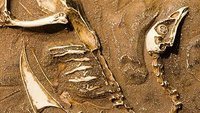
Back
fossil record
5.
FLASHCARD QUESTION
Front
Which evidence of common ancestry is being studied in this visual? Options: biogeography, fossil record, anatomical homology
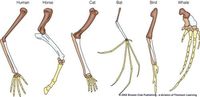
Back
anatomical homology
6.
FLASHCARD QUESTION
Front
Scientists compare the limbs of organisms to look for evidence of common ancestry. These limbs provide evidence of common ancestry because they -
Back
have the same basic structure
7.
FLASHCARD QUESTION
Front
Which statement best represents the illustration to the right?

Back
Wolves, bison, and horses share homologous structures.


Access all questions and much more by creating a free account
Create resources
Host any resource
Get auto-graded reports

Continue with Google

Continue with Email

Continue with Classlink

Continue with Clever
or continue with

Microsoft
%20(1).png)
Apple

Others
Already have an account?

