

Unit 4 - DNA and RNA

Presentation
•
Biology
•
9th Grade
•
Practice Problem
•
Medium
Standards-aligned

Madeline Carlson
Used 112+ times
FREE Resource
20 Slides • 17 Questions
1
Unit 4 -
DNA and RNA

2
3
Nucleotide
A nucleotide, the monomer of nucleic acid, is made up of 3 parts:
- Phosphate group
- 5-carbon sugar
- Nitrogen base

4
Multiple Choice
5
Fill in the Blanks
6
7

8
Scientists that Discovered the Structure of DNA
James Watson and Francis Crick earned the Nobel Prize for building a model to show the structure of DNA.

9
Scientists that Discovered the Structure of DNA
Rosalind Franklin used x-rays to take special pictures that revealed DNA to have a double helix structure. Watson and Crick could not have built their DNA model without the important information from Rosalind Franklin’s x-ray pictures.

10
Multiple Choice
11
Multiple Choice

12
DNA
DNA, or Deoxyribonucleic Acid, contains the genetic information we pass on from one generation to the next.
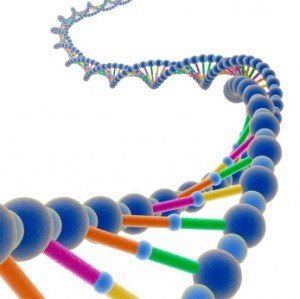
The overall structure of the polymer DNA is called a double helix, “double” because it contains 2 strands of nucleotides, and “helix” because it is twisted into a spiral shape.

13
DNA Structure
The double helix of DNA is like a twisted ladder. The ladder is made of 2 strands of nucleotides. The sugars and phosphates make up the “sugar-phosphate backbones”, or the outsides of the ladder. The nitrogen bases make up the rungs (steps) of the ladder. The two sides of the ladder are connected down the middle by many hydrogen bonds.

14
Multiple Choice
15
Multiple Choice
16
Multiple Choice
17
Multiple Choice
18
Fill in the Blanks
19
Base Pairing Rules
To connect the two strands of DNA, the nitrogen bases must match up in a specific way: A always pairs with T, and C always pairs with G.
A and T are complementary to each other, and C and G are complementary to each other. Complementary means they fit together, or pair together.

20
21
Multiple Choice
22
Multiple Choice
23
Fill in the Blanks
24
Chromosome
Our human cells contain about 3 meters of DNA in the nucleus. To fit so much DNA into such a tiny space, the DNA coils up very tightly into chromosomes. Each of our chromosomes contains a very large amount of DNA.

25
Gene
A gene is a specific sequence of nucleotides found in our DNA that contains instructions to make a protein. Each of our chromosomes contains many genes. The difference between two different genes is the sequence of nitrogen bases it contains.

26
RNA
RNA, ribonucleic acid, is the other polymer of nucleic acid. It is similar to DNA it is important in making protein, it is made of monomers called nucleotides, and it contains the elements CHONP (carbon, hydrogen, oxygen, nitrogen, and phosphorus). However, instead of having 2 strands like DNA, RNA has only one strand and it contains the nitrogen base Uracil in place of Thymine.

27

28
Multiple Choice
29
Multiple Choice
30
Multiple Choice
31
Multiple Choice

32
Why is DNA important?
DNA is important because it contains the instructions for making all the proteins in your body. These protein-coding instructions are known as our genetic code, or genetic information.

33
Why is DNA important?
The genetic code is made up of different sequences of nucleotides. Difference sequences of nucleotides carry information on how to make different proteins, and these different proteins are responsible for our many different traits, such as hair color and eye color.
34
Why is DNA important?
Proteins are responsible for many important jobs in our cells (like enzymes) and make up much of the structure of our bodies. Proteins are necessary for normal growth and function of organisms and cells.

35
Who has DNA?
All Living things on earth has DNA. Bacteria, animals, plants, fungi, and protists all contain genetic information in the form of DNA.
All DNA is made of the same building blocks, or nucleotides so, sometimes we even have similar genes that contain instructions on how to make similar proteins that do the same jobs in our cells.

36
Who has DNA?
This means we can compare DNA between two different species, and it also allows scientists to combine DNA from two different species, because the nucleotides and structure are the same.

37
Open Ended
Unit 4 -
DNA and RNA
Show answer
Auto Play
Slide 1 / 37
SLIDE


