Search Header Logo
Characterization

Characterization

Assessment

Presentation

•

English

•

9th Grade

•

Medium

•
CCSS
RL.7.3, RL.8.3, RL.9-10.3

+3

Standards-aligned

Created by

Susan Porter-Voss

Used 44+ times

FREE Resource

18 Slides • 30 Questions

1

Characterization

How authors develop characters in literary text.
Slide image

2

Slide image

3

Slide image

4

Slide image

5

Slide image

6

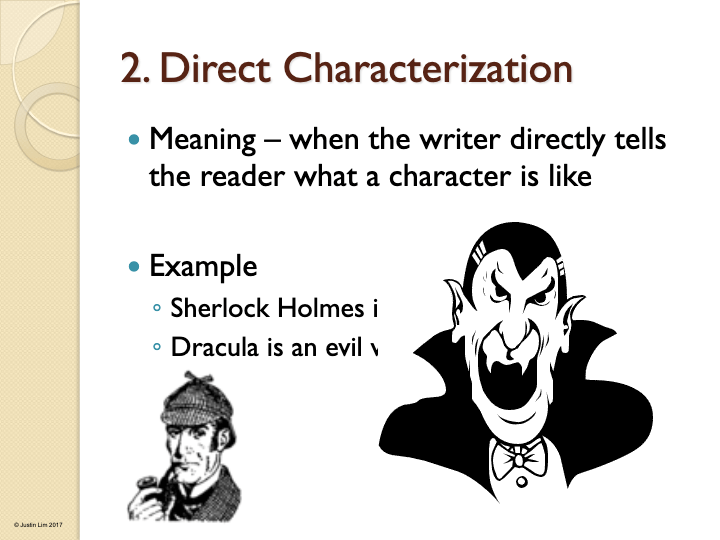
Examples of Direct Characterization:

  • Sherlock Holmes is smart.

  • Dracula is evil.

  • Mrs. Porter is obnoxious.

  • Mr. Mosby is kind.

7

Slide image

8

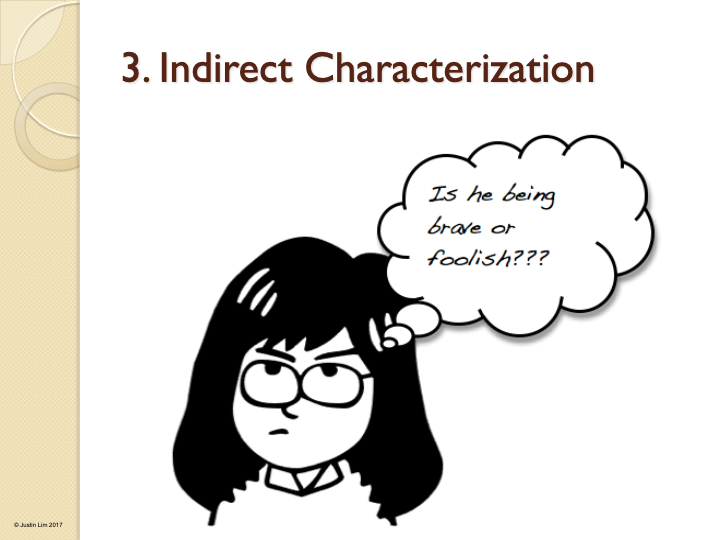
An example of Indirect Characterization:

  • Sarah sits alone on the bus. She scowls all the time and rolls her eyes. She wears combat boots and carries a pocket knife. Once, she pushed a little boy down for no reason.

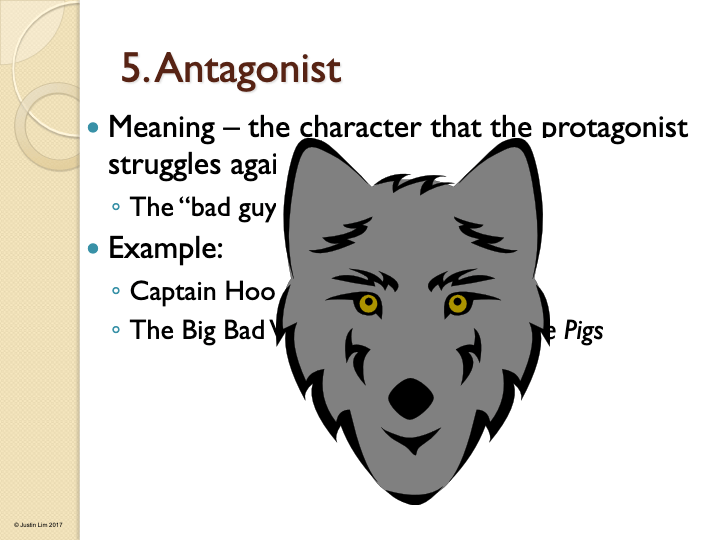
  • You can infer from this that Sarah is mean or bad or negative, because the author is INDIRECTLY telling you Sarah is mean or bad or negative.

9

Slide image

10

Slide image

11

Slide image

12

Slide image

13

Slide image

14

Slide image

15

Slide image

16

Slide image

17

Slide image

18

Slide image

19

Multiple Choice

The good guy or hero in a story is the....

1

Protagonist

2

Antagonist

20

Multiple Choice

A character that changes throughout the story - learns a lesson or matures - is...

1

Static

2

Dynamic

21

Multiple Choice

Uncle Jon smells bad and wears old clothes.

1

Direct Characterization

2

Indirect Characterization

22

Multiple Choice

Connor is a dishonest boy, with a loud mouth and an obnoxious manner.

1

Direct Characterization

2

Indirect Characterization

23

Multiple Choice

Sally screamed at the top of her lungs, "I want more candy!"

1

Indirect-Thoughts

2

Indirect-Speech

3

Indirect-Action

4

Indirect-Effects on Others

5

Indirect-Looks

24

Multiple Choice

The students in the back row glared at Stephen who was hiding a cheat-sheet under his leg during the math test.

1

Indirect-Thoughts

2

Indirect-Speech

3

Indirect-Action

4

Indirect-Effects on Others

5

Indirect-Looks

25

Multiple Choice

Winn wondered why Joe would be so mean to her.

1

Indirect-Thoughts

2

Indirect-Speech

3

Indirect-Action

4

Indirect-Effects on Others

5

Indirect-Looks

26

Multiple Choice

He was tall and lean, with dark brown hair and blue eyes.

1

Indirect-Thoughts

2

Indirect-Speech

3

Indirect-Action

4

Indirect-Effects on Others

5

Indirect-Looks

27

Multiple Choice

Henry threw the winning touchdown pass with ease.

1

Indirect-Thoughts

2

Indirect-Speech

3

Indirect-Action

4

Indirect-Effects on Others

5

Indirect-Looks

28

Multiple Choice

Mary looked away and shifted her feet when her father asked where the money went.

1

Direct Characterization

2

Indirect Characterization

29

Multiple Choice

The dog was vicious and couldn't be trusted around children.

1

Direct Characterization

2

Indirect Characterization

30

Multiple Choice

The author shows the reader about a character's personality

1

Direct Characterization

2

Indirect Characterization

31

Multiple Choice

The author tells the reader about a character's personality

1

Direct Characterization

2

Indirect Characterization

32

Multiple Choice

The process by which the writer reveals the personality of a character

1

Characterization

2

Syntax

3

Writing

4

Elements

33

Multiple Choice

Question image
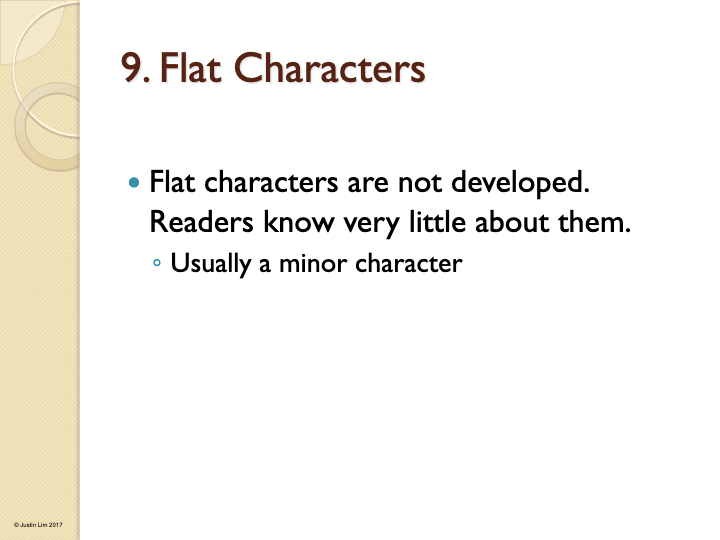
A character that, has few traits and is easily described is...
1
the antagonist
2
the protagonist
3
round
4
flat

34

Multiple Choice

This type of character has layers

1

round

2

flat

3

static

4

dynamic

35

Multiple Choice

A well developed, complex character is

1

round

2

flat

3

static

4

dynamic

36

Multiple Choice

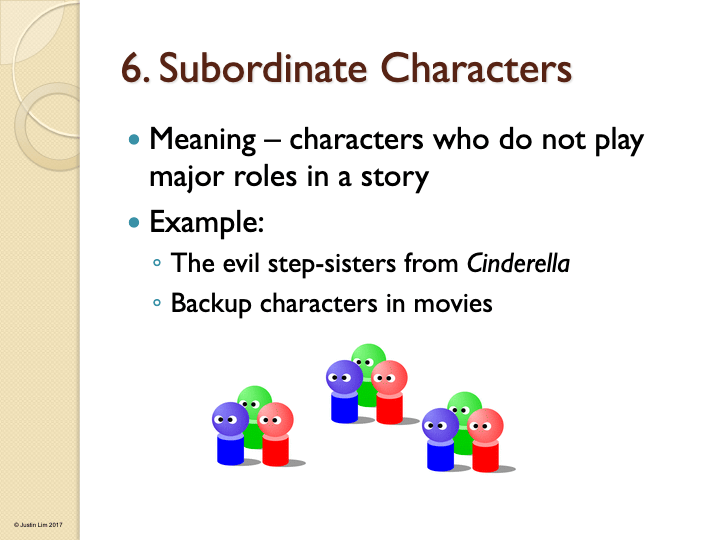
minor characters play a small part in the story

1

true

2

false

37

Multiple Choice

How can you determine if a character is major or minor?
1
the protagonist is always the major character
2
removing a major character will have a significant impact on the plot (i.e., climax, resolution)
3
minor characters typically show up at the end
4
removing a minor charaacter will have a significant impact on the plot (i.e., climax, resolution)

38

Multiple Choice

Even though she loved to dance, Shannon was nervous about joining the dance team.  She tried out and made it, but never said a word to anyone.  At each dance practice, Shannon got a little more comfortable with her team.  By the end of the season, not only did she make friends, but she even taught the team a few dance moves.
1
dynamic character
2
flat character
3
static character
4
antagonist

39

Multiple Choice

Which scenario would make someone a static character? 
1
A protagonist becomes more powerful and knowledgeable over time
2
A protagonist starts off as a good character, but becomes evil 
3
An antagonist eventually becomes kind
4
An antagonist remains evil throughout the story 

40

Multiple Choice

Which scenario would make someone a dynamic character
1
A character breaks her arm. 
2
A character cuts his hair. 
3
A character gains a new perspective on life. 
4
A character dies by the end of the story. 

41

Multiple Choice

Which scenario would make someone a dynamic character
1
A character breaks her arm. 
2
A character cuts his hair. 
3
A character gains a new perspective on life. 
4
A character dies by the end of the story. 

42

Multiple Choice

Question image
TRUE OR FALSE?
In the book (and movie) "Holes", Stanley Yelnats is central to the story. The plot revolves mainly around him. He is an example of an antagonist. 
1
True 
2
False

43

Multiple Choice

Question image
TRUE OR FALSE?
Percy Jackson of "The Lightning Thief" series is a character who starts as a "troubled teen" who gets into a lot of mischief. By the end of the story, he turns into a powerful demi-god who helps save the world. This makes him a dynamic character. 
1
True 
2
False 

44

Multiple Choice

This figure usually creates a conflict for the main character.
1
Protagonist
2
Antagonist 
3
Dynamic character
4
Static character

45

Multiple Choice

TRUE OR FALSE? 
The protagonist of a story is usually also a dynamic character.
1
True
2
False 

46

Multiple Choice

This is a character who does not change or develop over the course of the story. 
1
Protagonist 
2
Antagonist 
3
Dynamic character
4
Static character

47

Multiple Choice

This is a character who changes their personality, attitude, and/or beliefs over time. This change is usually a result of a conflict. 
1
Protagonist 
2
Antagonist 
3
Dynamic character
4
Static character

48

Multiple Choice

This character is central to the story. The plot revolves around him or her. 
1
Dynamic character
2
Static character
3
Protagonist
4
Antagonist

Characterization

How authors develop characters in literary text.

Slide image

Show answer

Auto Play

Slide 1 / 48

SLIDE