Ecology Study Guide
Presentation
•
Science
•
6th - 8th Grade
•
Medium
+3
Standards-aligned
Crystal Winner
Used 39+ times
FREE Resource
9 Slides • 25 Questions
1
Ecology Study Guide
2
Answer the questions aobu the ecosystem below.
How do these organisms interact with one another and the nonliving parts of their environment?
What happens if one of the animals were removed?
What is the source of energy in the ecosystem?
3
Multiple Select
How do these organisms interact with one another and the nonliving parts of their environment? (Choose all that apply)
Plants like the grass and trees use sunlight, wather, and soil.
The animals compete for food and water.
The animals mate and care for their young.
The organisims need air and water to survive.
4
Multiple Select
What happens if one of the animals were removed? (choose all that apply)
There would be no more animals left
There would be an increase in some of the organisms population
There would be less competion for resources
There would be more competition for resources
There would be no change in the ecosystem
5
Multiple Choice
What is the sourse of energy in the ecosystem?
the lion
the grass
the river
the sun
the air
6
7
Multiple Choice
Eats only plants
carnivore
herbivore
omnivore
decomposer
8
Multiple Select
Examples of herbivores (choose all that apply)
cows
deer
snakes
caterpillars
sharks
9
Multiple Choice
These are examples of what type of consumer?
snakes, owls, sharks
herbivoer
carnivore
omnivore
decomposer
10
Multiple Choice
Carnivores are
organisms that eat only plants
organisms that eat only animals
organisms that eat both plants and animals
organisms that eat the remains of plants and animals
11
Multiple Choice
Organims that are omnivores
eat only plants
eat only animals
eat both plants and animals
eat plants and animal remains
12
Multiple Select
Some examples of omnivores are
(choose all that apply)
humans
worms
bears
rabbits
owls
13
Multiple Choice
Organisms that eat plants and animal remains are called
herbivore
carnivore
omnivore
decomposer
14
Autotrophs
organisms that use sun-light or energy stored in chemical compounds to make food
15
Heterotrophs
Organisms that rely on other organism for their energy
16
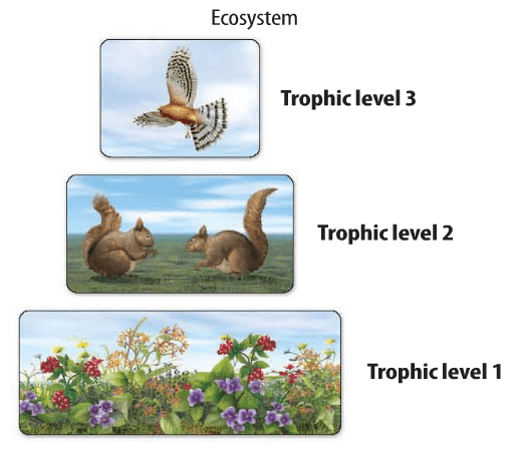
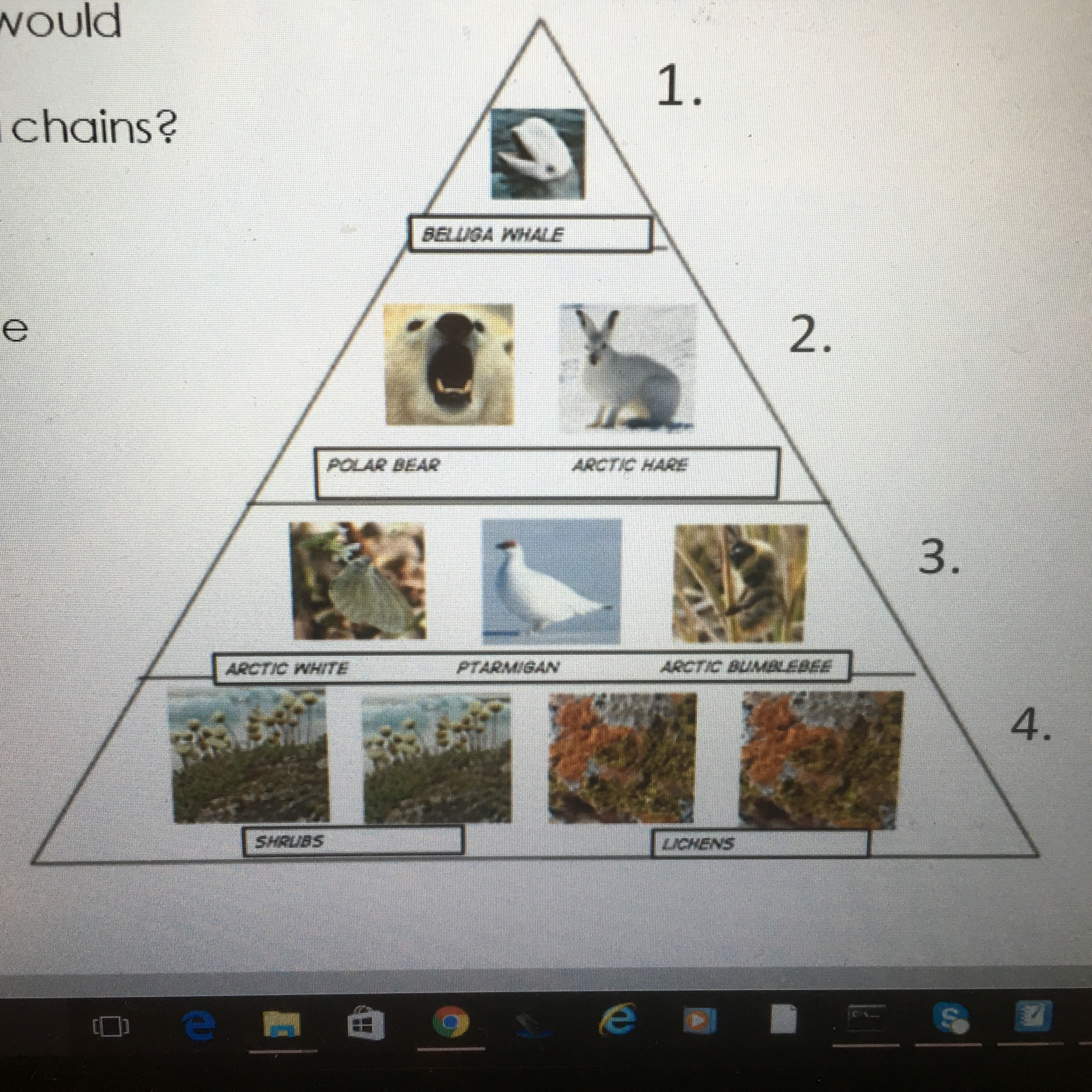
Energy Flow in Ecosystems
How does eneryg flow through an ecosystem?
What's the difference between a food web and a food chain?
Explain the term trophic level
17
Open Ended
How does erergy flow through an ecosystem?
18
Multiple Choice
What's the difference between a food web and a food chain?
A food web shows one possible transfer of energy by eating and being eaten and a food chain shows all possible feeding relationships
A food web shows all possible feeding relationshiops and a food chain shows which organism transfer of energy by eating and being eaten.
19
Multiple Choice
What is a trophic level?
The trophic level is part of the food web.
The trophic leve is a feeding step of an organism in a food chain
A trophic level shows all of the feeding relationshiops in an ecosystem
20
Multiple Choice
21
Multiple Choice
22
Multiple Choice
23
Multiple Choice
24
Multiple Choice
25
Multiple Choice
26
How does the water cycle help plants and animals?
Water helps make soil rich in nutrients which is great for plant growth. Animals and organisms rely on plants for their survival.
27
How do plants and animals obtain the nitrogen they need?
Plants take up nitrogen commpounds through thier roots. Animals obtain these compounds when they eat plants.l When plant and animals die or when animals excrete wastes, the nitrogen compounds in the organic matter re-enter the soil where they are broken down by microrganisms, known as decomposers.
28
How do plants and animals help maintain a balance of carbon dioxide in the atmosphere?
Through the process of photosynthesis, carbon dioxide is pulled from the air to produce food made from carbon for plant growht. Carbon moves from plants to animals through food chains, the carbon that is in plants moves to the animals that eat them.
29
Multiple Choice
30
Multiple Choice
31
Multiple Choice
32
Multiple Choice
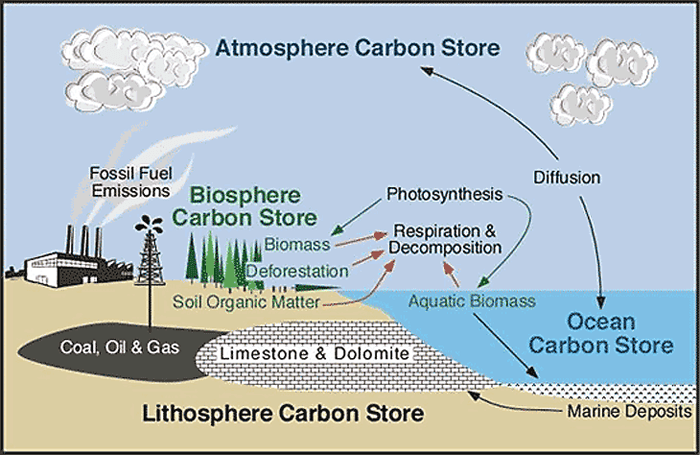
Which of the following is represented by this picture?
the water cycle
the carbon cycle
the nitrogen cycle
the hydrogen cycle
33
Multiple Choice
Which of the following is represented in this picture?
the water cycle
the carbon cycle
the nitrogen cycle
the hydrogen cycle
34
Multiple Choice
Which of the following is represented in this picture?
the water cycle
the carbon cycle
the nitrogen cycle
the hydrogen cycle
Ecology Study Guide

Show answer
Auto Play
Slide 1 / 34
SLIDE

Similar Resources on Wayground
24 questions
Watersheds
Presentation
•
6th - 8th Grade
26 questions
Intro to Waves
Presentation
•
5th - 8th Grade
26 questions
Sexual vs Asexual Reproduction
Presentation
•
6th - 8th Grade
24 questions
Climate Regions Review
Presentation
•
6th - 8th Grade
30 questions
States of Matter
Presentation
•
7th - 8th Grade
27 questions
Levels of Organization
Presentation
•
5th - 7th Grade
28 questions
Contact and Non-contact Forces
Presentation
•
6th - 8th Grade
26 questions
Water Pollution
Presentation
•
6th - 8th Grade
Popular Resources on Wayground
10 questions
5.P.1.3 Distance/Time Graphs
Quiz
•
5th Grade
10 questions
Fire Drill
Quiz
•
2nd - 5th Grade
20 questions
Equivalent Fractions
Quiz
•
3rd Grade
22 questions
School Wide Vocab Group 1 Master
Quiz
•
6th - 8th Grade
20 questions
Main Idea and Details
Quiz
•
5th Grade
20 questions
Context Clues
Quiz
•
6th Grade
20 questions
Inferences
Quiz
•
4th Grade
12 questions
What makes Nebraska's government unique?
Quiz
•
4th - 5th Grade
Discover more resources for Science
8 questions
Amoeba Sister Asexual vs Sexual Reproduction
Interactive video
•
8th Grade
19 questions
Introduction to Properties of Waves
Presentation
•
6th - 8th Grade
16 questions
Interactions within Ecosystems
Presentation
•
6th - 8th Grade
10 questions
Exploring the Layers of the Earth
Interactive video
•
6th - 10th Grade
16 questions
Photosynthesis and Cellular Respiration Review
Quiz
•
7th Grade
20 questions
Abiotic & Biotic Factors
Quiz
•
7th Grade
15 questions
Punnett Squares
Quiz
•
6th Grade
10 questions
Exploring the Evolution of Cell Theory
Interactive video
•
7th Grade