Search Header Logo
Willowridge DNA RNA replication Structure Base Pairing

Willowridge DNA RNA replication Structure Base Pairing

Assessment

Presentation

Biology

9th - 10th Grade

Hard

NGSS
HS-LS1-1, HS-LS3-1, HS-LS3-2

+8

Standards-aligned

Created by

Jorge Rodriguez

Used 47+ times

FREE Resource

48 Slides • 45 Questions

1

DNA RNA Codons
Slide image

2

Slide image

3

Please take out your notebook

to take notes

4

Amoeba Sisters Dna vs DNA

5

Slide image

6

Slide image

7

Genes and DNA

8

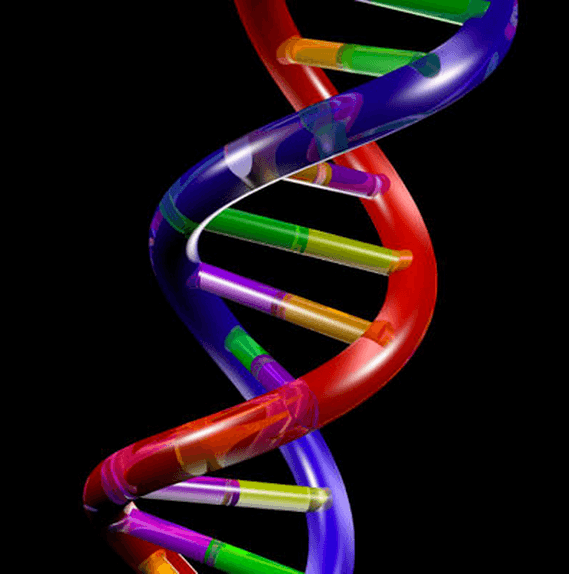
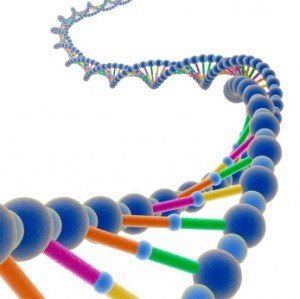
DNA a Double helix

Slide image

9

Slide image

10

Slide image

11

DNA is made of 4 basic nucleotides

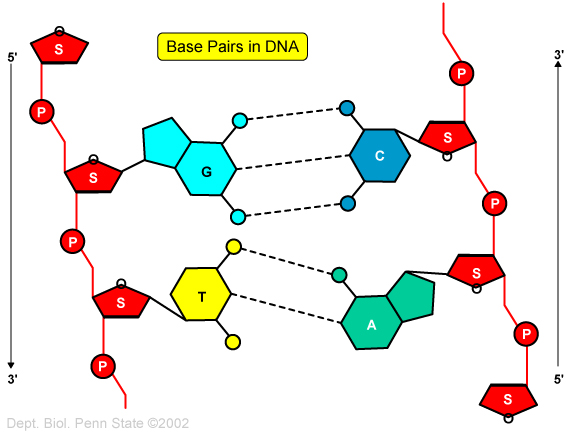
Each nucleotide is made of a Phospate group, a Pentose sugar ( 5 sides) and a Nitrogenous base ( the base pairs are Adenine-Thymine, Cytosine- Guanine)

Where they bond is called a rung. In a ladder each step is called a rung. At the rung the base pairs join as A-T and C-G. They are held together by weak hydrogen bonds which can break easily.

Slide image

12

Nucleotides sequences(their order)

determines what they code for. Only 4 nitrogenous bases code for all of life! all living things have the same 4 nitrogenous bases.


For comparison, everything you do on a computer bases on one and zero only two combinations!

Slide image

13

All our genetic information

Is stored in the 4 complementary bases Adenine, Cytosine, Guanine and Thymine.

Every nucleotide has a Phosphate group, a Pentose sugar and a Nitrogenous base like Adenine, Cytosine, Guanine or Thymine.

Slide image

14

Human DNA consists of

a set combination of 3 billion bases i the right sequences. Over 99% of all the bases are the same in all humans!

Slide image

15

Genetic similarites

Humans and mice are 92% genetically similar.


Humans and chimps are 98% similar.


Humans are 99% similar to other humans. You look different from other humans due to the genes that are expressed (turned on).

Slide image

16

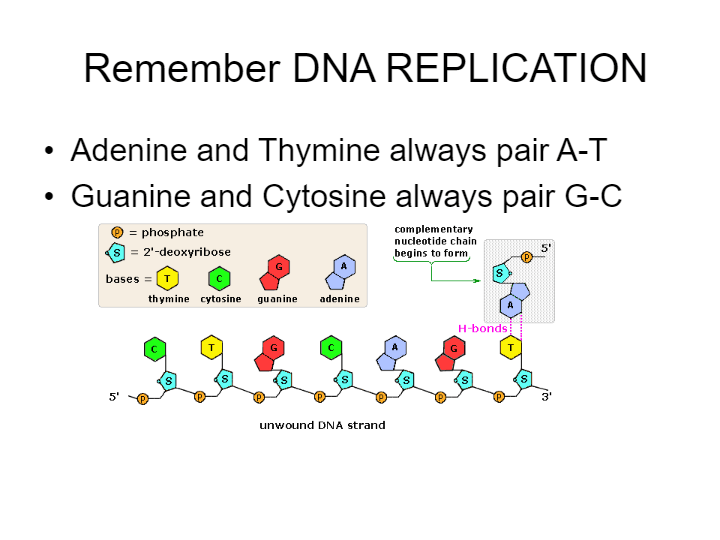
When DNA makes more copies of itself

It is called REPLICATION. A replica is a copy. In the cell there are many nucleotides floating around and match up to the DNA which has opened up. So an Adenine matches a Guanine A-T and the Cytosine matches with a Guanine till there are two copies of the original DNA strand (string).

Slide image

17

DNA Replication

Notice the free floating bases

18

Questions next

19

Multiple Choice

The base pairs in humans and dogs, cats, worms, plants are:

1

50% identical

2

not similar at all

3

100% identical

4

it depends if it is plant or animal

20

Multiple Choice

Each gene carries information which tells your cells :

1

When to eat

2

When to breathe

3

When you should sleep

4

to make a particular protein

21

Multiple Select

Question image

Each nucleotide is made up of these 3 parts:

1

Protein

2

a Phosphate group

3

a Nitrogenous base

4

a Pentose sugar

22

Multiple Choice

The place where nucleotides bond is called a :

1

intersection

2

rung

3

XY site

4

protein

23

Multiple Choice

The hydrogen bonds which holds the base pairs together have this type of bond:

1

Hydrogen bond

2

Ribosome bond

3

Protein bond

4

Glue bond

24

Multiple Choice

What is coded for by DNA is determined by the sequence (order) of :

1

Mitochondria

2

Ribosome

3

the 4 nitrogenous bases

4

2 nitrogenous bases

25

Multiple Choice

IN DNA what are the complementary bases for Adenine and Cytosine in the correct order?

1

Guanine and Thymine

2

Thymine and Adenine

3

Thymine and Guanine

4

Guanine and Adenine

26

Multiple Choice

Question image

what is the correct complemtary strand for the picture?

1

T A C C G T T G

2

T AG G G A T G

3

T A C C G A T G

4

T A G C G A T T

27

Multiple Choice

Yes, Identical twins have the same DNA

1

so they have the same genetic sequence

2

behave the same

3

have slightly different genetic sequence

4

all the above

28

Daughter strands

They are created when complementary base pairs match up to the original parent strand.

Slide image

29

Make your own Replication diagram

Strand 1 will have the following Nucleotide sequences. AAC ACG GAT CCA TTA GCG CGC AAA ACC GGG - Add 10 more sequences for a total of 20. Now create strand 2 from which fits with strand 1.


Next: for each strand add the proper bases to create the correct Daughter strands. . See example next slide

30

What is DNA and how does it work?

31

DNA makes protein rap

32

Slide image

33

Amoeba Sisters DNA Replication

34

Slide image

35

Slide image

36

The human mirror: Identical twins

37

DNA Base pairs

The base pair for Adenine (A) is?


The base pair for Guanine (C) is?

Slide image

38

Slide image

39

Slide image

40

Slide image

41

Slide image

42

Slide image

43

Slide image

44

RNA leaves the nucleus

and joins a ribosome to provide instructions to make protein. It is called messenger RNA or mRNA when it leaves the nucleus to provide instructions to the ribosome for protein making.

Slide image

45

RNA is coded from DNA in a process called Transcription

When DNA is separated by Helicase, only one strand is copied. That copy becomes the RNA

Slide image

46

RNA is made of 4 basic nucleotides

Each nucleotide is made of a Phospate group, a Pentose sugar ( 5 sides) and a Nitrogenous base (Adenine-Uracil and Cytosine-Guanine). Notice that Thymine is replaced by Uracil so it is is A-U not A-T.

RNA is one strand and is the code for making protein. It is the instructions sent out from the DNA.

Slide image

47

DNA vs RNA base pairs

Slide image

48

The sugar in DNA and RNA

The sugar for DNA is Deoxyrobose. The sugar for RNA is Ribose.

DNA is called Deoxyribonucleic acid and RNA is called Ribonucleic acid.

Slide image

49

Slide image

50

Slide image

51

Compare and contrast DNA and RNA

How are DNA and RNA physically different? Which one has a double helix and which one has a single helix (hint: helix means spiral)


Which one must remain in the nucleus at all times?


Which one uses Uracil ?


Which one works with the Ribosome to create protein?


Which one has the sugar Ribose?


52

Slide image

53

DNA replication song

54

Slide image

55

Slide image

56

Slide image

57

Final Questions are next!!

58

Multiple Choice

What is a genome?

1

all of your chromosomes

2

How you look

3

How you behave

4

It helps process sugars

59

Multiple Choice

In RNA the base pairs are

1

A-T G-C

2

A-U G-C

3

A-T G-U

4

AU C-U

60

Multiple Choice

DNA is shaped in a:

1

double helix

2

tightly packed swirl

3

twisted ladder

4

nucleotide

61

Multiple Choice

Question image

What is this a picture of?

1

nucleotide

2

DNA strand

3

chromosome

4

gene

62

Multiple Choice

Hydrogen bonds occur:

1

on the ribbon (between the sugar)

2

between the bases

3

only between A & T

4

only between G & C

63

Multiple Choice

The size and shape of proteins determines:

1

their function

2

their bonds

3

their nucleotides

4

their chromosomes

64

Multiple Choice

What are the parts of a nucleotide?

1

phosphate, sugar, base

2

A, T, G, C

3

Nucleic Acids

4

two base pairs connected

65

Multiple Choice

Which sequence of DNA bases would pair with this partial strand
ATG TGA CAG
1
ATG TGA CAG
2
TAC ACT GTC
3
GTA AGT GAC
4
CAT TCA CTG

66

Multiple Choice

Question image
The molecule pictured is a monomer of _______.
1
RNA
2
DNA
3
a carbohydrate
4
a protein

67

Multiple Choice

Question image
What process is shown in the diagram?
1
replication
2
transcription
3
mitosis
4
translation

68

Multiple Choice

What are the three components of a nucleotide?
1
sugar, hydrogen, nitrogen base
2
sugar, oxygen, nitrogen base
3
sugar, phosphate, nitrogen base
4
sugar, phosphate, protein

69

Multiple Choice

Question image
The drawing shows the structure of what molecule?
1
A DNA molecule
2
A lipid molecule
3
A carbohydrate molecule
4
A protein molecule

70

Multiple Choice

Question image
In a molecule of double-stranded DNA, the amount of adenine present is always equal to the amount of _________.
1
cytosine
2
guanine
3
thymine
4
uracil

71

Multiple Choice

Which of the following monomers are repeatedly joined together to form a strand of DNA?
1
amino acids
2
nucleotides
3
fatty acids
4
polysaccharides

72

Multiple Choice

Which sequence of complementary DNA bases would pair with this partial strand

ATG TGA CAG?

1

ATG TGA CAG

2

TAC ACT GTC

3

GTA AGT GAC

4

CAT TCA CTG

73

Multiple Choice

What happens to the RNA code when it leaves the nucleus?
1
It remains as RNA forever
2
It finds a ribosome and is read
3
It leaves the cell
4
It returns to the nucleus

74

Multiple Choice

WHY must we use RNA if we already have genetic code in DNA?
1
RNA is portable and can be read by the ribosome
2
RNA is more accurate than DNA
3
The cell needs a backup code and uses RNA
4
DNA and RNA can be used interchangeably 

75

Multiple Choice

Which of the following is true of DNA?
1
It can sometimes leave the nucleus
2
It never leaves the nucleus
3
It is portable
4
It is temporary

76

Multiple Choice

Which molecule holds ALL of an organisms' genes ALL the time?
1
DNA
2
RNA

77

Multiple Choice

Which of the following would most correctly describe DNA?
1
Permanent (should never break down)
2
Temporary (breaks down after it is read)

78

Multiple Choice

In Eukaryotic cells, where is DNA ALWAYS located?
1
Cytoplasm
2
Nucleus
3
Outside of the cell
4
DNA is always moving around

79

Multiple Choice

Question image
What does this picture represent?
1
amino acid
2
base pairing
3
nucleotide
4
the DNA molecule

80

Multiple Choice

Question image
The following picture must be
1
DNA because it's double stranded
2
RNA because it's single stranded
3
DNA because it's single stranded
4
RNA because it's double stranded

81

Multiple Choice

Question image
Nitrogenous bases are joined by which type of bond?
1
polar bonds
2
ionic bonds
3
covalent bonds
4
hydrogen bonds

82

Multiple Choice

A process in which DNA has the unique ability to make an exact copy of itself.
1
Replication
2
Translation
3
Transcription

83

Multiple Choice

What are the three components of a nucleotide?
1
sugar, hydrogen, nitrogen base
2
sugar, oxygen, nitrogen base
3
sugar, phosphate, nitrogen base
4
sugar, phosphate, protein

84

Multiple Choice

Question image
What determines the code, or information, of a DNA molecule?
1
the shape (structure) of the nitrogen bases
2
the order (sequence) of the nitrogen bases
3
the color of the nitrogen bases
4
the frequency (number) of nitrogen bases

85

Multiple Choice

Question image
In a molecule of double-stranded DNA, the amount of Adenine present is always equal to the amount of
1
cytosine
2
guanine
3
thymine
4
uracil

86

Multiple Choice

Guanine bonds with ______________.
1
Adenine
2
Guanine
3
Cytosine
4
Thymine

87

Multiple Choice

Which of the following units are repeatedly joined together to form a strand of DNA?
1
amino acids
2
nucleotides
3
fatty acids
4
polysaccharides

88

Multiple Choice

Question image
Which of the following best describes a DNA molecule?
1
double helix
2
contains ribose
3
made of amino acids
4
contains Uracil

89

Multiple Choice

Which sequence of DNA bases would pair with this partial strand
ATG TGA CAG
1
ATG TGA CAG
2
TAC ACT GTC
3
GTA AGT GAC
4
CAT TCA CTG

90

Multiple Choice

DNA has the nitrogen bases____________________
1
adenine and thymine
2
cytosine and glycol
3
cytosine and guanine
4
adenine, thymine, cytosine and guanine

91

Multiple Choice

DNA is the code for ______________.
1
genetic traits
2
 amino acids
3
enzymes

92

Multiple Choice

DNA cannot leave the __________________.
1
mitochondria
2
nucleolus
3
nucleus
4
neutron

93

Multiple Choice

DNA contains _____________________sugar.
1
fructose
2
deoxyribose
3
galactose
4
ribose

DNA RNA Codons

Slide image

Show answer

Auto Play

Slide 1 / 93

SLIDE