Search Header Logo
Unit 2B

Unit 2B

Assessment

Presentation

•

Chemistry

•

8th - 12th Grade

•

Medium

•
NGSS
HS-PS4-1, HS-PS1-8, HS-PS4-3

+2

Standards-aligned

Created by

Jessica Cupo

Used 5+ times

FREE Resource

10 Slides • 37 Questions

1

Unit 2B Quiz Review

Unit 2B: Isotopes & Energy and Atoms
Slide image

2

Lesson 5 Review Isotopes

Round 1: May the Odds be ever in your favor

3

Multiple Choice

Question image

What is an Isotope?

1

An atom that has a different number of neutrons (that is, a greater or lesser atomic mass) than the standard for that element

2

An atom that has a different number of protons (that is, a greater or lesser atomic mass) than the standard for that element

3

An atom that has a different number of electrons (that is, a greater or lesser atomic mass) than the standard for that element

4

An atom that has a different number of protons, neutrons and electrons (that is, a greater or lesser atomic mass) than the standard for that element

4

Multiple Choice

The atomic mass is the same for all isotopes of an element

1

True

2

False

5

Multiple Choice

The atomic number is the same for all isotopes of an element

1

True

2

False

6

Multiple Choice

The mass number represents the number of subatomic particles in the nucleus, which is equal to the sum of the number of protons + number of neutrons

1

True

2

False

7

Multiple Choice

Question image
How many neutrons does B (Boron) contain?
1
5
2
11
3
6
4
10.811

8

Multiple Choice

Question image

What element is this? What is the mass number of this atom?

1

sodium, 23

2

magnesium, 23

3

magnesium, 12

4

sodium, 11

9

Multiple Choice

Question image

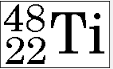
How many protons does this isotope of titanium have? Hint titanium has an atomic number of 22.

1

48

2

22

3

26

4

70

10

Multiple Choice

The atomic mass is equal to _.

1

the number of protons only

2

the number of neutrons only

3

the total number of protons and neutrons

4

the number of protons, neutrons, and electrons.

11

Multiple Choice

The atomic number is equal to _.

1

the number of protons and electrons

2

the number of neutrons only

3

the total number of protons and neutrons

4

the number of protons neutrons and electrons

12

Round Two!

To the Victors go the spoils!

13

Multiple Choice

4.35% of all X atoms have a mass of 39.946 amu. 83.79% have a mass of 41.941 amu, 9.50% have a mass of 42.941 amu, and 2.36% have a mass of 43.939 amu. What is the average atomic mass of atom X?

1

41.97 amu

2

42.19 amu

3

10.43 amu

4

40.04 amu

14

Multiple Choice

Chlorine has two naturally occurring isotopes, Cl-35 and Cl-37, The atomic mass of chlorine is 35.45. Which of these two isotopes of chlorine is more abundant?

1

Cl-35

2

Cl-37

3

Cannot be determined from the information provided.

15

Multiple Choice

The atomic mass of an element depends upon the ___.

1

relative abundance of protons in that element

2

mass and relative abundance of each isotope of that element

3

mass of each isotope of that element

4

mass of each electron in that element

16

Multiple Choice

The atomic mass of an element is the ___.

1

average of the mass number and the atomic number for the element

2

weighted average of the masses of the isotopes of the element

3

total mass of the isotopes of the element

4

total number of subatomic particles in the nucleus

17

Multiple Choice

Which answer choice describes the subatomic particles and their respective charges?
1
p-    e+    n
2
p+    e     n-
3
p+    e-    n
4
p-     e+    n

18

Multiple Choice

Adding or subtracting neutrons (charge = 0, mass = 1) makes the element change into an...
1
ion
2
mixture
3
isotope
4
neutral atom

19

Multiple Choice

Question image

What is the name of the pictured isotope?

1

Copper-29

2

Copper-63

3

Copper-34

4

CopperWopperHopperBopper

20

Multiple Choice

How many neutrons does the isotope below have?     89 36Kr
1
53
2
36
3
89
4
125

21

Multiple Choice

What quantities vary between isotopes of an element?
1
protons, electrons, and atomic mass
2
protons, electrons, and atomic number
3
neutrons and electrons
4
neutrons and atomic mass

22

Multiple Choice

Question image
In a correctly written symbol what would be located in the "A" position?
1
number of neutrons
2
atomic number
3
number of electrons 
4
mass number

23

Multiple Choice

Question image
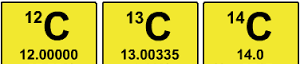
What do these isotopes of carbon all have in common?
1
neutrons & mass number
2
atomic number and neutrons
3
atomic number and electrons
4
protons, atomic number, and mass number

24

Round Three!

Lesson 6: Energy and Atoms!

25

Multiple Choice

Question image

Which color has the longest wavelength?

1

Yellow

2

Red

3

Green

4

Purple

26

Multiple Choice

Question image

Which of the following is not in the electromagnetic spectrum?

1

Light waves

2

Sound waves

3

Radio Waves

4

X-rays

27

Multiple Choice

Question image

Which type of wave is shown in the above picture?

1

Sound

2

Longitudinal

3

Electromagnetic

28

Multiple Choice

The height of the wave from the rest position is known as the _____________.
1
amplitude
2
crest
3
trough
4
wavelength

29

Multiple Choice

What are electromagnetic waves?
1
sound waves
2
electric & magnetic fields (energy) that travel through empty space very quickly
3
Someone's name
4
things like longitudinal waves

30

Multiple Choice

How much of the electromagnetic spectrum is visible?

1

All of it

2

None of it

3

Most of it

4

Only a small part

31

Multiple Choice

The distance between two crests or two troughs of a wave is called:
1
frequency
2
amplitud
3
wavelength
4
hertz

32

Multiple Choice

As the frequency of an electromagnetic wave increases, the amount of energy in that wave...
1
increases.
2
decreases.
3
stays the same.

33

Multiple Choice

Question image
High frequency waves have _________ wavelengths.
1
varying
2
long
3
the same
4
short

34

Multiple Choice

Question image
Which of the following electromagnetic waves has the lowest energy?
1
gamma ray
2
infrared wave
3
visible light wave
4
microwave

35

Multiple Choice

How are electromagnetic waves different from other waves? 
1
They have very short wavelengths 
2
They transmit energy instead of matter 
3
They can travel through empty space
4
They can change direction by reflection 

36

Multiple Choice

Which section of the spectrum is the ONLY one we can see?
1
X-rays
2
Visible Light
3
Gamma Rays
4
Ultraviolet Rays

37

Multiple Choice

Question image
Which has the SHORTEST wavelength and, therefore, the highest frequency/most energy
1
Radio waves
2
Ultraviolet Rays
3
Gamma Rays
4
X-rays

38

Multiple Choice

Question image
Which has the LONGEST wavelength and, therefore, the lowest frequency/energy
1
Gamma Rays
2
Radio Waves
3
Visible Light
4
Infrared rays

39

Multiple Choice

Select the correct order of waves on the EMS from the longest wavelength to the shortest wavelength

1

Radio, Micro, Infra, Visible, Ultra, X-ray, Gamma

2

Gamma, X-ray, Ultra, Vis, Infra, Micro, Radio

3

Vis, Micro, Infra, Ultra, X-ray, Gamma, Radio

4

Micro, Radio, Vis, Infra, Ultra, X-ray, Gamma

40

Multiple Choice

True or false: as you move along the spectrum, radio to gamma waves, the wavelengths decrease in size (get smaller)
1
true
2
false

41

Multiple Choice

A wave with a large wavelength will have a ______ frequency and _____ energy
1
high, low
2
high, high
3
low, high
4
low, low

42

Questions?

Please ask questions! We will use remaining time to go over some example problems, again. They should all look familiar by now, we've been sneaking reviews in all week with the bell ringers and exit tickets.


Congrats to our champions!

43

Slide image

44

Slide image

45

Slide image

46

Slide image

47

Slide image

Unit 2B Quiz Review

Unit 2B: Isotopes & Energy and Atoms

Slide image

Show answer

Auto Play

Slide 1 / 47

SLIDE