

8.5(D) & 8.5(E) - Checkpoint 3 Review

Presentation
•
Chemistry
•
8th Grade
•
Practice Problem
•
Medium
+3
Standards-aligned

Leonel ResendizLlanas
Used 68+ times
FREE Resource
23 Slides • 67 Questions
1
8.5(D) & 8.5(E) - Checkpoint 3 Review
8th Grade Science
2
3
How are elements represented?
- Elements are represented by a chemical symbol.
- This can be a single capital letter OR a capital letter with a lowercase letter.
- ONLY ELEMENTS are on the Periodic Table of Elements - NO COMPOUNDS.

4
Multiple Choice

What is the symbol for Iron?
5
Multiple Choice

What is the name of the element with the symbol N?
6
Multiple Choice

What is the chemical symbol for Hydrogen?
7
What are Compounds?
They are represented by a chemical formula.
The chemical formula has TWO or MORE elements.
Every capital letter is a new element present.

8
Multiple Choice
9
Multiple Choice

Can compounds be found in the periodic table?
10
Multiple Choice

Which of the following is not a compound?
11
Multiple Choice
12
Subscripts
The small number written directly behind the symbol of an element within a chemical formula.
It represents the number of atoms of that element.
If you DO NOT see a subscript it means there is ONLY ONE atom.

13
Subscripts
If there are parenthesis you must multiply the subscript by all the subscripts (INSIDE) the parenthesis.
Remember if you DO NOT see a subscript just multiply by one.

14
Multiple Choice
15
Multiple Choice
16
Multiple Choice
17
Multiple Choice
18
Coefficients
Number on the left side (or in front) of an element or formula.
The coefficient tells you how many molecules or compounds you have.
You must distribute the coefficient by multiplying it with each subscript.

19
Coefficients
You must distribute the coefficient by multiplying it with each subscript.
REMEBER,if there are parenthesis you must multiply the subscript by all the subscripts (INSIDE) the parenthesis.
THEN multiply all your atoms by the coefficient.

20
Multiple Choice

Which chemical formula below matches the image shown here?
21
Multiple Choice
22
Multiple Choice
23
Multiple Choice
24

Let's Count Atoms!
25
Multiple Choice

Are there any compounds on the periodic table?
26
Multiple Choice

How many atoms are present if there is no subscript following the element symbol?
27
Multiple Choice
28
Multiple Choice

How many Aluminum atoms are in Al2O3?
29
Multiple Choice
30
Multiple Choice
31
Multiple Choice
32
Multiple Choice
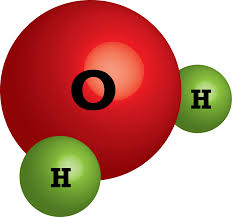
How many atoms of Hydrogen are in this compound?
33
Multiple Choice
34
Multiple Choice

How many Nitrogen atoms are in (NH₄)₂CrO₄?
35
Multiple Choice
36
Multiple Choice
37
Multiple Choice
38
Multiple Choice
39
Multiple Choice
40
Multiple Choice
41
42

43
Physical Change
ONLY changes the form or the appearance of a substance.
Does not change or form a new substance.
Phase Changes

44

45
Multiple Choice
46
Multiple Choice
47
Multiple Choice
48
Multiple Choice
49
Multiple Choice
50
Chemical Changes
Substance is transformed into one or more different substances, such as when iron becomes rust.
IRREVERSIBLE - Cannot change it back to its original form.
A new product is produced.

51

52
Multiple Choice

53
Multiple Choice

54
Multiple Choice

55
Multiple Choice
56
Multiple Choice
57
Multiple Choice
58
Multiple Choice

59
Chemical Reactions
a process in which atoms of one or more substances (reactants) are rearranged to form one or more new substances (products).
Chemical changes are the result of chemical reactions.

60
Indicators of a Chemical Reaction:
COLOR CHANGE
GAS PRODUCTION
LIGHT PRODUCTION
TEMPERTURE CHANGE
SMELL/ODOR
PRECIPITATE

61
Open Ended
62

63
Multiple Choice

Identify what type of change happening in the picture below...
64
Multiple Choice
65
Multiple Choice
66
Multiple Choice
67
Multiple Choice
68
Multiple Choice
69
The Law of Conservation of Mass
Mass or matter cannot be created nor destroyed.
Reactants EQUAL Products

70
Reactants
What you START with.
LEFT side.
EQUAL to the products.

71
Products
What you END with.
RIGHT side.
EQUAL to the reactants.
72
Multiple Choice
73
Multiple Choice
74

Mass is NEITHER created nor destroyed.
75
Multiple Choice
76
Multiple Choice
77
Multiple Choice
78
Multiple Choice
79
Multiple Choice
80
Multiple Choice
81
Multiple Choice
82
Multiple Choice

83
Multiple Choice
84
Multiple Choice
85
Multiple Choice
86
Multiple Choice

87
Multiple Choice

88
Multiple Choice

How many Carbons are present on the reactant side?
89
Multiple Choice
90

Study and complete your exit ticket!
8.5(D) & 8.5(E) - Checkpoint 3 Review
8th Grade Science
Show answer
Auto Play
Slide 1 / 90
SLIDE

