

Outer Planets

Presentation
•
Science
•
4th Grade
•
Practice Problem
•
Medium
Standards-aligned

Natalie Broome
Used 1K+ times
FREE Resource
10 Slides • 10 Questions
1
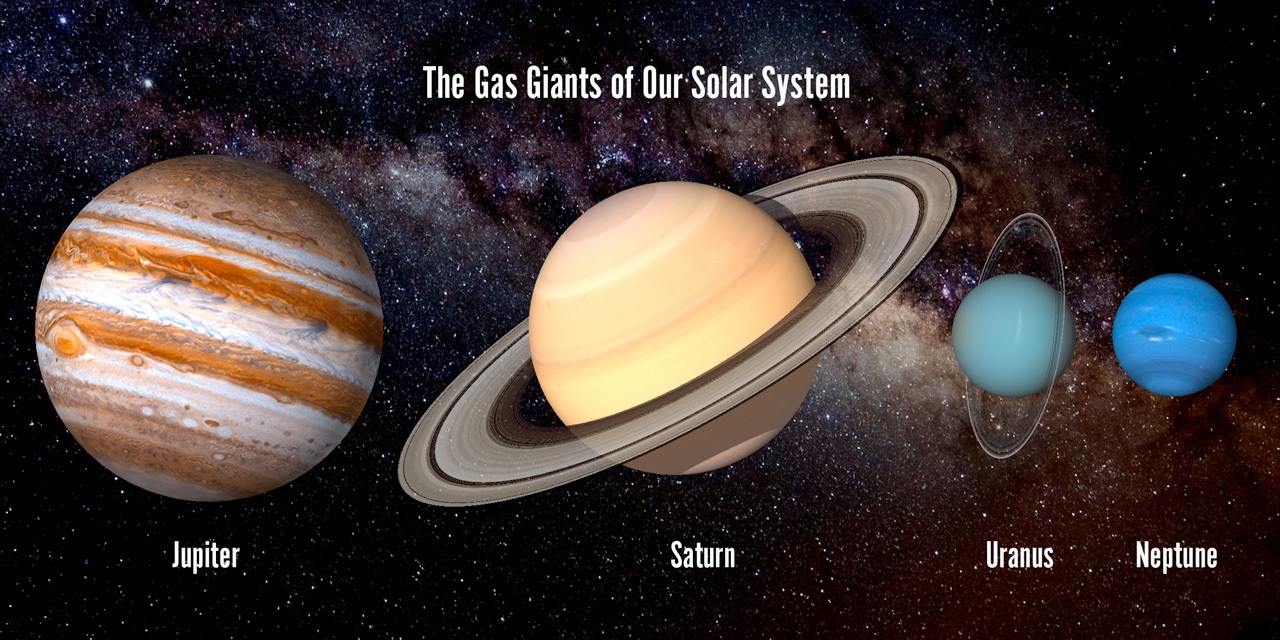
Outer Planets
What are their characteristics?
2
Outer Planets
Made Of: Gases
Size: Larger
Location: Farthest from the Sun

3
Multiple Choice
4
Multiple Choice
5
Jupiter
Order from Sun: 5th
Number of Moons: 79 (53 named, 26 awaiting names)
Temperature: Coldest -260F, Warmest -150F
Atmosphere: Gases - hydrogen, helium, methane & ammonia, Stormiest (Great Red Spot)

6
Jupiter: Interesting Facts
-Largest Planet
-Thin, cold atmosphere becomes thicker and hotter and turns into a thick, dark fog which becomes so pressurized it turns into a liquid
-Named after the Roman sky-god

7
Multiple Choice
8
Multiple Select
9
Saturn
Order from Sun: 6th
Number of Moons: 82 (most in solar system)
Temperature: Coldest -300F, Warmest -188F
Atmosphere: Gases - hydrogen and helium

10
Saturn: Interesting Facts
-Rings are made of ice crystals (some as big as houses) - must use a telescope on Earth to see them
-Named after the Roman god of agriculture

11
Multiple Choice
12
Multiple Select
13
Uranus
Order from Sun: 7th
Number of Moons: 27
Temperature: Coldest -370F, Warmest -243F
Atmosphere: hydrogen & methane (absorbs red light and scatters blue light)

14
Uranus: Interesting Facts
-Coldest planet in our solar system
-Rotates like a barrell (on its side) instead of a top
-Named after Greek god of the sky

15
Multiple Choice
16
Multiple Select
17
Neptune
Order from Sun: 8th
Number of Moons: 14
Temperature: Coldest -328F, Warmest -218F
Atmosphere: Gases - helium & methane, windiest

18
Neptune: Interesting Facts
-Most violent weather
-Triton - moon that orbits planet backward
-Named after Roman god of the sea

19
Multiple Choice
20
Multiple Select
Outer Planets
What are their characteristics?
Show answer
Auto Play
Slide 1 / 20
SLIDE


