Search Header Logo
Cell Division Review for Test

Cell Division Review for Test

Assessment

Presentation

•

Science, Biology

•

7th Grade

•

Medium

Created by

Sheryl Mclaughlin

Used 26+ times

FREE Resource

12 Slides • 19 Questions

1

Cell Division

Please play over and over until you understand the content, so you will excel on your test.

Slide image

2

3

4

Mitosis

  • A cell duplicates its DNA and divides into two clone daughter cells

  • Eukaryotic cells or cells with a nucleus undergo Mitosis

  • Mitosis helps grow new tissues and repair wounded ones

  • Most cells (somatic) undergo Mitosis to grow and repair tissue (not sex cells though)


Slide image

5

Mitosis vs Meiosis

  • Human haploid cells (gametes) have 23 chromosomes

  • Human diploid cells have 46 chromosomes

  • mitosis produces two new cells that are identical to the parent cell


Slide image

6

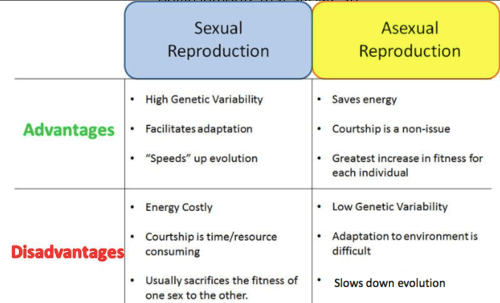
Cells Reproduce Two Ways

  • Sexually

  • Asexually


Slide image

7

Forms of Asexual Reproduction

  • Binary fission

  • Budding

  • Fragmentation

8

Binary Fission

  • A parent cell splits into two identical daughter cells

Slide image

9

Budding

  • A parent cell forms a bud that remains attached until it is able to live on its own

Slide image

10

Fragmentation

  • A parent organism breaks into fragments, with each fragment developing into a new organism

Slide image

11

Asexual Reproduction

  • No variation or diversity (unless a mutation occurs)

  • Exact copy of DNA

  • Equal amount of genetic information

  • Identical to parent

Slide image

12

Sexual Reproduction

  • Creates variation or diversity within the population

  • Meiosis creates four new cells or gametes (sex cells)

  • Mother gives half of the chromosomes (egg) and father gives half of the chromosomes (sperm)

  • In humans, each gamete (sex cell) has 23 chromosomes

Slide image

13

Multiple Select

Question image

Select all of the phrases that apply to asexual reproduction in organisms. (3 are correct)

1

requires two parents

2

little variation in offspring

3

only one type of cell involved

4

duplicates its genetic material

5

occurs over a long amount of time

14

Multiple Choice

Question image

Which is the result of mitosis?

1

two identical nuclei

2

four unique cells

3

a decrease in genes

4

a new protein

15

Multiple Choice

Question image

Which process is shown in the plant cell?

1

cell growth

2

cell reproduction

3

metamorphosis

4

photosynthesis

16

Multiple Choice

The cell cycles describes the processes that takes place as a cell

1

absorbs nutrients

2

makes proteins

3

repairs old cells

4

forms new cells

17

Multiple Choice

Question image

Why would a scientist use asexual reproduction to grow two offspring of a plant, instead of using sexual reproduction

1

The plants would be an exact genetic match

2

The plants would have fewer recessive traits

3

The plants would have greater genetic diversity

4

The plants would be more likely to mutate

18

Multiple Choice

Plants can reproduce sexually and sexually. If one offspring is produced sexually, while the other is produced asexually, what will only the sexually produced offspring have?

1

both inherited and acquired traits

2

an new combination of traits

3

beneficial genetic traits

4

a complete set of traits

19

Multiple Choice

Question image

Last year, Steve was shorter than his brother. This year, Steve is taller than his brother. What cell process is directly responsible for Steve's growth?

1

diffusion

2

mitosis

3

osmosis

4

respiration

20

Multiple Choice

Question image

A particular peach tree produces peaches that are more resistant to disease than other peaches. What method would reproduce these exact peaches?

1

use bees to pollinate the flowers

2

reproduce by cross-pollination of different peach trees

3

increase the diversity in the peach tree

4

ensure that the peach tree reproduces asexually

21

Multiple Choice

Question image

The cell cycle is necessary in order for new cells to replace damaged or dead cells. In which part of the cycle are new cells formed?

1

Growth

2

DNA Synthesis

3

Preparation for Division

4

Mitosis

22

Multiple Choice

Question image

At the end of the mitotic cell cycle, a cell divides into two cells. What must happen before the cell divides? (hint: during interphase)

1

The number of organelles doubles

2

Chromosomes must be copied

3

Four nuclei must be formed

4

The membrane thickens

23

Multiple Choice

Question image

A bacterium can reproduce quickly by splitting into two cells. Which of these best describes the genetic make-up of the resulting two cells?

1

They have the same amount of genetic material and are identical

2

They have the same amount of genetic material but are not identical

3

They have half the amount of genetic material which grows in size

4

They have half the amount of genetic material, but then it duplicates itself

24

Multiple Choice

Question image

Potatoes can reproduce asexually. Each sprout on a parent potato can grow into a new plant. How does the genetic material in the sprout compare to the parent potato?

1

The sprout has a random genetic assortment

2

The sprout has twice the genetic material of the parent plant

3

The parent potato has twice the genetic material of the sprout.

4

Both the sprout and the parent potato have the same genetic identity.

25

Multiple Choice

Question image

The diagram illustrates a type of reproductive process in an organism. Based on this information, what conclusion about the offspring labelled A is supported?

1

It has acquired traits in response to its environment

2

It has a lower mass of genetic material than offspring B

3

It has the same genetic material as its parent

4

It has half as much genetic material as its parent

26

Multiple Choice

Some organisms reproduce sexually while other organisms reproduce asexually. Which would be an example of asexual reproduction?

1
2
3
4

27

Multiple Choice

Question image

Vertebrate animals produce offspring by sexual reproduction. What is an advantage of this type of reproduction?

1

Time and energy is used to find a mate in the population

2

There is increased genetic diversity within the population

3

The offspring grows faster than one that is reproduced asexually

4

The offspring receives its DNA from one parent and is identical to that parent

28

Multiple Choice

Question image

Cell division is necessary for an organism to

1

obtain nutrients

2

grow and reproduce

3

make proteins

4

conserve matter and energy

29

Multiple Choice

The picture shows the graph of the experiment performed by two students. Which statement is the best hypothesis for the experiment?

1

Plants grow at a fester rate when they receive more water

2

Fertilizer in soil increases the rate of photosynthesis in plants

3

Moss and fertilizer in soil affect how much water is retained in the soil

4

Plants receive the most nutrients when put in soil mixed with moss

30

Multiple Choice

Question image

Mice transfer their genetic information to their offspring by meiosis. If a mouse has 20 chromosomes, how many chromosomes did it get from its mother?

1

20

2

10

3

40

4

21

31

Multiple Select

Question image

Check all the statements that accurately describes how genetic information is transferred by meiosis.

1

two daughter cells

2

four daughter cells

3

identical genetic information to the parent cells.

4

half the number of chromosomes that are present in the parent cells

Cell Division

Please play over and over until you understand the content, so you will excel on your test.

Slide image

Show answer

Auto Play

Slide 1 / 31

SLIDE