

Electron Configuration

Presentation
•
Chemistry
•
10th - 12th Grade
•
Practice Problem
•
Medium
Standards-aligned

Audrey Nebzydoski
Used 389+ times
FREE Resource
13 Slides • 7 Questions
1
Electron Configuration
Mrs. Nebzydoski's Lesson

2
3
Multiple Choice
4
5
6
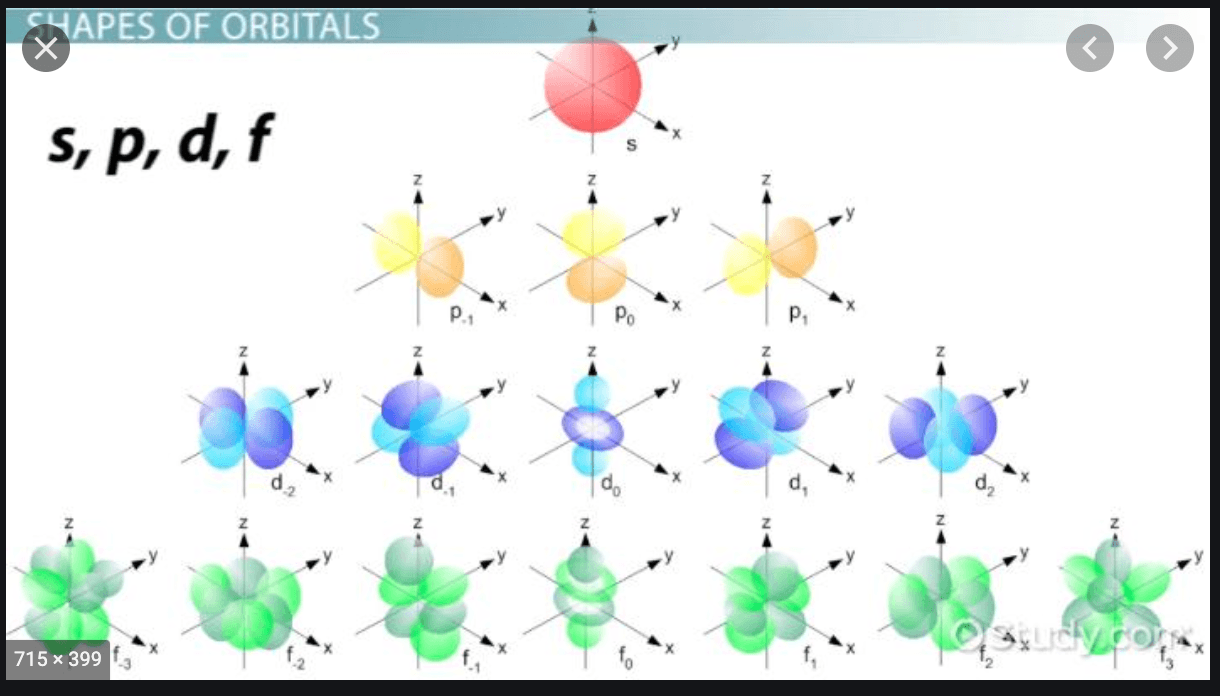
Orbital shapes
As you can see, the s orbital is a circular path around the nucleus and that is why there is only one option. The p orbital is a figure-8 path that can be on the x-axis, the y-axis, or the z-axis in a 3-D atom. This is why there are 3 different p orbitals.

7
Multiple Select
8
9
Multiple Choice
10
Periodic Table and Orbitals
The periodic table gets its shape from the type of atomic orbitals that are filled in the atoms of the collumns.

11
The blocks of the periodic table
As you can see here the "s" block is shown on the left in pink, the "p" block is on the right in orange, the "d" block is in the middle shown in blue, and the "f" block is shown below in yellow.

12
Multiple Choice
13
Columns on the periodic table and the orbitals...
The s block contains 2 columns
The p block contains 6 columns
The d block contains 10 columns
The f block contains 14 columns

14
Think about it....
The s block contains 2 columns and the "s" orbitals can contain 2 electrons. The p block contains 6 columns and the "p" orbitals can contain up to 6 electrons. The d block contains 10 columns and the the "d" orbitals can contain up to 10 electrons! (This is NOT a coincidence!)

15
Multiple Choice
16
Orbital filling
Electrons fill these orbitals in a way that allows them to take the easiest root possible. The LOWEST energy levels are filled first.

17
Orbital filling cheat sheet
You copied this orbital filling diagram cheat sheet in your notes. It is important that you always use it to fill electrons into orbitals when completing electron configurations.

18
Multiple Choice
19
Multiple Choice
20
Electron Configuration
Mrs. Nebzydoski's Lesson
Show answer
Auto Play
Slide 1 / 20
SLIDE


