


Tutoring - Solutions/Separating mixtures
Presentation
•
Science
•
8th Grade
•
Practice Problem
•
Medium
+4
Standards-aligned
Nicole Cole
Used 107+ times
FREE Resource
7 Slides • 30 Questions
1
Tutoring - Solutions/Separating mixtures
2
Multiple Choice
3
Multiple Choice
4
Multiple Choice
5
Multiple Choice
6
Multiple Choice
7
Multiple Choice
This diagram represents...
An element
A molecule
A compound
A mixture of elements and compounds
8
Solution -
Solutions are homogeneous mixtures of two or more substances.
The solution consists of two parts: a solute and a solvent.
Solute = The substance being dissolved.
Solvent = The substance that is doing the dissolving
9
Examples of solutions:
Solutions can be mixtures in any phase. Each of these examples are homogeneous mixtures.
Remember homogeneous mixture means that you can not distinguish individual components of the mixutre; the composition is uniformed.
10
Multiple Choice
11
Multiple Choice
A tablespoon of a substance is added to warm water and stirred. The result was that the substance could no longer
be seen.
We can conclude from the results that the substance –
is less dense that water
heated the water
flavored the water
dissolved in water
12
Multiple Choice
13
Multiple Choice
14
Multiple Choice
15
Multiple Choice
Solutions are a special kind of mixture in which __________.
Each object stays the same in the mixture
substances are dissolved together
16
Poll
Water is not known as the universal solvent.
True
False
17
Open Ended
Why is water a universal solvent?
18
Separating Mixtures
There are many methods to separate out the different components to a mixture.
Evaporation: Separates solids from liquids
Filtration: Separates different size particles
Magnetic: Separates solids from solids
19
Multiple Choice
20
Multiple Choice
This type of paper allows liquid to pass through it. What tool is it?
sieve
filter
21
Multiple Choice
To separate a mixture of salt and water what separation tool/method is used?
Filter
Sieve
Magnet
Evaporation
22
Evaporation
A technique used to separate a mixture (solution) of a soluble solid and the solvent.
Heat the solution until the liquid turns into a gas, and the solute will be left behind as a solid.
23
Filtration
This technique is used to separate mixtures that have particles that are different sizes.
Some filters are designed to separate stream water. They separate the water from the bacteria.
Mixtures with relatively large particle sizes, can be filtered through something like a coffee filter.
24
Magnetic
This technique uses a magnet to separate magnetic material from nonmagnetic material.
25
Multiple Choice
26
Multiple Choice
Evaporation is good for separating a mixture (solution) of a soluble solid and a solvent.
True or False?
27
Multiple Choice
In filtration, what is the part that remains in the filter paper called?
28
Multiple Choice
Filtration is a common method of separating an insoluble solid from a liquid.
True or False?
29
Multiple Choice
A cup of orange juice with pulp is poured into a glass. Which of these procedures could be done to separate the juice from the pulp?
pour the juice through a coffee filter
heat the juice in a pot until boiling
pour the juice in another cup
allow the mixture to settle, leaving the pulp at the bottom of the glass
30
Multiple Choice
Which mixture can be separated using a filter?
sand and iron filings
saltwater
sand and water
none of the above
31
Multiple Choice
Which tools are best for separating a mixtures of sand, iron filings, and water?
Hot plate and filter
Tweezers and filter
Filter and magnet
Magnet and hot plate
32
Multiple Choice
This method is utilized in industries like junkyards to remove metal scraps from other materials.
chromatography
physical manipulation
use of magnet
distillation
33
Multiple Choice
This method is used to separate metals from non metals.
use of magnet
physical manipulation
sieving
chromatography
34
Multiple Choice
35
Multiple Choice
36
Multiple Choice
37
Multiple Choice
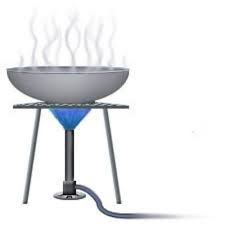
Name the separation technique shown in the diagram.
evaporation
distillation
filtration
Tutoring - Solutions/Separating mixtures

Show answer
Auto Play
Slide 1 / 37
SLIDE

Similar Resources on Wayground
31 questions
EM Spectrum (Waves)
Presentation
•
8th Grade
33 questions
8.L.4.1 & 8.L.4.2 Review
Presentation
•
8th Grade
31 questions
Force and Velocity
Presentation
•
8th Grade
29 questions
Cohesion, Adhesion, and Surface Tension
Presentation
•
8th Grade
35 questions
Speed, Velocity, and Acceleration
Presentation
•
8th Grade
32 questions
Effects of Rotation and Revolution
Presentation
•
8th Grade
32 questions
Lesson: Density, Mass, & Volume
Presentation
•
8th Grade
33 questions
Counting Atoms
Presentation
•
8th Grade
Popular Resources on Wayground
10 questions
How much do you know about our Portrait of an Eagle?
Quiz
•
10th Grade
10 questions
Fast Food Slogans
Quiz
•
6th - 8th Grade
21 questions
Continents and Oceans
Quiz
•
6th Grade
20 questions
Parts of Speech
Quiz
•
5th Grade
16 questions
Subject & Predicate
Quiz
•
5th Grade
25 questions
Multiplication Facts
Quiz
•
5th Grade
12 questions
Map Skills
Quiz
•
3rd Grade
22 questions
Continents and Oceans
Quiz
•
5th Grade
Discover more resources for Science
20 questions
Scientific Method and Variables
Quiz
•
8th Grade
20 questions
Scientific method and variables
Quiz
•
8th Grade
27 questions
Counting Atoms - Subscripts
Quiz
•
8th Grade
20 questions
Claim, Evidence and Reasoning (CER)
Quiz
•
6th - 8th Grade
18 questions
Counting Atoms
Quiz
•
7th - 8th Grade
20 questions
Elements, Compounds and Mixtures
Quiz
•
8th Grade
10 questions
Exploring Chemical and Physical Changes
Interactive video
•
6th - 10th Grade
10 questions
Decoding the Periodic Table of Elements
Interactive video
•
6th - 10th Grade