

Poetry

Presentation
•
English
•
10th Grade
•
Practice Problem
•
Medium
+27
Standards-aligned

Brian Isles
Used 224+ times
FREE Resource
8 Slides • 11 Questions
1
Poetry
World Literature
2
Before we start, let's review!
3
Multiple Choice
Does poetry have to rhyme?
Yes!
No!
4
Multiple Choice
What does "In Medias Res" mean?
In the middle of things
After it, therefore because of it
On the side
I could totally eat some Chipotle!
5
Multiple Choice
An epic poem is...
a prose about a legendary man who does anything he wants to do!
a story about how everyone is special and totally the same without special qualities.
a long narrative verse about a national or legendary hero.
6
Multiple Choice
How were epic poems often shared?
Sketched on papyrus
Written down on tablets
Etched in the stars
Spoken out loud to the people
7
Poetic devices
Poems are not unique in WHAT they're about; they're unique in HOW they're crafted.
Instead of sentences and paragraphs, we have lines and stanzas.
Some structures are shorter than others. For instance, a haiku is only three lines, and a sonnet is only 14 lines.
Epic poems are HUGE and can be as long as any short story or novel that you've ever read!
So what makes a poem a poem?
8
Meter, Rhythm, and Structure
Since poems DO NOT need to rhyme, we must figure out what they typically have in common.
Poetry should have a clear rhythm to it. You should be able to count the syllables in each of the lines to see if there's consistency.
Poets use rhythms to create a "feel" or a mood for the poem, but sometimes they'll throw in something that feels out of place. Frequently, this is done to get you to pay closer attention.
9
Let's look at a poem!
How many syllables in each line?
Does it rhyme?
Theme/Message?
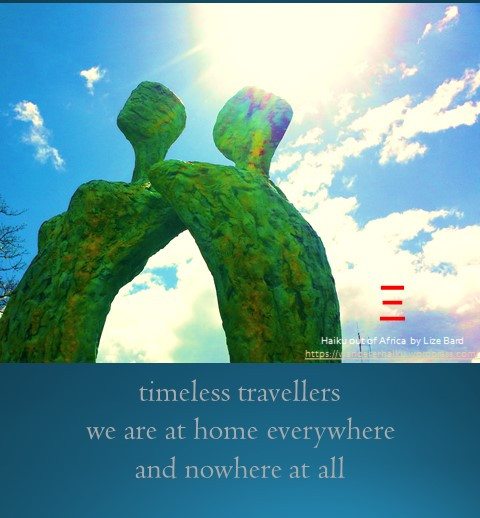
10
Multiple Choice
Which of these has the number of syllables in the correct order?
3, 5, 5
7, 3, 5
5, 7, 5
7, 7, 7
11
Multiple Choice
Does it rhyme?
Yes
No
12
Open Ended
What is the message/theme of the poem?
13
Sound Devices
Sometimes you need to read poems out loud to catch literary devices that the poet wants you to discover.
Alliteration - repetition of the same letter or sound at the beginning of adjacent or closely connected words. - Sweet, silly songs
Assonance - repetition of vowel sounds in words that are adjacent or closely connected - Lou drew blue hues all over!
Onomatopoeia - using a word that resembles the sound it describes: "roar" "boom" "shush" "cackle" "whine" "bang"
Repetition - words or phrases repeated to create an effect. Lyrics use repetition constantly as hooks to draw your attention.
14
Multiple Choice
Steven stopped studying and stood up.
Assonance
Alliteration
Repetition
Onomatopoeia
15
Multiple Choice
The crack of the whip shot a chill down my spine.
Assonance
Alliteration
Repetition
Onomatopoeia
16
Multiple Choice
She called and called and called me until I picked up the phone.
Assonance
Alliteration
Repetition
Onomatopoeia
17
Multiple Select
Anna asked absolutely asinine questions, but Ben bent over backwards to answer, to explain, and to teach her.
Alliteration
Assonance
Repetition
Onomatopoeia
18
Poetry tips
Read poetry twice - once to yourself and once out loud. This helps you to determine the meaning and then to look for specific devices.
When you read a poem, you don't have to read it line by line. Frequently, poets write lines that flow onto the next line. Those are called Enjambed Lines, and you can read them like sentences.
Sometimes poets put an end-stop punctuation (. ! ?) in the middle of a line. This is called a Caesura, and you should pause and ask why they did that. You might run into something important!
19

Poetry
World Literature
Show answer
Auto Play
Slide 1 / 19
SLIDE
Similar Resources on Wayground

16 questions
Simple past vs Present perfect
Presentation
•
10th Grade
16 questions
Rhetoric Review
Presentation
•
10th Grade
11 questions
Context Clues
Presentation
•
10th Grade
14 questions
Figurative Language
Presentation
•
9th - 10th Grade
15 questions
"The Moral Logic of Survivor Guilt" by Nancy Sherman
Presentation
•
9th - 10th Grade
16 questions
Quotation Marks/Dialogue
Presentation
•
9th - 10th Grade
15 questions
Parallel Construction
Presentation
•
10th Grade
15 questions
Lessons 7-8: Our Tradition
Presentation
•
10th Grade
Popular Resources on Wayground
10 questions
How much do you know about our Portrait of an Eagle?

Quiz
•
10th Grade
10 questions
Fast Food Slogans
Quiz
•
6th - 8th Grade
21 questions
Continents and Oceans
Quiz
•
6th Grade
20 questions
Parts of Speech
Quiz
•
5th Grade
16 questions
Subject & Predicate
Quiz
•
5th Grade
25 questions
Multiplication Facts
Quiz
•
5th Grade
12 questions
Map Skills
Quiz
•
3rd Grade
22 questions
Continents and Oceans
Quiz
•
5th Grade
Discover more resources for English
20 questions
Context clues
Quiz
•
10th Grade
15 questions
ENG 10 Grammar: 18.1 Prepositions or Adverbs P. 34
Quiz
•
10th Grade
10 questions
Making Inferences and Drawing Conclusions

Interactive video
•
6th - 10th Grade
10 questions
Crafting an Effective Thesis Statement
Interactive video
•
6th - 10th Grade
10 questions
Exploring Coordinating Conjunctions with FANBOYS
Interactive video
•
6th - 10th Grade
10 questions
Distinguishing Theme and Main Idea
Interactive video
•
6th - 10th Grade
20 questions
Subject Verb Agreement
Quiz
•
10th Grade
10 questions
Identifying Simple, Compound, and Complex Sentences
Interactive video
•
6th - 10th Grade