Search Header Logo
MVHS Chemistry Semester 1 Review Day 1

MVHS Chemistry Semester 1 Review Day 1

Assessment

Presentation

Chemistry

9th - 12th Grade

Medium

NGSS
HS-PS1-1, HS-PS1-2, HS-PS1-3

+4

Standards-aligned

Created by

Nicholas Carpenter

Used 1+ times

FREE Resource

22 Slides • 40 Questions

1

MVHS Chemistry Semester 1 Review

Day 1

Slide image

2

Topics that will be covered on the final

  • Properties of Matter - Chemical and Physical Properties and Changes - Day 1

  • Atomic Theory - Composition of atoms, subatomic particles, ions and isotopes, Electron Configurations - Day 1

  • Periodic Table - Trends and Organization - Day 1

  • Chemical Reactions - Signs of Reactions, Balancing Equations, Types of Reactions, Predicting Products - Day 2

  • Bonding - Types of Bonds, Balancing Charges, IMFs, Writing Chemical Names and Formulas - Day 1 and 2

3

Properties of Matter 1

  • Properties are physical or chemical

  • Physical Properties can be observed without changing the chemical composition of a substance

  • Physical properties include mass, volume, density, color, luster, texture, melting point, boiling point, solubility, shape

  • Chemical Properties can only be determined by changing the composition of the substance (the substance has to undergo a chemical reaction)

  • Chemical properties include flammability, oxidation numbers, and pH

4

Properties of Matter 2

  • Mass: the amount of matter in a given object (protons and neutrons); standard unit is kg, but we usually use grams in Chemistry

  • Volume: The amount of space an object takes up; standard unit is L, but we often use mL (liquids) or cm3 (solids) (1 mL = 1 cm3); 

  • Density: The amount of matter within a given volume; measured in g/mL or g/cm3 (those mean the same thing,

  •  D=mVD=\frac{m}{V}  ; m=DVm=D\cdot V  V=mDV=\frac{m}{D}  

  • D: Density; m: mass; V: volume

  • volume of irregular solids (like rocks) can be measured via water displacement - place in a graduated cylinder of water and measure the volume change

5

Multiple Choice

Why do some substances float on water?
1
they are warmer than water
2
they are cooler than water
3
they are more dense than water
4
they are less dense than water

6

Multiple Choice

Bobbie has a paper clip. It has a mass of 9g and a volume of 3cm3. What is its density?

1

3 g/cm3

2

1/3 g/cm3

3

27 g/cm3

4

39 g/cm3

7

Multiple Choice

Amos has an eraser. It has a mass of 4 g, and a volume of 2 cm3. What is its density?

1

8 g/cm3

2

2 g/cm3

3

1/2 g/cm3

4

24 g/cm3

8

Multiple Choice

Mei has a rock. The rock has a mass of 14 g and a volume of 2 cm3. What is the density of the rock?

1

7 mL

2

7 g/cm3

3

28 g/cm3

4

1/7 g/cm3

9

Multiple Choice

Question image
What is this tool to get mass?
1
triple beam balance
2
ruler
3
thermometer
4
graduate cylinder

10

Multiple Choice

How does the mass of a bowling ball on Earth compare to its mass on the moon?
1
The mass will be greater on the moon
2
The mass will be less on the moon
3
The mass will stay the same

11

Multiple Choice

Question image
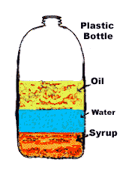
Which liquid is the least dense?
1
oil
2
water
3
syrup 
4
plastic bottle

12

Properties of Matter 3

  • Physical changes can occur without changing the composition - examples include breaking ice, phase changes (melting or boiling)

  • Chemical changes involve reactions - combustion, neutralizing acids or bases

13

Atomic Theory 1

  • Composition of atoms: nucleus in center, made of protons (positive charge) and neutrons (no charge); electron cloud around nucleus contains electrons (negative charge)

  • In neutral atoms, np (# of protons) = ne (# of electrons)

  • Ions have an unbalanced number of protons and electrons

  • Cations have more protons than electrons, so they have a positive charge

  • Anions have more electrons than protons, so they have a negative charge

  • Calculate charge (q): q = np - ne

14

Multiple Choice

If an atom loses electrons, the charge will be positive.

1

true

2

false

15

Multiple Choice

Which types of elements form anions?

1

metals

2

nonmetals

3

metalloids

4

noble gases

16

Multiple Choice

Which types of elements form cations?

1

metals

2

nonmetals

3

metalloids

4

noble gases

17

Atomic Theory 2

  • Electrons are situated around the nucleus in energy levels (also called shells)

  • Outermost shell is called the valence shell

  • Valence electrons determine element's chemical properties

  • Valence shells correspond to rows in the periodic table - if the outermost electrons are in the 3rd shell, the element is in the 3rd row of the periodic table

  • Shells are subdivided into subshells (or sublevels)

  • s, p, d, f subshells

  • subshells are subdivided into orbitals, which can hold 2 electrons each

18

Atomic Theory 3

  • Electrons have a property known as "spin"

  • Electrons within the same orbital must have opposite spins (up or down);

  • s subshell has 1 orbital (2 electrons); p has 3 orbitals (6 electrons); d has 5 orbitals (10 electrons); f has 7 orbitals (14 electrons)

  • Each orbital in a subshell must have 1 electron in it before any can have 2 (no one gets seconds until everyone has gotten 1)

  • Elements can be identified by their electron configuration, which tells us where (in the shells and subshells) their electrons are located

  • Shells and subshells are filled in the same order for most elements, it's just a matter of how many electrons there are to fill the available orbitals

19

Atomic Theory 4 - Electron Configurations

  • To write an electron configuration, you must find a home for all of the electrons

  • The coefficient (big number) tells you the shell or energy level; the letter tells you the subshell, and the superscript (little number/exponent) tells you how many electrons are in the subshell (the superscripts in the image tell you how many each subshell can hold, not how many there are - you determine that)

Slide image

20

Atomic Theory 5 - Electron Configs pt 2

  • Start at the top of the blue arrows and follow them down; once you reach the end of one arrow, move to the top of the next

  • Ex: an element has 9 electrons, it's configuration would be 1s2 2s2 2p5

  • The last number is 5 instead of 6 because we only had 5 electrons left after filling 1s and 2s. Add the superscripts to count the number of electrons

Slide image

21

Atomic Theory 6 - Electron Configs pt 3

  • Energy levels in d block are 1 less than s and p; f block energy levels are 2 less

  • ex: Selenium config is 1s2 2s2 2p6 3s2 3p6 4s2 3d10 4p4

  • Valence electrons correspond with columns in periodic table (at least for s and p blocks) - Groups 1 and 2 have 1 and 2 valence electrons, Groups 13, 14, 15, 16, 17, and 18 have 3, 4, 5, 6, 7, and 8, respectively

Slide image

22

Slide image

Final terms in the electron configuration of each element

23

Multiple Choice

Each row on the periodic table represents:

1

an energy level

2

a sublevel

3

an electron

4

an orbital

24

Multiple Choice

Question image
How many electrons can the d sublevel hold?
1
14
2
10
3
2
4
6

25

Multiple Choice

Question image
What atom matches this electron configuration?
1s22s22p63s23p64s23d10
1
Zinc
2
Copper
3
Nickel
4
Germanium

26

Multiple Choice

Question image
Which electron configuration belongs to Chlorine (Cl)?
1
1s2s2p3s3p5
2
1s2s2p3s3p6
3
1s2s2p3s3p7

27

Multiple Choice

The electron configuration of an atom is 1s22s22p6.  The number of electrons in the atom is 
1
3
2
6
3
8
4
10

28

Multiple Choice

Question image

How many electrons can the first energy level hold?

1

1

2

2

3

8

4

0

29

Atomic Theory 7 - Isotopes

  • Atoms of the same element that have different numbers of neutrons are called isotopes

  • Different isotopes have different mass numbers (number of protons + number of neutrons

  • Isotopes are identified by that mass number (ex: Carbon-12 and Carbon-14)

30

Atomic Theory 8 - Isotopes

  • Different isotopes are present in samples and in the universe in different amounts (abundances)

  • The average mass of all of the isotopes of a given element is the atomic mass that you see on the periodic table

  • Example calculation on the next slide

Slide image

31

Atomic Theory 9 - Isotopes

  • Important - when using % abundance in calculation, you must convert the percentage to a decimal by dividing by 100

  • ex: 78.99% becomes 0.7899

  • Multiply the resulting decimals by the masses of the corresponding isotopes and add them all together to get the average atomic mass

Slide image

32

Multiple Choice

Question image
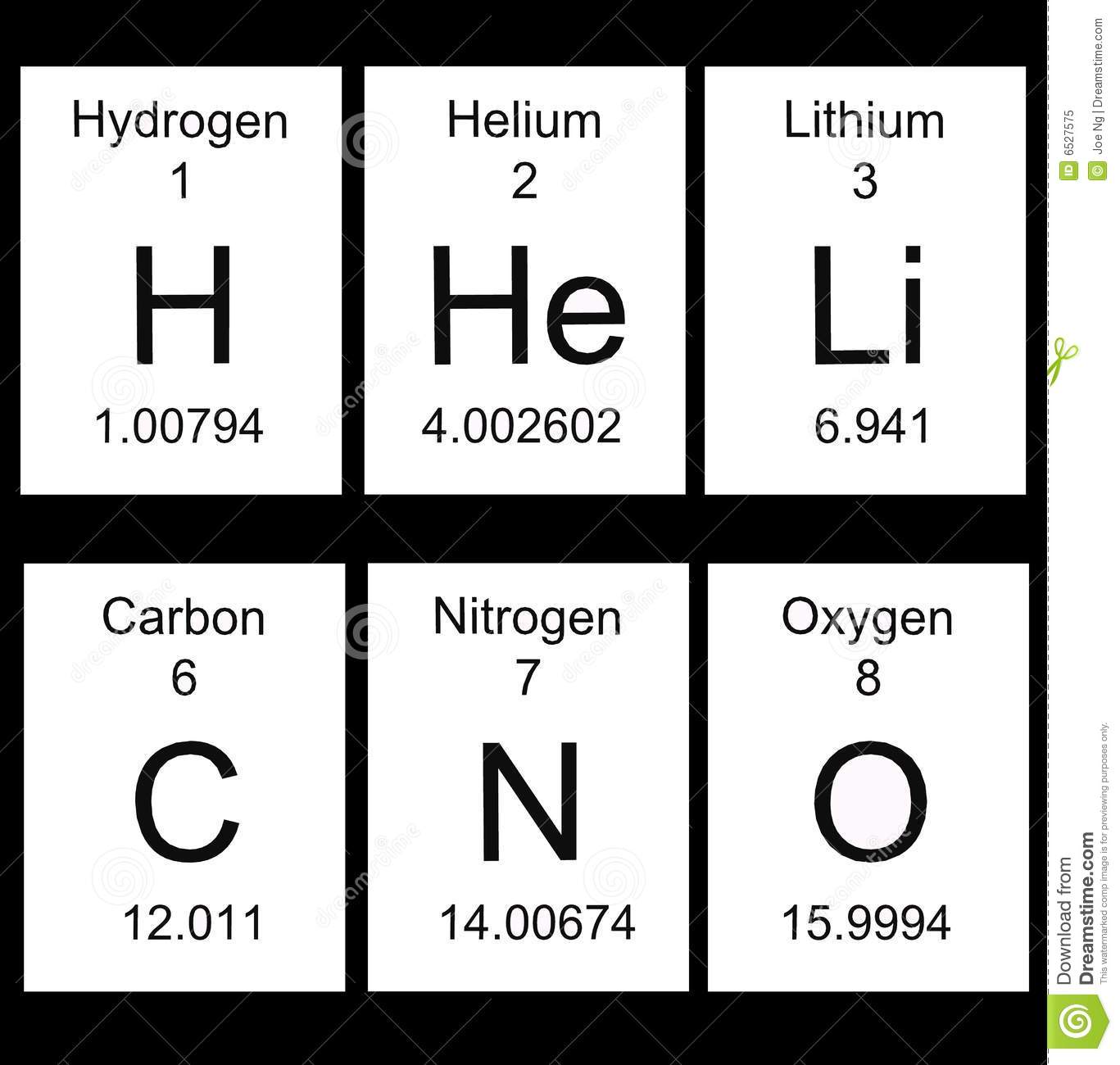
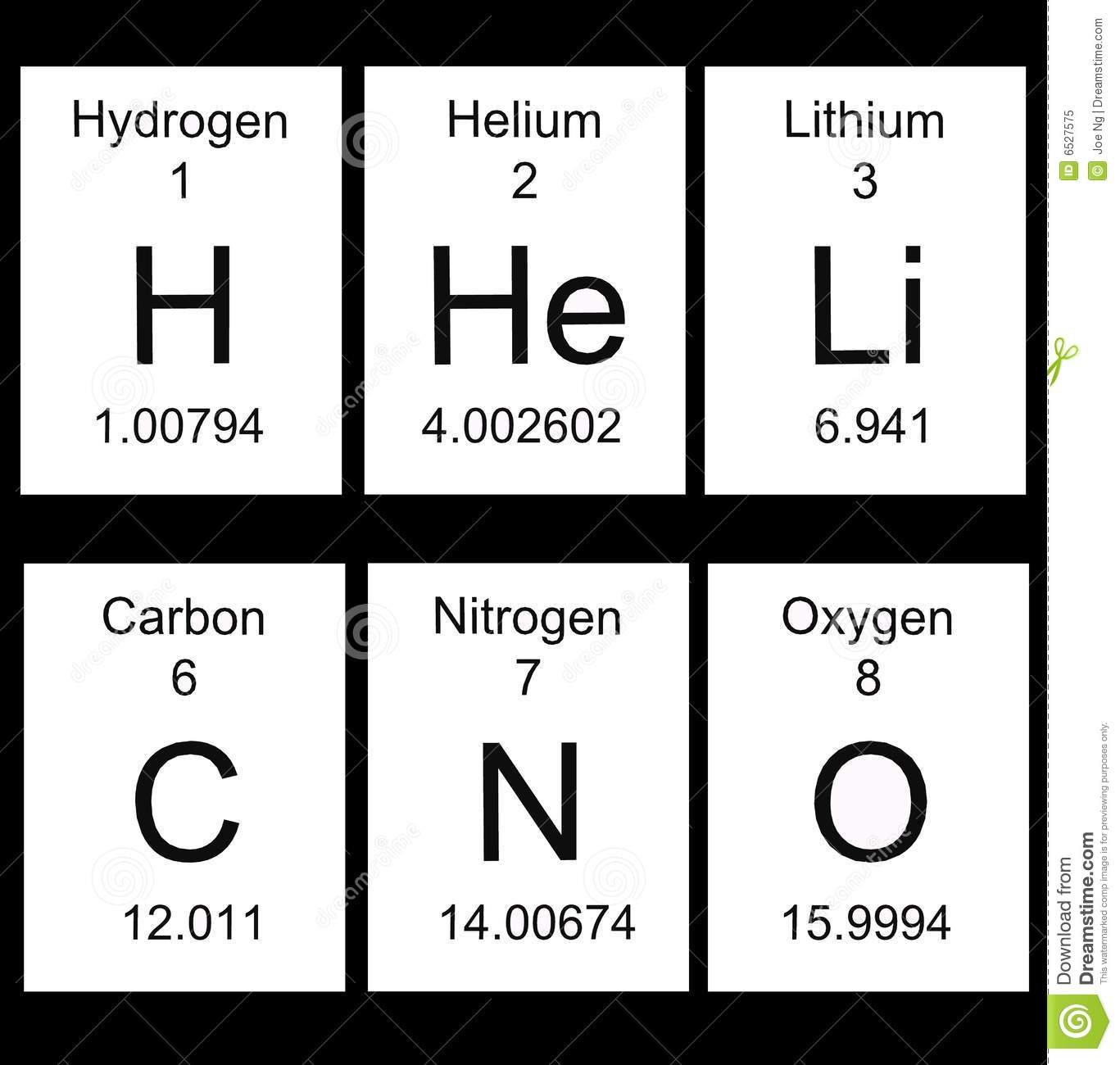
If an atom contains exactly three protons, then it's an atom of _____
1
lithium
2
gold
3
nitrogen
4
carbon

33

Multiple Choice

Question image
How many neutrons does the isotope of lithium have?
1
8
2
3
3
4
4
5

34

Multiple Choice

The atomic mass of an element is the ___.

1

average of the mass number and the atomic number for the element

2

weighted average of the masses of the isotopes of the element

3

total mass of the isotopes of the element

4

total number of subatomic particles in the nucleus

35

Multiple Choice

What is the atomic number for an element with three protons?
1
2
2
1
3
3
4
6

36

Multiple Choice

24.1% of all the isotopes of a an element have a mass of 75.23 amu, 48.7% have a mass of 74.61 amu, and 27.2% have a mass of 75.20 amu.
What is the average mass of this element?
1
74.92 amu
2
24.97 amu
3
75.01 amu
4
74.51 amu

37

Periodic Table 1

  • Periodic Table is arranged in order of ascending atomic number (number of protons)

  • Columns are called Groups; Rows are called Periods

  • Groups are elements that have similar properties (same number of valence electrons)

  • Periods have the same number of energy levels/shells of electrons

38

Slide image

39

Periodic Table 2 - Trends

  • Trends are electronegativity, atomic radius, ionization energy, reactivity

  • Electronegativity: a measure of an atom's ability to attract electrons

  • atomic radius: the distance from the center of the nucleus to the valence electrons

  • ionization energy: the amount of energy required to remove an electron

  • Reactivity: how readily an atom will react with other atoms

40

Periodic Table 3 - Trends Cont.

  • Electronegativity increases up and to the right

  • Atomic Radius increases down and to the left

  • Ionization energy increases up and to the right

  • metal reactivity increases down and to the left - with atomic radius

  • nonmetal reactivity increases up and to the right - with electronegativity

41

Multiple Choice

Which of the following is true for Calcium
1
Metal and Low electronegativity value 
2
Metal and has 2 valence electrons
3
Metal, Low electronegativity, has 2 valence electrons
4
Metal and Semi conductor 

42

Multiple Choice

The element with the largest electronegativity in the halogens is - 
1
At
2
F
3
Cl
4
Br

43

Multiple Choice

The atom with the largest atomic radius in Group 18 is - 
1
Ar
2
He
3
Kr
4
Rn

44

Multiple Choice

Atoms that have a high electronegativity, _______________.
1
give up their electrons more easily.
2
hold on to their electrons more tightly.
3
have more electron shells.

45

Multiple Choice

As you move across the periodic table atoms tend to get smaller because, ______________.
1
the atoms have more mass.
2
the atoms have less mass
3
the atoms have more protons.
4
the atoms have less electrons.

46

Multiple Choice

As you move down the periodic table atoms get bigger.  This is because ____________.
1
The atoms have more mass.
2
The atoms have more protons.
3
The atoms have more energy levels
4
The atoms have more nuetrons

47

Multiple Choice

Which atom has the largest atomic radius?
1
potassium
2
rubidium 
3
francium
4
cesium

48

Multiple Choice

Which of the following will have a lower ionization energy than Scandium (Sc)?
1
Helium (He)
2
Titanium (Ti)
3
Calcium (Ca)
4
Magnesium (Mg)

49

Multiple Choice

Question image
Most of the elements on the periodic table are classified as _____.
1
Metals
2
Nonmetals
3
Metalloids
4
Periods

50

Multiple Choice

Question image
The number at the bottom of each square on the periodic table is the ...
1
atomic number
2
atomic mass
3
chemical symbol
4
element name

51

Multiple Choice

Question image
The number at the top of each square on the periodic table is the ...
1
atomic number
2
atomic mass
3
Chemical Symbol
4
Element Name

52

Multiple Choice

Question image

Elements in the same group or column have the same ...

1

# of valence electrons

2

# of shells

3

# of protons

4

Mass Number

53

Multiple Choice

What happens to the number of shells as you move down a group?

1

They decrease by 1

2

They increase by 1

3

Nothing

54

Bonding 1 - Types of Bonds

  • Ionic bond - one atom (a nonmetal) takes the valence electrons of another atom (or atoms) to become an anion and makes the other atom(s) become a cation; these oppositely charged atoms now attract each other and create an ionic compound

  • There are also polyatomic ions - ions with multiple atoms that are covalently bonded together; these can interact with individual ions or other polyatomic ions

  • Covalent Bonds: when two or more nonmetals share valence electrons

  • Metallic Bond: when metals bond with each other creating a "sea of electrons;" valence electrons move freely between atoms

55

Bonding 2 - Properties

  • Ionic compounds are brittle and have high melting points

  • Covalent compounds have lower melting points and are not as brittle; some are liquid or even gas at room temperature

  • Metallically bonded substances (alloys) are ductile (can be pulled into wires) and malleable (can be hammered into shapes) because the "sea of electrons" allows atoms to slide past each other

56

Bonding 3 - IMFs

  • Polarity: when one atom in a covalent compound has a higher electronegativity than another, it will pull the shared valence electrons closer to it, creating areas of partial positive and negative charges

  • Dipole: a molecule with a partial positive end and a partial negative end

  • Hydrogen Bonding: a special type of dipole-dipole attraction featuring hydrogen bonded with high electronegativity elements (N, O, F)

  • London Dispersion: "temporary dipoles" created by valence electrons in two atoms repelling each other

  • Relative IMF strength: hydrogen bonding > dipole dipole > London Dispersion

57

Multiple Choice

Does HCl have hydrogen bonding?
1
yes
2
no

58

Multiple Choice

Which one has higher melting point? CO2 or H2O

1

CO2

2

H2O

59

Multiple Choice

The weaker the intermolecular forces of a substance the _____________ the boiling point

1

higher

2

lower

60

Multiple Choice

Which substance has the weakest intermolecular forces?

1

Substance A, boiling point of 75 °C

2

Substance B, boiling point of 105 °C

3

Substance C, boiling point of 25 °C

4

Substance d, boiling point of 45 °C

61

Multiple Choice

Water has an unusually high boiling point for a molecular compound because it has

1

hydrogen bonding

2

ion-ion attractions

3

a high density

4

a large gram formula mass

62

Multiple Choice

Which sample has hydrogen bonding?

1

H2S

2

CH4

3

NH3

4

HI

MVHS Chemistry Semester 1 Review

Day 1

Slide image

Show answer

Auto Play

Slide 1 / 62

SLIDE