Separation of Mixtures
Presentation
•
Science
•
6th - 9th Grade
•
Medium
+2
Standards-aligned
Jennifer LaSanta
Used 549+ times
FREE Resource
8 Slides • 12 Questions
1
Separation of Mixtures
How do we separate Homogeneous and Heterogeneous mixtures??
2
Multiple Choice
Are made from a combination of 2 or more elements...
Molecules
Pure Substances
Compounds
Elements
3
Multiple Choice
A combination that can be separated by physical processes is a .....
Pure Substance
Glucose
Element
Mixture
4
Multiple Choice
A mixture that is NOT evenly distributed is called ....
Compounded
Homogenous
Heterogenous
Salty
5
Multiple Choice
A substance with atoms that are all alike.
element
compound
homogeneous mixture
heterogeneous mixture
6
Multiple Choice
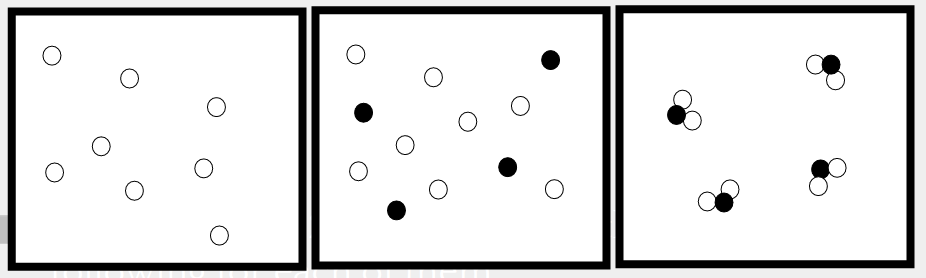
Which one of these pictures represents a pure substance?
1 and 2
1 and 3
2 and 3
1, 2 and 3
7
Multiple Choice
Which one of these pictures represents a mixture?
1
2
3
1, 2 and 3
8
9
10
11
Chromatography
Chromatography SEPARATES substances as they are drawn across a barrier.
Chromatography happens when different colors from an ink pen spread out on a paper towel.
12
Distillation
Separates mixtures based on differences in substances' boiling points.
Distillation is used to process crude oil into its many different parts such as gasoline.
13
14
15
Multiple Choice
If a solid doesn't dissolve in a liquid we say that it is
Soluble
A solvent
Insoluble
Undissolveable
16
Multiple Choice
What happens when salty water is boiled?
The salt becomes a new compound and water evaporates as it has a low boiling point
The water evaporates and the salt remains in the beaker as it has a high melting point
The water becomes a new compound and evaporates while salt remains in the beaker
The water will disappear and the salt remains in the beaker as it is a solid
17
Multiple Choice
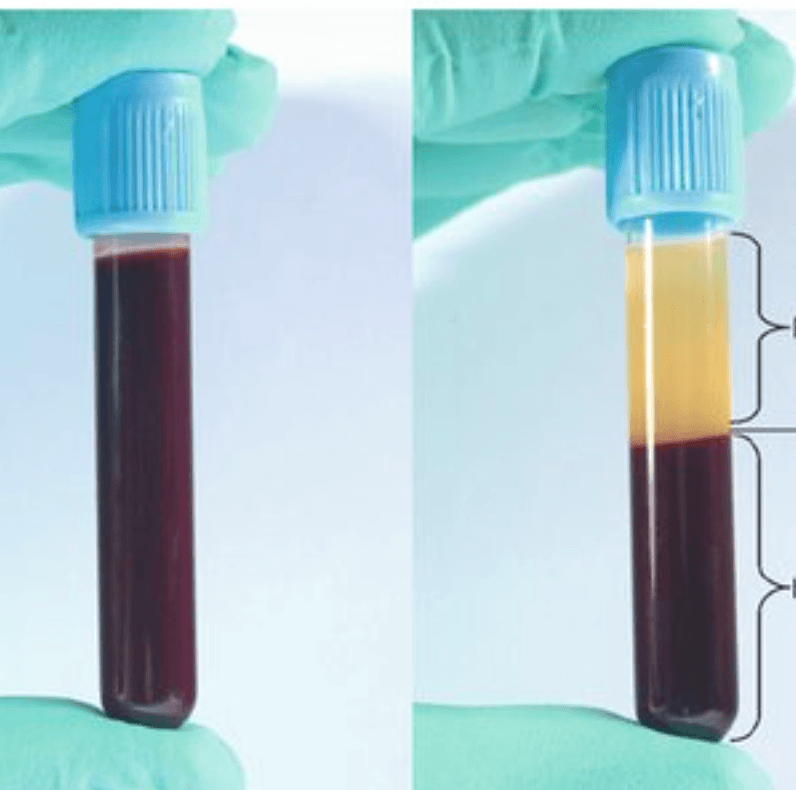
The process used to separate heterogeneous mixtures of solids and liquids is called
filtration
crystallization
distillation
chromatography
18
Multiple Choice
If you spilled nails in a sandbox, what separation tool/method could you use to clean out the sandbox so it would be safe for children to play in?
Filter
Screen
Magnet
Evaporation
19
Multiple Choice
This type of paper allows liquid to pass through it. What tool is it?
sieve
filter
20
Multiple Choice
Mixtures can be separated .......................
Physically
Chemically
Separation of Mixtures
How do we separate Homogeneous and Heterogeneous mixtures??
Show answer
Auto Play
Slide 1 / 20
SLIDE

Similar Resources on Wayground
14 questions
Galaxies
Presentation
•
6th - 8th Grade
16 questions
Electricity & Magnetism 2
Presentation
•
6th - 10th Grade
16 questions
Cell Transport
Presentation
•
6th - 8th Grade
14 questions
The Scientific Method
Presentation
•
6th - 8th Grade
16 questions
Gravity in Our Solar System 1: Gravity Variables
Presentation
•
6th - 8th Grade
16 questions
Food Labels
Presentation
•
6th - 8th Grade
15 questions
Rotation and Revolution
Presentation
•
6th - 8th Grade
14 questions
The Universe Unit Launch
Presentation
•
6th - 8th Grade
Popular Resources on Wayground
10 questions
5.P.1.3 Distance/Time Graphs
Quiz
•
5th Grade
10 questions
Fire Drill
Quiz
•
2nd - 5th Grade
20 questions
Equivalent Fractions
Quiz
•
3rd Grade
22 questions
School Wide Vocab Group 1 Master
Quiz
•
6th - 8th Grade
20 questions
Main Idea and Details
Quiz
•
5th Grade
20 questions
Context Clues
Quiz
•
6th Grade
20 questions
Inferences
Quiz
•
4th Grade
12 questions
What makes Nebraska's government unique?
Quiz
•
4th - 5th Grade
Discover more resources for Science
8 questions
Amoeba Sister Asexual vs Sexual Reproduction
Interactive video
•
8th Grade
19 questions
Introduction to Properties of Waves
Presentation
•
6th - 8th Grade
16 questions
Interactions within Ecosystems
Presentation
•
6th - 8th Grade
10 questions
Exploring the Layers of the Earth
Interactive video
•
6th - 10th Grade
16 questions
Photosynthesis and Cellular Respiration Review
Quiz
•
7th Grade
20 questions
Abiotic & Biotic Factors
Quiz
•
7th Grade
15 questions
Punnett Squares
Quiz
•
6th Grade
10 questions
Exploring the Evolution of Cell Theory
Interactive video
•
7th Grade