Search Header Logo
Unit 1: History of Astronomy

Unit 1: History of Astronomy

Assessment

Presentation

•

Science, Other

•

10th - 12th Grade

•

Medium

•
NGSS
HS-PS2-4, HS-ESS1-4, MS-ESS1-1

+2

Standards-aligned

Created by

Monica McClure

Used 16+ times

FREE Resource

31 Slides • 18 Questions

1

Unit 1: History of Astronomy

Review Session
Slide image

2

Slide image

3

Slide image

4

Slide image

5

Multiple Choice

What Earth motion is the basis (cause) of the cycle of day and night?

1

rotation

2

revolution

3

precession

6

Slide image

7

Slide image

8

Multiple Choice

Question image

The law of universal gravitation is credited to whom?

1

Einstein

2

Galileo

3

Darwin

4

Newton

9

Multiple Choice

Question image
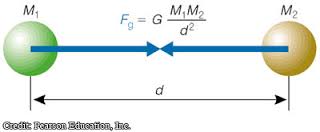
Complete the following statement: The farther away two planets are the _______ the gravitational force between them.
1
more
2
same
3
dosen't matter
4
less

10

Multiple Choice

Two objects are attracted to each other with 36 N of gravitational force.
What would the force between them be if the distance between them were doubled?
1
9
2
18
3
72
4
144

11

Multiple Choice

Planets orbit the Sun in the shape of a(n) _______

1

ellipse

2

circle

3

square

4

circle within a circle

12

Multiple Choice

The heliocentric model

1

means "earth centered"

2

is relatively new

3

says that the Sun is at the center of the universe

4

was established by Ptolemy

13

Multiple Choice

What was one of the contributions of Copernicus to astronomy?

1

He discovered that planets moved in elliptical orbits

2

He used telescopes to observe the heavens which reinforced the idea of heliocentricity

3

He made extensive and detailed observations of the positions of the planets

4

He said the Earth was not the center of the universe

14

Multiple Choice

What problems did early astronomers face when trying to justify a geocentric model?
1
Retrograde motion of planets farther out than the Earth
2
Bodies in the night sky moved from horizon to horizon making people think the Sun was the center
3
No observations of bodies in the night sky were observable to make any logical conclusions about celestial orbits
4
The lack of evidence for stellar parallax

15

Multiple Choice

Which astronomer of antiquity first applied a telescope to astronomical observation?
1
Ptolemy
2
Galileo Galilei
3
Tycho Brahe
4
Copernicus

16

Multiple Choice

Which astronomer of antiquity made elaborate models of an earth-centered universe?
1
Copernicus
2
Aristarchus
3
Ptolemy
4
Tycho Brahe

17

Multiple Choice

The eccentricity of a planet's orbit is equal to the distance between the foci of the ellipse divided by the length of the semi-major axis. So, if the distance between the foci is equal to 1 AU, and the length of the semi-major axis is 3, the eccentricity is _____.

1

3

2

0.33

3

1

4

2

18

Slide image

19

Slide image

20

Multiple Choice

The name for the average sun-to-earth distance is
1
A Year
2
A Light Year
3
An Astronomical Unit
4
A Parsec

21

Slide image

22

Slide image

23

Multiple Choice

Tycho Brahe's biggest contribution to astronomy was...?
1
Accurate Observations of the stars and planets
2
His telescopic observations
3
Heliocentric Universe
4
His Silver Nose

24

Slide image

25

Multiple Choice

Astronomer Johannes Kepler...
1
Published Almagest
2
Invented the first Radio Telescope
3
Suggested elliptical orbits for the planets
4
Was made head astronomer for the Church

26

Slide image

27

Multiple Choice

Question image
The formula P2 = a3 is an expression of
1
Kepler's 3rd Law
2
Newton's 2nd Law
3
Kepler's 1st Law
4
Kepler's 2nd Law

28

Slide image

29

Slide image

30

Multiple Choice

The formula we get from the second law is...?
1
F = m*a
2
v = d/t
3
a = v/t
4
f = 1/T

31

Slide image

32

Slide image

33

Slide image

34

Slide image

35

Multiple Choice

A light year is _____

1

a unit of time

2

a unit of distance

3

how fast light travels

4

all of these

36

Slide image

37

Slide image

38

Slide image

39

Slide image

40

Slide image

41

Slide image

42

Slide image

43

Slide image

44

Slide image

45

Slide image

46

Slide image

47

Slide image

48

Multiple Choice

Ancient Greeks believed, the earth to be the centr of the universe. What do we call this model?
1
Ptolemic System
2
Geocentric Universe
3
Heliocentric Universe
4
Copernican Model

49

Slide image

Unit 1: History of Astronomy

Review Session

Slide image

Show answer

Auto Play

Slide 1 / 49

SLIDE