Search Header Logo
8.5BC Reteach

8.5BC Reteach

Assessment

Presentation

Science

8th - 10th Grade

Practice Problem

Medium

Created by

Ciara West

Used 9+ times

FREE Resource

18 Slides • 37 Questions

1

What you need to know about PROTONS

1. They have a positive charge!

2. They are located inside the nucleus!

3. They add mass to the atom!

4. They are equal to your atomic number! PROTON=IDENTITY!

media

2

What you need to know about PROTONS

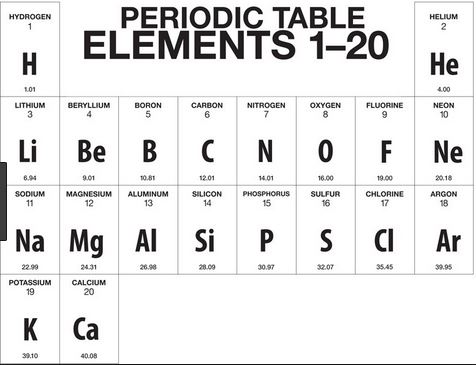
Remember protons are equal to the atomic number, so that means if the atomic number here is 3, we should have 3 protons!

media

3

Multiple Choice

Question image

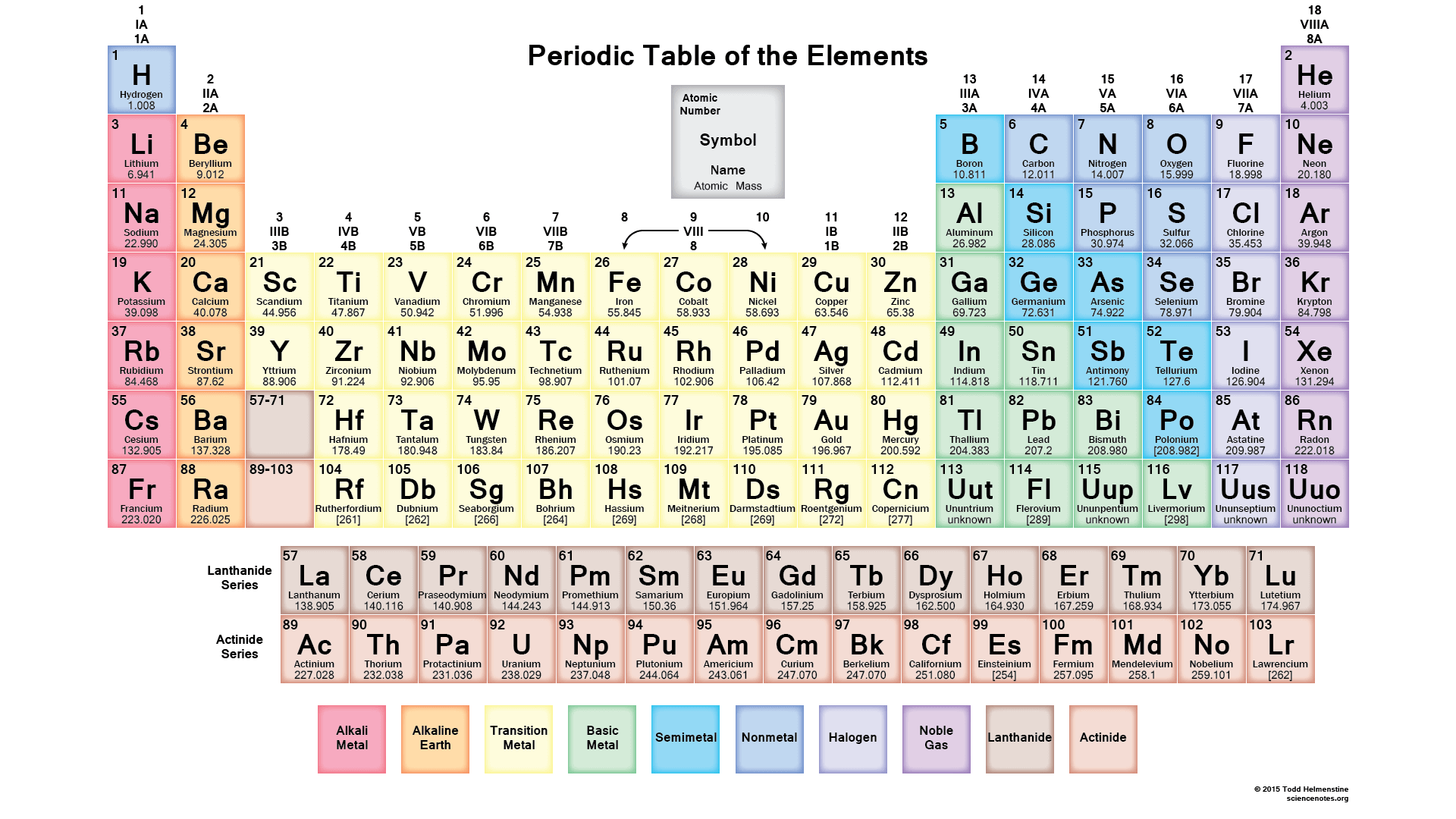
How many protons are in Gold

1

79

2

197

3

118

4

276

4

Multiple Choice

A proton is a _____ charged particle.
1
Negatively
2
Positively

5

Multiple Choice

Protons are equal to:
1
Atomic Mass
2
Number of neutrons
3
Atomic Number
4
All of the subatomic particles

6

Multiple Choice

Question image

Sodium has an atomic number of 11, how many protons does this atom have?

1

22

2

11

3

12

4

2

7

What you need to know about NEUTRONS

1. They have no charge or a neutral charge

2. They are located inside the nucleus!

3. They add mass to the atom!

4. Mass-Atomic #= Neutrons!

media

8

What you need to know about NEUTRONS

Remember the formula to find NEUTRONS is MASS - ATOMIC #=NEUTRONS, So Lithium has a mass that rounds to 7, minus the atomic number 3, so you'd have 4 neutrons!

media

9

Multiple Choice

Question image
How many neutrons are in a Gold atom?
1
79
2
196
3
118
4
275

10

Multiple Choice

An atom with 19 protons, and 19 electrons and a mass of 39 has how many neutrons?
1
19
2
39
3
20
4
58

11

Multiple Choice

What is the charge of the neutron?
1
Negative
2
Positive
3
electrical charge
4
Neutral (no charge)

12

What you need to know about ELECTRONS

Remember electrons are equal to protons, so that means if the atomic number here is 3, we should have 3 protons and 3 electrons!

media

13

Multiple Choice

Which of the following best describes an electron?
1
It has no charge and about the same mass as a proton
2
It has a negative charge and much less mass than a proton
3
It has a positive charge and much more mass than a neutron
4
It has a negative charge and about the same mass as a neutron

14

THE PERIODIC TABLE

Groups, Periods, Valence Electrons, Energy Levels, Metals, Nonmetals, Metalloids

15

What you need to know about GROUPS

1. SAME GROUP SAME CHEMICAL/PHYSICAL PROPERTIES!

2. Groups go from 1-18.

3. Groups go UP and DOWN

4. Groups tell the number of valence electrons (#A)


media

16

What you need to know about GROUPS

Remember, groups tell you the number of VALENCE ELECTRONS! Just look for the number with an A next to it! So group 13, has 3 Valence Electrons!

media

17

Multiple Choice

Question image
Sodium (Na) is found in group 
1
1
2
2
3
3
4
4

18

Multiple Choice

Question image

What are the vertical columns on the periodic called?

1

groups

2

periods

3

nonmetals

4

metals

5

metalloids

19

Multiple Choice

Which elements have the most similar chemical properties?
1
K and Na
2
K and Ca
3
K and Cl
4
K and S

20

Multiple Choice

Question image

Beryllium is in group number______.

1

Group 2

2

Group 3

3

Group 4

4

Group 7

21

Multiple Choice

Question image

How many valence electrons are in group 16?

1

16

2

6

3

1

22

What you need to know about PERIODS

1. Periods are in rows that go across (side to side)

2. Periods go from 1-7.

3. Periods tell us the number of energy levels

media

23

What you need to know about PERIODS

Remember, periods tell you the number of energy levels! So period 4, has 4 energy levels!

media

24

Multiple Choice

Question image
1

energy levels

2

valence electrons

3

protons

4

neutrons

25

Multiple Choice

Question image
1
energy levels
2
valence electrons
3
protons
4
neutrons

26

Multiple Choice

Which of these elements can be found in period 2?

1

Oxygen, O

2

Sulfur, S

3

Selenium, Se

4

Tellurium, Te

27

Multiple Choice

How many energy levels are in period 2?

1

12

2

2

3

22

28

Multiple Choice

Which of these elements can be found in period 4?

1

Oxygen, O

2

Sulfur, S

3

Selenium, Se

4

Tellurium, Te

29

What you need to know about VALENCE ELECTRONS

1. These are electrons on the OUTSIDE energy level!

2. Valence electrons determine REACTIVITY!

3. VALENCE ELECTRONS GO FROM 1-8

4. Look for the #A to see the number of Valence Electrons! (#A)

media

30

What you need to know about VALENCE ELECTRONS

5. Elements with 1 or 7 Valence electrons are HIGHLY reactive/ unstable.

6. Elements with 8 Valence electrons are stable/nonreactive.

media

31

What you need to know about VALENCE ELECTRONS

Remember, valence electrons are on the outside energy level only. AND the # with an A next to it also tells you how many VE there are! So for Carbon, you can count or look at the #A to see it has 4 valence electrons!

media

32

Multiple Choice

All atoms are most stable with (or would "prefer") how many electrons in their valence shell?

1

1

2

2

3

8

4

18

33

Multiple Choice

What are valence electrons?

1

The total number of electrons in an atom

2

The number of electrons in the outermost shell

3

The number of electrons in the second shell

4

The number of protons in the outermost shell

34

Multiple Choice

Question image

How many valence electrons does Hydrogen Have?

1

1 Valence electron

2

2 Valence electron

3

3 Valence electron

4

4 Valence electron

5

5 Valence electron

35

Multiple Choice

Question image

Which two groups on the Periodic Table are the MOST reactive?

1

Group 1 and Group 17

2

Group 2 and Group 16

3

Group 13 and Group 15

4

Group 17 and Group 18

36

Multiple Choice

Question image

Which two groups on the Periodic Table are the MOST reactive?

1

Group 1 and Group 17

2

Group 2 and Group 16

3

Group 13 and Group 15

4

Group 17 and Group 18

37

What you need to know about ENERGY LEVELS

1. They are the number of shells or circles around the nucleus.

2. They are equal to your periods!

media

38

What you need to know about ENERGY LEVELS

Remember, it's just the number of circles around the nucleus OR look at the period! As you can see, Sodium should have 3 energy levels!

media

39

Multiple Choice

Cd and Te have the same number of energy levels.

1

True

2

False

40

Multiple Choice

P and Po have the same number of energy levels.

1

True

2

False

41

Fill in the Blanks

Type answer...

42

Multiple Choice

The period number tells you the number of

1

protons

2

energy levels

3

valence electrons

43

Fill in the Blanks

Type answer...

44

What you need to know about METALS, NONMETALS, & METALLOIDS

1. Metals are on the left/middle.

2. Nonmetals on are the right.

3. Metalloids are along the staircase.

media

45

What you need to know about METALS, NONMETALS, & METALLOIDS

Remember these facts about metals, nonmetals, and metalloids!

media

46

Multiple Choice

Fluorine is used in many tooth pastes because it helps maintain healthy teeth.  At room temperature it is gaseous, and does not conduct electricity. Based off these properties, it would be classified as?
1
A metal
2
A non metal
3
A metalloid

47

Multiple Choice

Which of the following is a good conductor of heat?
1
Metal
2
Nonmetal
3
Metalloid

48

Multiple Choice

Question image
A student tested the conductivity of four elements using an incomplete electrical circuit. When the element is placed in the circuit, the bulb lights up brightly, lights up dimly, or does not light up at all based on the element’s ability to conduct electricity. The table below shows the results of her investigation. Based on the results of the conductivity test, which element is classified as a metal? 
1
Hydrogen
2
Arsenic
3
Krypton
4
Copper

49

Multiple Choice

Which of these grouping of elements could have the characteristic of luster (shiny)?

1

Metal

2

Nonmetal

3

metalloids

4

Both metals and metalloids

50

Multiple Choice

Which of these was NOT a conductor?

1

sulfur

2

magnesium

3

zinc

4

aluminum

51

Let's see what you learned!

Try out these more difficult questions!

52

Multiple Choice

Question image

What property does element X have based on its location in the Periodic Table?

1

Highly reactive nonmetal

2

Manmade radioactive substance

3

Nonreactive gas

4

Metallic solid

53

Multiple Choice

Which of the following best describes the location of the element tin?

1

Group 4(4B), Period 4

2

Group 16(6A), Period 5

3

Group 14 (4A), Period 5

4

Group 13(3A), Period 6

54

Multiple Choice

Question image

A student is shown a picture of the atom below. What element, based on the subatomic particle in the atom, is shown?

1

Beryllium

2

Helium

3

Lithium

4

Oxygen

55

Multiple Choice

Which of the following atoms is the most reactive?

1
2
3
4

What you need to know about PROTONS

1. They have a positive charge!

2. They are located inside the nucleus!

3. They add mass to the atom!

4. They are equal to your atomic number! PROTON=IDENTITY!

media

Show answer

Auto Play

Slide 1 / 55

SLIDE