

Topic 3.3 - Electrical Circuits

Presentation
•
Physics, Science
•
9th Grade
•
Practice Problem
•
Easy

Calvin Todd
Used 8+ times
FREE Resource
50 Slides • 1 Question
1
Topic 3.3 - Electrical Circuits

2
3
4
Electrochemical cell
Transforms chemical energy into electrical energy
Example: An AA “battery” is an electrochemical cell (even though it is commonly known as a “battery”)

5
How an Electrochemical Cell Works
Chemical reactions of two different metals or metal compounds occur on the surface of electrodes (zinc and carbon)
Electrodes are in a solution called an electrolyte (aqueous solution of ammonium chloride)

6
How an Electrochemical Cell Works
The chemical reactions cause one electrode to become positively charged, and the other to become negatively charged
The electrodes are in contact with terminals in the cell (Figure 3.13: negative terminal and positive terminal)

7
How an Electrochemical Cell Works
When the terminals are connected to an electrical pathway, charges flow through

8
Battery
Battery: A connection of two or more electrochemical cells
Example: Several electrochemical cells can be packaged together to make a battery
Electrochemical cells and batteries are sources (anything that supplies electrical energy)

9
Electrochemical Cells
An electrochemical cell transforms chemical energy into electrical energy
How does an electrochemical cell become “charged”? (How does a cell transform chemical energy into electrical energy?)

10
Chemical to Electrical: How it works
The worker (chemical energy) carries negative charges (electrons) up a ladder and places them at the negative terminal of the cell
The worker leaves positive charges on the bottom at the positive terminal

11
Chemical to Electrical: How it works
The first electron is easy to carry up, since one only pair of charges is being separated
Only a small amount of electrical energy is stored in the cell
12
Chemical to Electrical: How it works
After a few charges have been separated, the attraction between the positive charges at the positive terminal and the negative charge of the electron being carried increases

13
Chemical to Electrical: How it works
The negative charges of the electrons at the negative terminal are repelling the negative charge of the electron being carried
Therefore, it takes more energy to carry each additional electron
14
Chemical to Electrical: How it works
The worker (chemical energy) has done a lot of work to separate the charges
This energy is stored in the electrical potential energy of the separated charged
15
Chemical to Electrical: How it works
Eventually, repulsion of the electron by the negative charges at the negative terminal and the attraction by the positive charges gets so strong that the worker cannot carry any more electrons

16
Chemical to Electrical: How it works
No more chemical energy will be transformed into electrical potential energy
The battery is now charged
17
Electrical Potential Difference
A unit of charge gains electrical potential energy when it passes through a source (such as a battery)

18
Electrical Potential Difference
Electrical potential difference: A quantity that provides a measure of the electrical potential energy a unit of charge gains when passing through a source
•Often called voltage
•Symbol: V
•Units: volts (V)

19
Electrical Potential Difference
Why is electrical potential difference called a difference?
It measures the difference in electrical potential energy per unit of charge between the positive terminal and the negative terminal in an electrochemical cell

20
Electrical Potential Difference
Electrical potential difference is often called the voltage
1.5V cell: It took 1.5 units of energy to separate the last unit of charge (e.g., carry the last unit of charge “up the ladder”)

21
Voltmeter
Measures electric potential difference

22
23
24
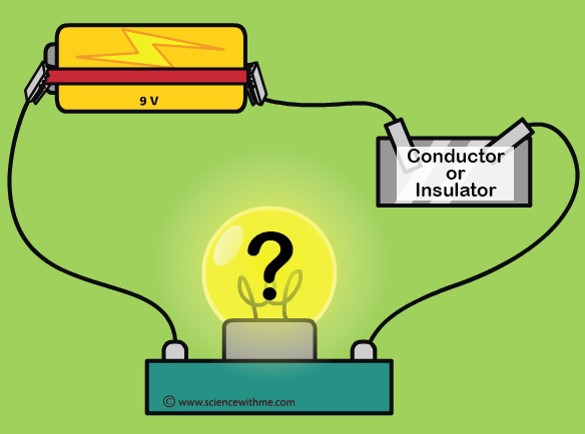
Conductors and Insulators
Insulator: A material charges cannot travel through
Conductor: A material charges can travel through

25
Conductivity
Conductivity: An indication of how easily charges travel through a material
Electrons can move through almost all metals (conductors); some metals more easily than others
The higher the conductivity of a material, the more easily electrons can move through
26
27
Current
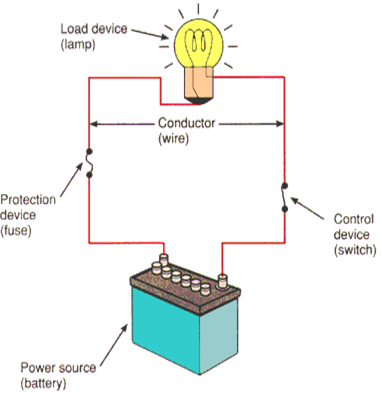
Chemical energy from a source (cell or battery) causes charges to move through a conductor (wires), carrying energy to an electrical device load (cellphone)
28
Current
The moving charges are called an electric current
Symbol for current: I
Current is measured in amperes: A
29
Current
Ammeters measure electric current

30
31
Electrical Loads
Load: A device that converts electrical energy into another form of energy
As electrons pass through a load, they lose energy as electrical energy is converted to another type of energy

32
Electrical Loads
Light bulb: A load that transforms electrical energy into light energy
Radio: A load that transforms electrical energy into sound energy
33
Electrical Loads
A load resists (hinders) the flow of current
Electrons in the current collide with atoms that make up the load, or with each other
Collisions interfere with the flow of current
34
Resistance
Resistance: Describes the amount that current is hindered by a load
•Symbol: R
•Units: Ω (Ohm)
Example of Resistance: Filament in a Light Bulb

35
Resistance
•Charges move from a large wire (electrical cord) into a very thin wire (filament)
Since the charges have less room in the filament (the filament resists the movement of charges), they collide with atoms so hard that the filament gets very hot
The heat makes the filament glow (“light up”)
36
Resistance
Resistance can be measured with an Ohmmeter

37
Open Ended
38
39
Electrical Circuits
Electrical circuit: A source, a load, and wires in a closed loop that allow current to flow
Source (electrochemical cell)
Load (lightbulb)
Wires

40
Short Circuits
Short circuit: A circuit with a resistance that is too low, making the current so high that it is dangerous

41
Short Circuits
Example: If there wasn’t a load (light bulb) to resist the flow of current, the current would be so large that the conductor would get very hot and start a fire
42
Modelling the Flow of Current
Negative terminal repels the negative charges already in the conductor
Positive terminal attracts the negative charges already in the conductor
Electrons move along the conducting wires; electrons from the electrochemical cell move into the conductor

43
Modelling the Flow of Current
As the electrons pass through the load, they transfer some of their energy to the load
The electrons then leave the load and return to the electrochemical cell
44
Modelling the Flow of Current
Electrons enter the electrochemical cell; combine with positive ions to become neutral
Over time: fewer electrons at negative terminal; fewer positive ions at positive terminal
The worker (chemical energy) can carry more electrons up the ladder, keeping the number of separated charges equal
45
Controlling the Flow of Current
In a typical circuit, a switch controls current in a circuit

46
Controlling the Flow of Current
A. The switch is open. The circuit is open so the current cannot flow.
B. The switch is closed. The circuit is closed so the current can flow and the light is on.

47

48
Comparison: Water Circuit and Electrical Circuit
Water circuit: A pump lifts the water to a higher level against the pull of gravity
Electrical circuit: The cell or battery is similar to the pump

49

50

51

Topic 3.3 - Electrical Circuits
Show answer
Auto Play
Slide 1 / 51
SLIDE

