

Physical and Chemical Changes

Presentation
•
Science
•
8th Grade
•
Medium
+1
Standards-aligned

Joseph F Mcguinness
Used 921+ times
FREE Resource
8 Slides • 5 Questions
1
Physical and Chemical Changes
Feb. 1st-5th

2
Multiple Choice

Warm up. Look at the image, and calculate which formula contains the most atoms of Oxygen
3
Physical and Chemical Changes Notes
1. Get out your Journal
2. Turn to a clean page
3. Format the page like you see to the right

4
Physical Changes (Term)
Are easily reversible, have no new products, and are often just a change of state of matter (Definition)
Examples include:
Solid to liquid
Liquid to gas
Gas to liquid
Liquid to solid

5
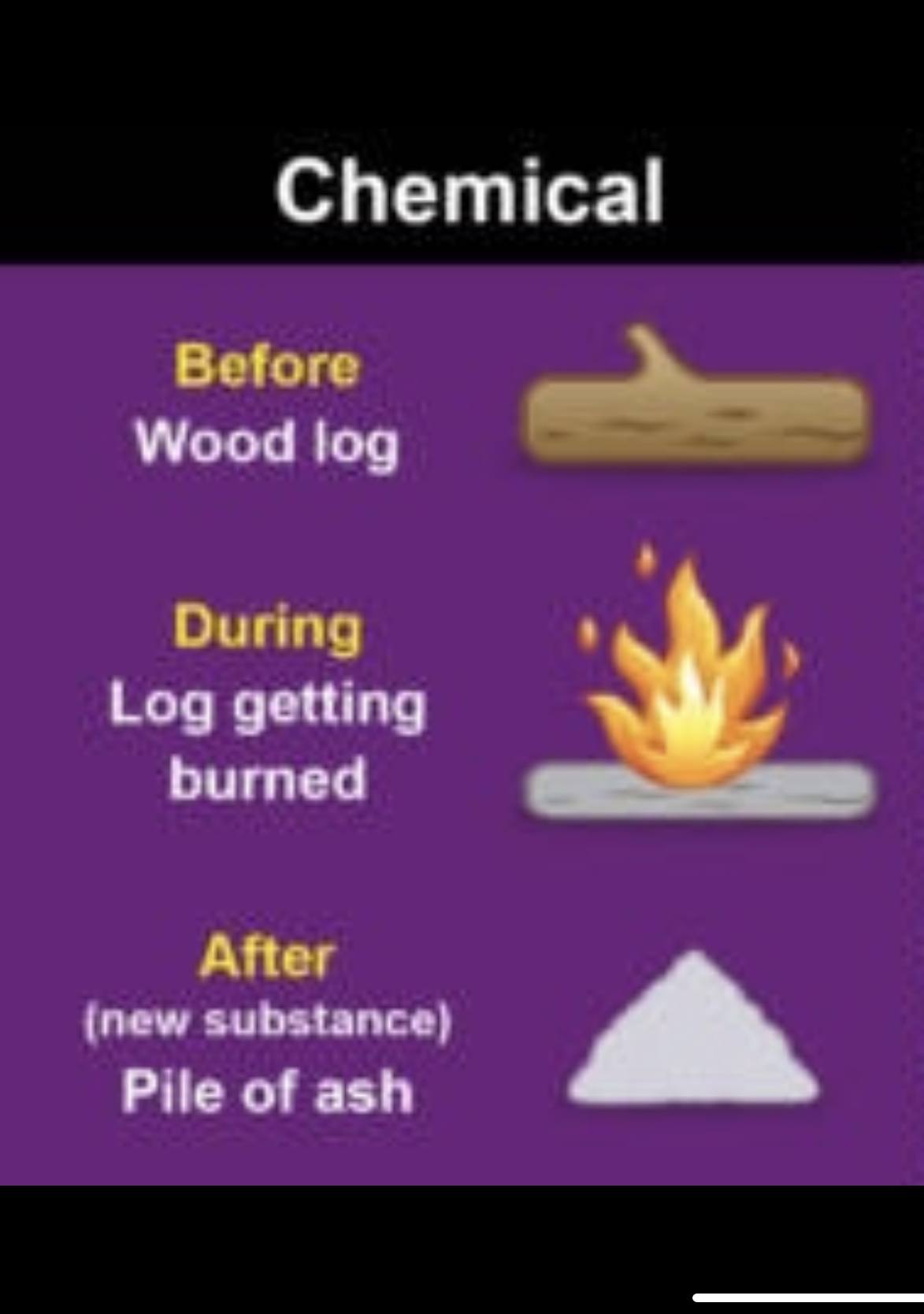
Chemical Changes (Term)
Are not easily reversed, new products are formed, reactants are used up, have evidence of heat/light/sound/fizzling occur, can produce electricity, or have a precipitate form (Definition)
Example: Wood Burning
6
Multiple Choice
7
Multiple Choice
8
Reactants (Term)
The substances in a chemical reaction that chemically combine
Examples would be the combination of sodium and chlorine

9
Products (Term)
The new substance made after a chemical reaction
Examples include Salt (NaCl) after sodium and chlorine combine

10
Precipitates (Term)
A solid that forms after two liquids chemically react (definition)
Examples would include the combination of milk and vinegar

11
Multiple Choice
12
Evidence of a chemical change
Abbreviation to remember = City, Girls, Like, To, Order, Pizza
C: color change
G: Gas
L: Light is produced
T: Temperature change
O: odor is produced
P: Precipitate is formed

13
Multiple Choice
Physical and Chemical Changes
Feb. 1st-5th
Show answer
Auto Play
Slide 1 / 13
SLIDE


