
Chemical Formulas and Bonding Review
Presentation
•
Chemistry
•
8th Grade
•
Practice Problem
•
Medium
Standards-aligned
Michael Stange
Used 25+ times
FREE Resource
8 Slides • 12 Questions
1
​
2
A way to represent a compound like a mathematical formula.
It uses ELEMENT SYMBOLS from the periodic table and SUBSCRIPTS to show how many of each element are in the COMPOUND.
COEFFICIENTS tell how many of the COMPOUND there are.
3
4
Multiple Select
1. How many total atoms are in this compound?
2. How many atoms of Hydrogen are in C6H12O6?
12 total atoms
24 total atoms
12 atoms of Hydrogen
24 atoms of Hydrogen
5
Fill in the Blanks
How many total atoms are in 6H2SO4? (remember to add your parentheses and distribute).
Type answer...
6
7
Fill in the Blanks
How many total atoms are in the compound, 2Na(OH)2?
Type answer...
8
These are the number of ELECTRONS on the OUTER SHELL and they are responsible for how the atom BONDS to other atoms.
9
Multiple Choice
What are valence electrons?
The total number of electrons in an atom
The number of electrons in the outermost shell
The number of electrons in the second shell
The number of protons in the outermost shell
10
Multiple Choice
11
Multiple Choice
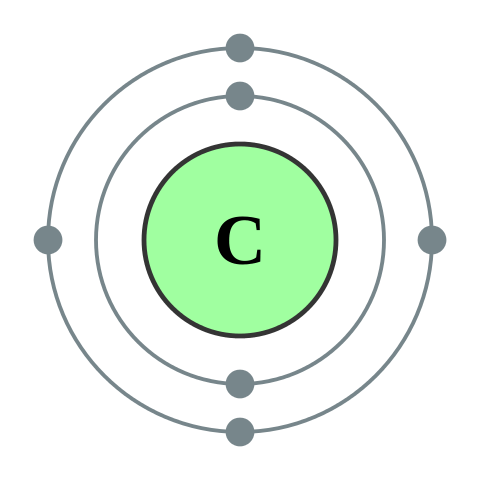
How many valence electrons does carbon have?
4
5
6
7
12
This is a way to write the number of VALENCE ELECTRONS in a way that tells you how many electrons will be gained or lost in a CHEMICAL REACTION.
The LEFT side of the periodic table has POSITIVE OXIDATION NUMBERS.
The RIGHT side of the periodic table have NEGATIVE OXIDATION NUMBERS.
13
Multiple Choice
How many valence electrons do elements in Group 15 have?
15
5
4
14
Multiple Choice
How many electrons are required to fill the outer shell for elements in Group 15
15
3
5
15
Multiple Choice
Group 15 has 5 VALENCE ELECTRONS. What would its OXIDATION NUMBER be?
+5
-5
+3
-3
16
IONIC bonds are between METALS and NONMETALS.
IONIC: METALS (+) LOSE electrons and NONMETALS (-) GAIN electrons.
COVALENT bonds are between NONMETALS.
COVALENT: SHARE electrons (no charges)
17
These are a way to visualize the number of VALENCE ELECTRONS.
They are used with the OXIDATION NUMBER to predict BONDING.
All ELEMENTS (except for Hydrogen) follow the OCTET RULE:
They all need 8 VALENCE ELECTRONS & will LOSE, SHARE. or STEAL to get 8.
18
Multiple Choice
19
Multiple Choice
Oxygen is number 8 on the periodic table and is in GROUP 16. How many electrons should Oxygen have around its Lewis dot model?
5
6
7
8
20
Multiple Choice
Aluminum is in group 13 on the periodic table and has the Lewis structure shown. What would be its oxidation number?
+3
-3
+5
-5
​
Show answer
Auto Play
Slide 1 / 20
SLIDE

Similar Resources on Wayground
15 questions
The Giver (Symbolism)
Presentation
•
8th Grade
15 questions
Conductors, Semiconductors, and Insulators
Presentation
•
8th Grade
16 questions
Acids, Bases, & Salts
Presentation
•
8th Grade
17 questions
Cellular Respiration and Photosynthesis Chemical Equations
Presentation
•
8th Grade
18 questions
Lesson 5.5: The Theory of Plate Tectonics
Presentation
•
8th Grade
16 questions
Acids and Bases
Presentation
•
9th Grade
14 questions
Chemical/Physical Properties and Changes
Presentation
•
9th Grade
17 questions
Density Lesson
Presentation
•
7th Grade
Popular Resources on Wayground
10 questions
How much do you know about our Portrait of an Eagle?
Quiz
•
10th Grade
10 questions
Fast Food Slogans
Quiz
•
6th - 8th Grade
21 questions
Continents and Oceans
Quiz
•
6th Grade
20 questions
Parts of Speech
Quiz
•
5th Grade
16 questions
Subject & Predicate
Quiz
•
5th Grade
25 questions
Multiplication Facts
Quiz
•
5th Grade
12 questions
Map Skills
Quiz
•
3rd Grade
22 questions
Continents and Oceans
Quiz
•
5th Grade
Discover more resources for Chemistry
20 questions
Counting Atoms Practice
Quiz
•
8th Grade
15 questions
Physical and Chemical Properties of Matter
Quiz
•
8th Grade
10 questions
Mastering Significant Figures in Chemistry
Interactive video
•
6th - 10th Grade
20 questions
Counting Atoms
Quiz
•
8th Grade
10 questions
Physical and Chemical Properties
Quiz
•
8th Grade
20 questions
Periodic Table Review
Quiz
•
8th Grade
20 questions
Acids and Bases
Quiz
•
8th Grade
11 questions
What are Atoms!
Interactive video
•
8th Grade