Search Header Logo
Earth+Moon Review and Practice

Earth+Moon Review and Practice

Assessment

Presentation

Science

7th Grade

Easy

NGSS
MS-ESS1-1, MS-ESS2-6, MS-ETS1-1

+3

Standards-aligned

Created by

Lauren Morriss

Used 1+ times

FREE Resource

29 Slides • 44 Questions

1

Earth+Moon Systems

Review and Practice

Slide image

2

Slide image

3

Slide image

4

Slide image

5

Open Ended

How does changing altitude or elevation change your point of view? How does it change your frame of reference?

6

Multiple Choice

If a mountain climber reaches the same height as a glider, their ______________ would be the same, but the glider is at a higher _____________.

1

altitude; elevation

2

elevation; altitude

7

Slide image

8

Slide image

9

Multiple Choice

Rocks, trees, wind, and animals are all apart of the

1

Geosphere

2

Hydrosphere

3

Ecosystems

4

Food web

10

Multiple Choice

What is the area where all living things are called?

1

Geosphere

2

Biosphere

3

Inner Core

4

Food chain

11

Multiple Choice

The parts of a system can be natural or

1

made by nature.

2

made by observations.

3

made by humans.

12

Multiple Choice

A group of parts that work together to achieve a goal.

1

matter

2

system

3

conduction

4

solar energy

13

Multiple Choice

The area of the earth that includes rocks, mountains, crust, mantle and the inner core.

1

Geosphere

2

Atmosphere

3

Hydrosphere

14

Slide image

SUBSYSTEMS OF A SYSTEM

15

Multiple Choice

Cells combine to form tissues, and tissues combine to form organs. This shows....

1

Some subsystems are more important than others

2

subsystems of a system can be placed in order from simple to complex

3

there are infinite subsystems

16

Slide image

17

Multiple Choice

Is it better to "zoom in" or "zoom out" to see systems more clearly

1

zoom out, you see the larger picture

2

zoom in, you see the fine details

3

neither, you can only make observations from your perspective

4

Both, there are some details you can only see from different perspectives

18

Slide image

19

Open Ended

list the major systems and smaller subsystems that could be interacting in the polar bear picture:

20

Slide image

is one view better than the other?

21

Open Ended

list the major systems and smaller subsystems that could be interacting in the Earth+Moon picture. Did you notice different things in the different views?

22

Slide image

23

Slide image

24

Slide image

25

Slide image

26

Multiple Choice

When the Earth rotates, it causes -

1

Seasons

2

Day and Night

27

Multiple Choice

When the Earth rotates, it causes -

1

Seasons

2

Day and Night

28

Multiple Select

If it is winter in the Southern Hemisphere what season will it be in the Northern Hemisphere?

1

Winter

2

Summer

3

Spring

4

Fall

29

Multiple Choice

What season is it in the Northern Hemisphere when it is fall in the Southern Hemisphere?

1

Winter

2

Spring

3

Summer

4

Fall

30

Multiple Choice

What effect does the tilt of the earth have?

1

It causes the earth to be farther away from the sun at different times of the year

2

It changes the angle that the sun strikes the earth in different land areas

3

When the earth is tilted away from the sun we have day

4

When the earth is tilted away from the sun we have night

31

Multiple Choice

Which of the following best describes the tilt of the earth when it is summer in the southern hemisphere?

1

The northern hemisphere is tilted toward the sun

2

The northern hemisphere is tilted away from the sun

3

The southern hemisphere is tilted toward the sun

4

The southern hemisphere is tilted away from the sun

32

Multiple Choice

Why is the Equator warmest?

1

Because it is closest to the sun.

2

Because it receives the most direct sunlight

3

Because no clouds form here.

4

Because it is far from the sun

33

Multiple Choice

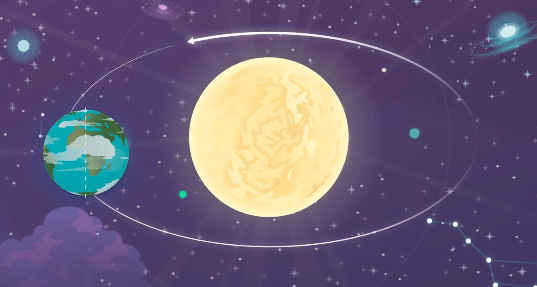
What is the term used to describe the motion of the Earth around the Sun?

1

Resolution

2

Rotation

3

Revolution

4

Round

34

Multiple Choice

What causes nighttime and daytime on Earth?
1
the Sun rotating on its axis  
2
Earth rotating on its axis
3
Earth revolving around the Sun
4
the Moon revolving around Earth

35

Multiple Choice

Which of these cycles takes 24 hours?  
1
Earth rotating on its axis  
2
Earth revolving around the Sun  
3
the Moon rotating on its axis  
4
the Moon revolving around Earth

36

Multiple Choice

What event occurs because of the rotation of Earth?

1

tides

2

four seasons

3

day and night

4

change in weather

37

Multiple Choice

What event occurs because of the rotation of Earth?

1

tides

2

four seasons

3

day and night

4

change in weather

38

Slide image

39

40

Multiple Choice

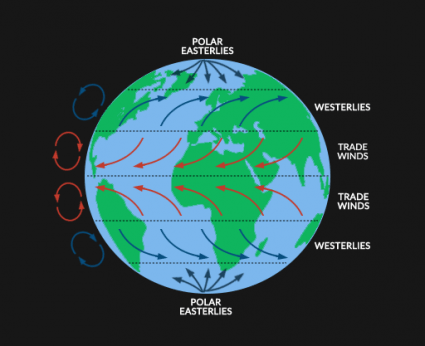
The Coriolis effect causes ___________.

1

the Earth to rotate on its axis

2

earthquakes

3

global winds to move in a curved path instead of a straight line

4

the Earth to revolve around the sun

41

Multiple Choice

Question image

what is the coriolis effect?

1

change in location of warm and cold surface water every 2-7 years

2

tendency of objects moving large distances on Earth’s surface to bend to the right in the northern hemisphere & to the left in the southern hemisphere

3

winds in northern Indian ocean that blow from the southwest in the summer & from the northeast in winter

4

two layers of horizontal winds moving in opposite directions

42

Multiple Choice

The Coriolis Effect is caused by what?

1

The wind blowing

2

Earth's gravity pulling things down

3

The rotation of the Earth

4

The pull of the Moon

43

Slide image

44

Slide image

45

Slide image

46

Multiple Choice

The Earth's _______ is an imaginary line that goes from the North Pole to the South Pole.

1

vernal equinox

2

axis

3

solar eclipse

4

solar flare

47

Multiple Choice

The Earth's axis is tilted _____ degrees.

1

23.5

2

25.3

3

30.2

4

24

48

Multiple Choice

The earth's orbital path sits on the _________.

1

axis

2

ecliptic plane

3

equatorial plane

49

Multiple Choice

Question image

How long does it take for the Earth to make one full orbit around the Sun?

1

one day

2

one week

3

one month

4

one year

50

Multiple Choice

The moon's orbit is tilted _____ from the earth's orbital plane

1

5 o

2

10o

3

23.5 o

51

Slide image

52

Slide image

53

Slide image

54

Slide image

55

Slide image

56

Multiple Choice

What part of the moon do we see from Earth?
1
all of it
2
the same side
3
none of it
4
only one quarter

57

Multiple Choice

What is the correct order of the moon phases?
1
new, full, 1st quarter, 3rd quarter
2
new moon, 1st quarter, full moon, 3rd quarter
3
1st quarter, 3rd quarter, new moon, full moon
4
new, 1st quarter, 3rd quarter, full

58

Multiple Choice

The phase of the moon that occurs between the sun and Earth
1
Full moon
2
Waxing crescent
3
Waning Crescent
4
New Moon

59

Multiple Choice

Define New Moon

1

None of moon is visible from Earth

2

All of moon visible from Earth

3

Moon is 1/2 visible from Earth

4

Moon is more than Half Visible from Earth

60

Multiple Choice

Question image

The Moon orbits Earth in a ________________ direction

1

clockwise

2

counterclockwise

3

upwards

4

downwards

61

Multiple Choice

Question image
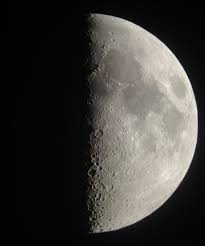
Name the moon phase
1
First Quarter
2
Last Quarter
3
New Moon
4
Full Moon

62

Multiple Choice

Question image
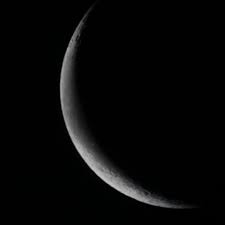
Name the moon phase
1
waning crescent
2
waxing crescent
3
waning gibbous
4
waxing gibbous

63

Slide image

64

Slide image

65

66

Multiple Choice

Question image

the material displaced from the land when a crater is formed

1

comet

2

ejecta

3

floor

4

rays

67

Multiple Choice

Question image

What do you call the lines that form around a crater

1

comet

2

ejecta

3

floor

4

rays

68

Multiple Choice

What caused the moon's craters?

1

a big monster was walking on the moon and those are his footprints

2

repeated moon landings

3

asteroid crashes

69

Multiple Choice

Question image
Why are craters on the moon so well-preserved?
1
No atmosphere = no precipitation for erosion
2
The rocks on the moon are more solid
3
The rocks on the moon absorb more impact

70

Multiple Choice

Question image
How do most craters on the moon form?
1
Collision with other planets
2
Rapidly moving debris hit the surface
3
The sun burns holes in the moon

71

Multiple Choice

Question image

the material displaced from the land when a crater is formed

1

comet

2

ejecta

3

flooded crater

4

complex crater

72

YOU DID IT!

the last video is 7 min. A guy created a scaled model of the solar system using a MARBLE for the earth. He had to do it in the desert because it had to be 7 miles across!!

73

Earth+Moon Systems

Review and Practice

Slide image

Show answer

Auto Play

Slide 1 / 73

SLIDE