Search Header Logo
Effects of Catalysts on the Rate of Reaction

Effects of Catalysts on the Rate of Reaction

Assessment

Presentation

Chemistry

11th Grade

Easy

NGSS
HS-PS1-5, HS-PS1-4, HS-PS1-6

+1

Standards-aligned

Created by

Mr. Cavida

Used 9+ times

FREE Resource

21 Slides • 34 Questions

1

Effects of Catalysts on the Rate of Reaction

Slide image

2

Objectives:

  • Define a catalysts

  • Describe how adding a catalysts affects the rate of the reaction

  • Explain, using an energy profile diagram, the effect of adding a catalyst

  • Give examples of reactions involving catalysts

Slide image

3

Let us review first... ready? Go!

4

Multiple Choice

A ______________ is a substance that increases the rate of a reaction without being used up during the reaction.

1

catalyst

2

product

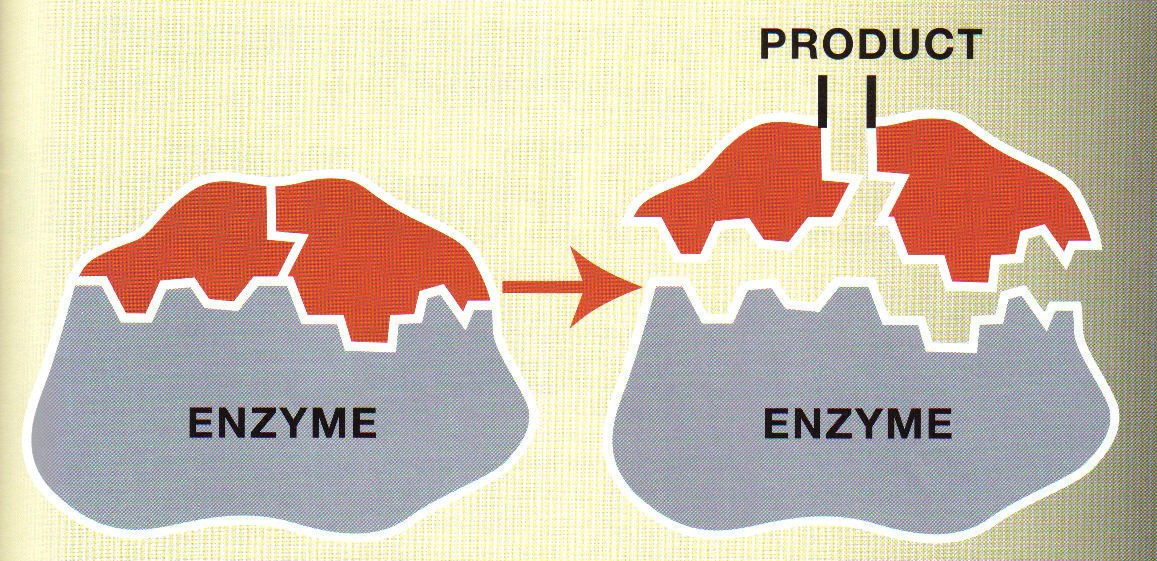
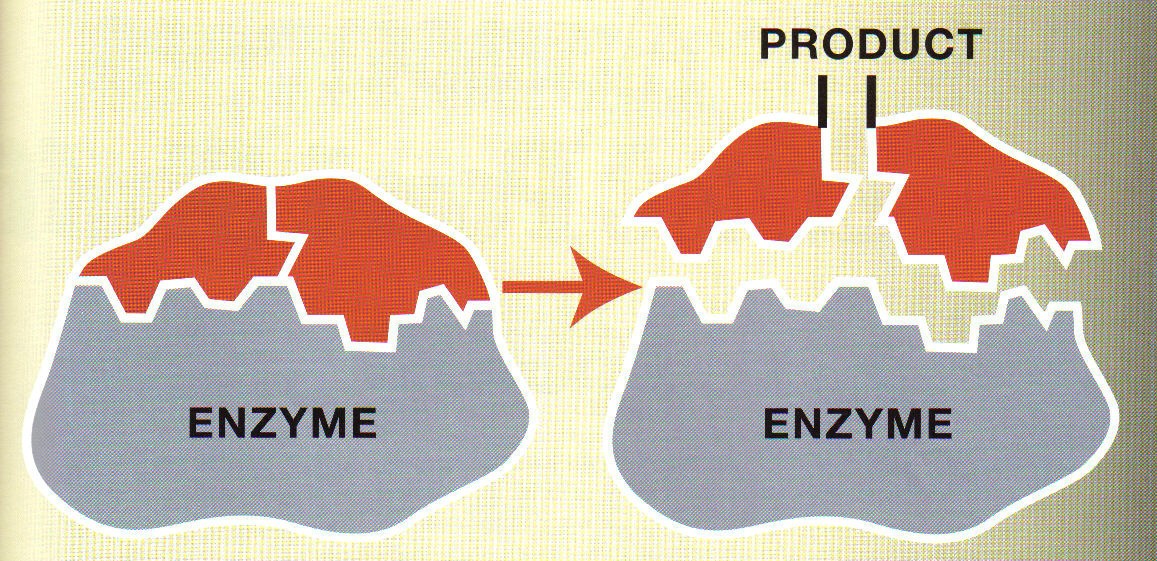
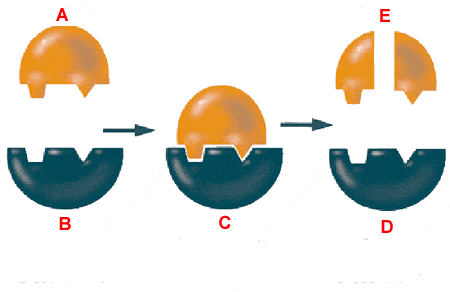
3

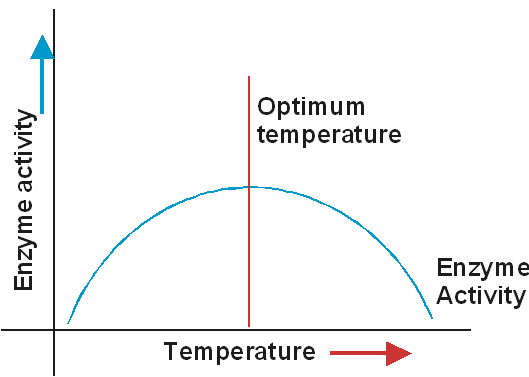
reactant

4

solute

5

Multiple Choice

Increasing the ____ causes the particles (atoms

or molecules) of the reactants to move more quickly so that

they collide with each other more frequently and with more

energy.

1

Catalyst

2

Surface Area

3

Temperature

4

Concentration

6

Multiple Choice

Products will form faster if____________

1

the particle size of the reactants are larger.

2

temperature is decreased.

3

concentration of the reactants are increased.

4

the reaction is not stirred.

7

Multiple Choice

The rate of a chemical reaction is NOT affected by which of the following:

1

temperature

2

concentration

3

particle size (surface area)

4

All of these affect reaction rates

8

Multiple Choice

The minimum amount of energy needed for colliding particles to react is called the

1

Chemical Energy

2

Kinetic Energy

3

Activation Energy

4

Potential Energy

9

What are catalysts?

  • Catalysts are substances that change the rate of a reaction without being used up in the reaction.

  • Catalysts never produce more product – they just produce the same amount more quickly.

Slide image

10

How catalysts affect the rate of the reaction?

11

In your notebook, draw a reaction profile diagram. If you are struggling look back at the exothermic and endothermic reaction.

12

Reaction Profile Diagram

  • Check your axes

  • Check you labelled REACTANTS and PRODUCTS

  • Check your line follows the correct progression

  • Label energy change

  • Label ACTIVATION ENERGY

Slide image

13

Reaction Profile with a Catalyst

The catalyst provide an alternative reaction pathway with a lower activation energy.

Slide image

14

Open Ended

Q. If the new pathway has a lower activation energy what does that mean for the reaction?

(think about collision theory)

15

Reaction Profile with a Catalyst

The catalyst provide an alternative reaction pathway with a lower activation energy.


More particles have enough energy for a collision to be successful.

Slide image

16

How do catalysts work? For a chemical reaction to take place:


  • energy is needed to break existing bonds, so new bonds can be formed;

  • the reacting parts of particles need to be brought together.

  • Different catalysts work in different ways, but most solid catalysts work by lowering the amount of energy needed for the reaction to take place.

17

Multiple Choice

Question image

Q. In the Haber Process, _____ is used as the catalyst of the reaction to produce ammonia from nitrogen and hydrogen gases.

1

Iron

2

Vanadium (V) oxide

3

Manganese oxide

4

Nickel

18

Multiple Choice

Q. What is the catalyst used in the Contact Process to produce sulfuric acid from sulfur dioxide and oxygen?

1

Iron

2

Vanadium(V) oxide

3

Platinum

4

Nickel

19

Many catalysts are transition metals or their compounds. For example:

  • Iron is a catalyst in the production of ammonia from nitrogen and hydrogen (the Haber process).

  • Nickel is a catalyst in the production of margarine (hydrogenation of vegetable oils).

  • Platinum is a catalyst in the catalytic converters of car exhausts. It catalyzes the conversion of CO and NO2 into the less polluting CO2 and N2.

Slide image

20

How a platinum catalyst works

  • When hydrogen and oxygen are mixed in a jar, there is no reaction. If a platinum wire is added, the gases react instantly with a loud pop, producing water.

  • The gas molecules are brought together onto the surface of the platinum. They are adsorbed

  • The molecules are much closer together and their bonds are weakened, lowering the activation energy of the reaction

Slide image

21

Decomposition of Hydrogen Peroxide (H2O2)

  • Hydrogen peroxide decomposes into water and oxygen.

  • Without a catalyst, this reaction is very slow, and can take months.

  • With a catalyst such as manganese (IV) oxide, the reaction takes minutes.

Slide image

22

Multiple Choice

Q. Which catalyst is used in making margarine?

1

Iron

2

Nickel

3

Platinum

4

Copper

23

Multiple Choice

Q. Which catalyst is used to convert toxic gases in the car exhaust into less harmful gases?

1

Iron

2

Nickel

3

Vanadium (V) oxide

4

Platinum

24

Homogeneous Catalysts

When a catalyst and the reactants in a catalysed reaction are in the same phase, the catalyst is described as a homogeneous catalyst. 


For example, a catalyst can be

described as homogeneous if it is dissolved in water and the reactants are also present as an aqueous solution.

Slide image

25

Heterogeneous Catalysts

  • If the catalyst is in a different phase to the reactants, the

    catalyst is described as a heterogeneous catalyst.

Slide image

26

Multiple Choice

Question image

What type of catalysis is shown in the diagram?

1

homogeneous

2

heterogeneous

27

Multiple Choice

Question image

Q. What kind of catalysis is shown in the picture?

1

homogeneous

2

heterogeneous

28

Multiple Choice

Question image

Q. What type of catalyst is shown in the diagram?

1

heterogenous

2

homogeneous

29

Multiple Choice

Question image

Q. What kind of catalyst is shown in the picture?

1

heterogenous

2

homogeneous

30

Slide image

31

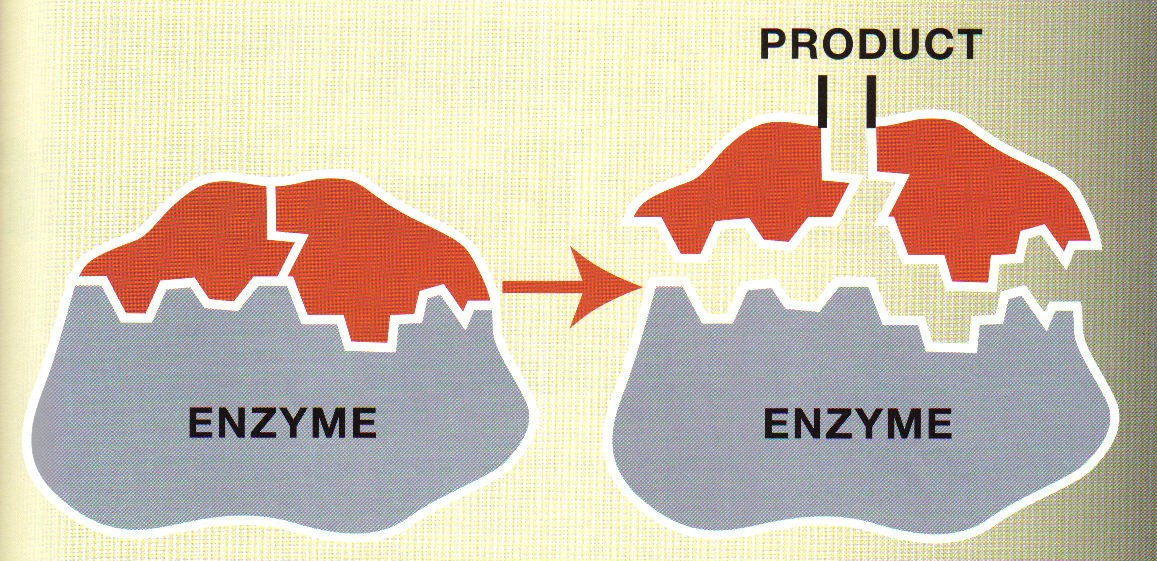
Enzymes

  • Biological catalysts.

  • Large protein molecules which enable the biochemical reactions that happen in living things to take place very quickly at

    relatively low temperatures

Slide image

32

Enzymes

  • Most enzyme-catalysed

    reactions happen in solution and are examples of

    homogeneous catalysis.


Slide image

33

Energy profile for an enzyme-catalysed

endothermic reaction

  • Enzymes speed up a reaction without being used up

  • Enzymes provide an alternative reaction pathway with a lower

    activation energy

Slide image

34

Specific features:

  • more efficient than inorganic catalysts; the reaction rate is often increased by a factor of 106 to 1012

  • very specific; they usually only catalyse one particular reaction

  • enzymes do not produce byproducts

  • enzymes work under very mild conditions; for example 35°C, pH 7, atmospheric pressure

  • the amount of enzyme present in a cell can be regulated according to need.

Slide image

35

Cofactors and Coenzymes

  • A cofactor is a non-protein chemical compound or metallic ion that is required for an enzyme's activity as a catalyst.

  • Cofactors can be considered "helper molecules" that assist in biochemical transformations.

  • coenzymes and cofactors play an integral role in a number of cellular metabolism reactions playing both structural and functional roles to aid in the catalysis.


36

Multiple Choice

Question image

Q. The molecule an enzyme is working on is called the:

1

Substrate

2

Solvent

3

Allosteric Inhibitor

4

CoEnzyme

37

Multiple Choice

Question image

Q. At low temperatures enzyme activity declines because of:

1

Denaturation

2

Decreased Kinetic Motion

3

Increased H-Bonding

4

Dissociation of Ionic Compounds

38

Multiple Choice

Question image

Q. At high temperatures enzyme activity declines because of:

1

Denaturation

2

Decreased Kinetic Motion

3

Increased H-Bonding

4

Dissociation of Ionic Compounds

39

Multiple Choice

Question image

Q. Enzymes speed up reaction rates by changing:

1

Activation Energy

2

pH

3

Hydrogen Bonds

4

Kinetic Energy

40

Multiple Choice

Question image

Q. Enzymes catalyze reactions by ___________ Activation Energy.

1

Increasing

2

Decreasing

41

Multiple Choice

Question image

Q. The area that the substrate fits into on the enzyme is called the:

1

Active Site

2

Allosteric Site

3

DiSulphide Bridge

4

β-Pleated Sheet

42

Multiple Choice

Q. Catalysts permit reactions to proceed along a ___________energy path.

1

lower

2

higher

43

Multiple Choice

Q. Why does a higher concentration increase the rate of reaction?

1

it increases the amount of reactants

2

it lowers the activation energy

3

it increases the energy of particle collisions

4

it increases the frequency of particle collisions

44

Multiple Choice

Q. Which does NOT happen when the temperature is increased?

1

Particles collide more often

2

Particles collide with more energy

3

Particles move faster

4

More particles collide in the correct orientation

45

Multiple Choice

Q. Which of the following can not increase the rate of reaction?

1

Decrease the size of reactants

2

Increase the temperature

3

Presence of inhibitors

4

Increase the concentration of reactants

5

Increase the pressure

46

Multiple Choice

Q. Does the presence of catalyst will change the amount of product?

1

Yes

2

No

47

Multiple Choice

Q. _____________ concentration of reactants by adding solute; ______________ concentration of reactants by adding solvent.

1

Increase; Increase

2

Decrease; Decrease

3

Increase; Decrease

4

Decrease; Increase

48

Multiple Choice

Q. Which factor can only affects the rate of reaction when involved gases as the reactant?

1

Concentration of reactants

2

Pressure

3

Temperature

4

Size of reactants

49

Multiple Choice

Q. Which of the following will lower the rate

of reaction?

1

adding an enzyme to the reaction

2

decreasing the temperature from 40°C to

10°C

3

breaking a chunk of calcium up into

smaller pieces

4

increasing the amount of solute

dissolved in a solution

50

Multiple Select

Q. Pick the TWO (2) options that will INCREASE the rate of a reaction.

1

Reducing Heat

2

Adding Catalyst

3

Adding Heat

4

Removing Catalyst

51

Multiple Choice

Q. ________ is the measure of how much area of an

object is exposed.

1

Surface Area

2

Catalyst

3

Temperature

4

Concentration

52

Multiple Choice

Q. Increasing the ____ causes the particles (atoms

or molecules) of the reactants to move more quickly so that

they collide with each other more frequently and with more

energy.

1

Catalyst

2

Surface Area

3

Temperature

4

Concentration

53

Multiple Choice

Q. The ____________ states that atoms, ions, or molecules must collide in order to react.

1

transition state

2

activation energy

3

rate law

4

collision theory

54

Multiple Choice

Q. Increasing the temperature will increase the kinetic energy of particles, therefore increasing the collisions between particles.

1

false

2

true

55

Multiple Choice

Q. Increasing the temperature will increase the kinetic energy of particles, therefore increasing the collisions between particles.

1

false

2

true

Effects of Catalysts on the Rate of Reaction

Slide image

Show answer

Auto Play

Slide 1 / 55

SLIDE