Mendel's Laws
Presentation
•
Biology
•
9th - 10th Grade
•
Medium
Standards-aligned
Aasha Beard
Used 16+ times
FREE Resource
11 Slides • 27 Questions
1
Mendel's Laws
SB3a. Use Mendel’s laws (segregation and independent assortment) to ask questions and define problems that explain the role of meiosis in reproductive variability.
2
Open Ended
How is meiosis involved in the transfer of genes?
3
Multiple Choice
The variety of genes and alleles that exist in organisms
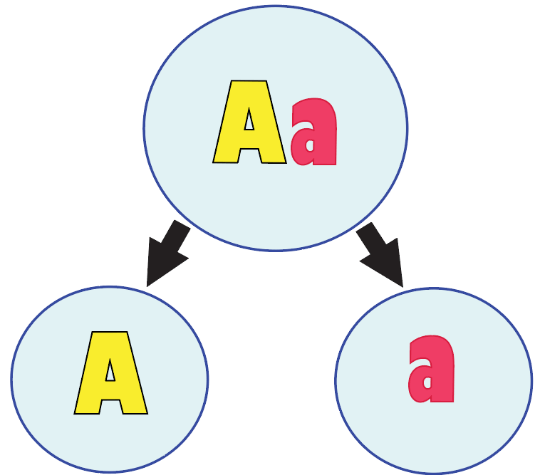
independent assortment
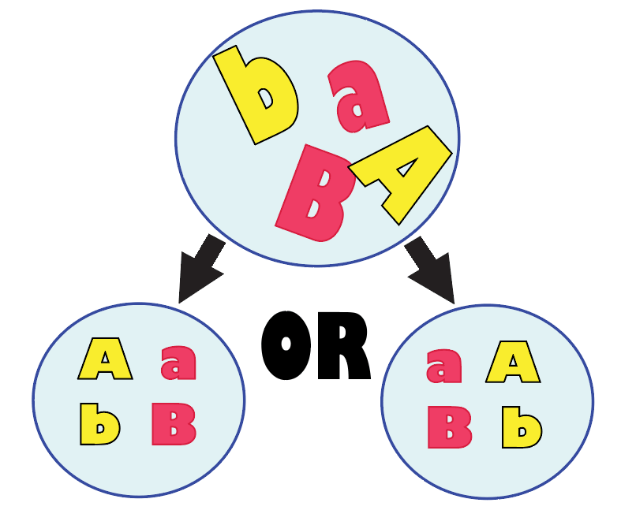
chromosomal abnormalities
genetic diversity
mutations
4
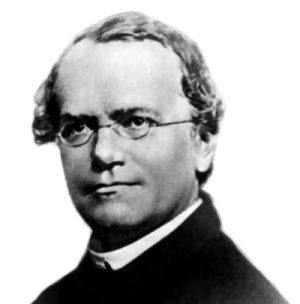
Gregor Mendel
In the mid-1800s, an Austrian monk had questions about genetics.
He specifically wanted to know how traits were passed down from one generation to the next. He conducted his research on pea plants.
He is often referred to as the “father of genetics”
5
Multiple Choice
Who is Gregor Mendel
an Austrian Monk from the mid 1800s who contributed to the study of Genetics
The scientist who discovered the structure of DNA
a British scientist who discovered penicillin
The scientist who used X-Ray Crystallography to shed light on the structure of DNA
6
Multiple Choice
What did Gregor Mendel study?
Mold Spores
Pea Plants
Sun Flowers
Rats
7
Genetics Vocabulary
Trait-a specific characteristic of an organism
Allele- alternative versions of the gene
Genotype-the alleles an organism inherits from its parents.
Phenotype-The physical trait that is expressed
8
Genetics Vocabulary
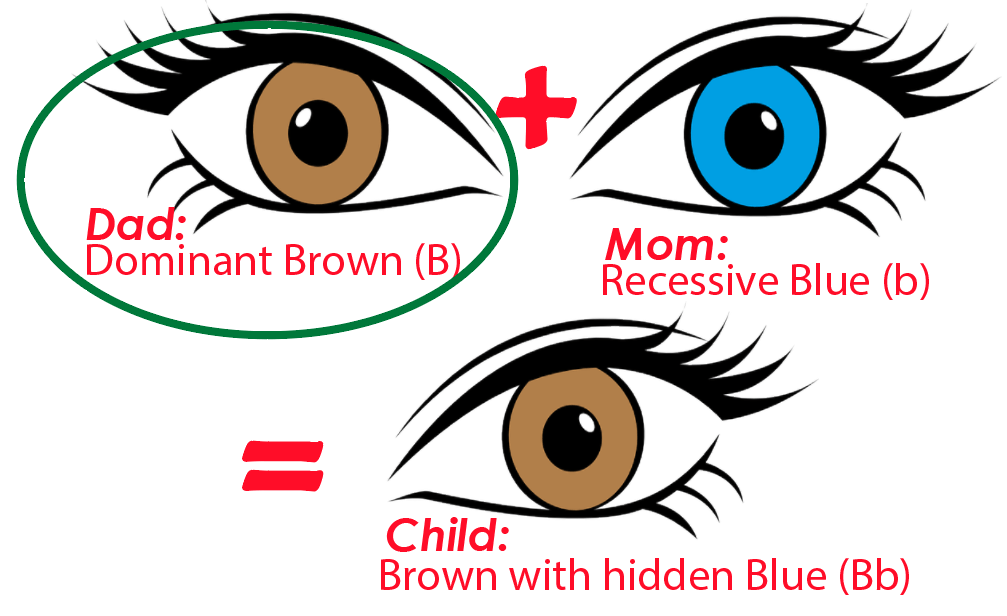
Dominant-A dominant allele is an allele whose trait always shows up in the organism when the allele is present. (Always represented by a Capital letter- A)
Recessive-A recessive allele is an allele that is masked when a dominant allele is present. (Always represented by a lower case letter- a)
9
Genetics Vocabulary
Heterozygous-Alleles are different (hybrid)
Homozygous-Alleles are the same (pure)
10
Multiple Choice
11
Multiple Choice
12
Multiple Choice
Genotype
the allele combination of an organism
different forms of genes
alleles for traits are the same
factors that determine traits
13
Multiple Choice
14
Multiple Choice
What does heterozygous mean?
An organism that has the same alleles for a trait (TT or tt)
An organism that has different alleles for a trait (Tt)
When neither allele is fully dominant; offspring is a mixture of both
the different forms of a trait (hair color--> brown, blonde, red
15
Multiple Choice
Which of the following genotypes is homozygous recessive?
Tt
tt
TT
T
16
Law of Dominance
States that the dominant allele will prevent the recessive allele from being expressed. The recessive allele will only appear when it is paired with another recessive allele in the offspring.
17
Multiple Choice
If a person has a dominant gene and a recessive gene for a certain trait, which will be expressed?
the dominant gene
the recessive gene
both genes
neither gene
18
Multiple Choice
If P represents purple color, and p represents white color, what combination(s) of factors represents white color?
PP and Pp
pp only
Pp only
PP only
19
Remember:
We have two copies of all of our chromosomes
Why?
20
Because you get one from each parent
Diploid cells= 2n
21
Multiple Choice
22
Law of Segregation
When traits are inherited, individual alleles assort independently during gamete production giving different traits an equal opportunity of being passed down.
23
Law of Independent Assortment
When two or more characteristics are inherited, individual hereditary factors assort independently during gamete production, giving different traits an equal opportunity of occurring together.
Caused by gene shuffling/random assortment of chromosomes during meiosis
24
Multiple Choice
Which of Mendel's laws states that alleles are separated during meiosis?
Law of Dominance
Law of Segregation
Law of Independent Assortment
25
Multiple Choice
If your genotype is Bb, then you can only pass a B or b to your child but you can't pass both.
Law of Dominance
Law of Segregation
Law of Independent Assortment
26
Multiple Choice
One gene for the type of earlobes a person will have will be in each gamete.
Law of Dominance
Law of Independent Assortment
Law of Segregation
27
Multiple Choice
This law describes how each homologous pair separates independently of any other pairs during Anaphase I of meiosis
Law of Segregation
Law of Independent Assortment
Law of Gravity
Law of Mathematical Order
28
Multiple Choice
This law describes how each member of a homologous pair is pulled randomly to one side or another in anaphase I
Law of Segregation
Law of Independent Assortment
Law of Gravity
Law of Mathematical Order
29
30
Fill in the Blanks
Type answer...
31
Fill in the Blanks
Type answer...
32
Fill in the Blanks
Type answer...
33
Multiple Choice
The Italian monk/scientist who first showed
the principles of genetics
Watson and Crick
Linnaeus
Darwin
Mendel
34
Multiple Choice
During meiosis, the homologous pairs of chromosomes and the matching alleles are lined up independently.
Offspring are a mix of maternal genes and paternal genes.
This increases genetic variation.
Homozygous Dominant
Law of Segregation
Crossing Over
Independent Assortment
35
Multiple Choice
During meiosis and gamete formation, homologous (paired up) alleles split up
Phenotype
Law of Segregation
Genotype
Dihybrid Cross
36
Multiple Choice
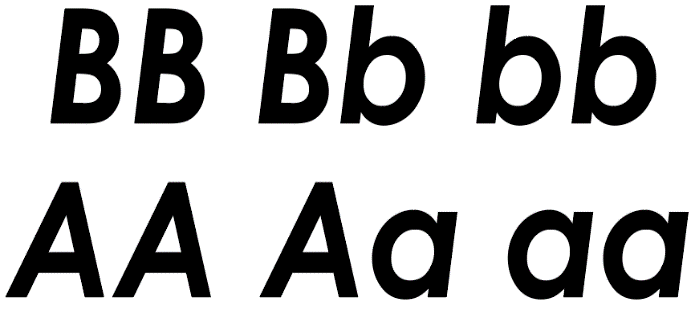
The letter symbols for both homologous alleles.
BB Bb bb AA Aa aa
Genotype
Phenotype
Recessive
Dominant
37
Multiple Choice
The instruction of one allele covers up the instruction
of the other allele in a homologous pair. Symbolized by a capital letter.
Recessive Allele
Dominant Allele
Heredity
Trait
38
Multiple Choice
A feature regulated by a set of genes (allele) passed on
from parents to offspring. Also called inherited traits.
Heterozygous
Mendel
Chromosome
Traits
Mendel's Laws
SB3a. Use Mendel’s laws (segregation and independent assortment) to ask questions and define problems that explain the role of meiosis in reproductive variability.
Show answer
Auto Play
Slide 1 / 38
SLIDE

Similar Resources on Wayground
35 questions
Mitosis/Meiosis review
Presentation
•
10th Grade
34 questions
Energy and Trophic Levels
Presentation
•
8th - 10th Grade
29 questions
Cell division terms part 3
Presentation
•
9th - 10th Grade
29 questions
Genetics terms part 3
Presentation
•
9th - 10th Grade
31 questions
Science Prefixes and Suffixes Lesson
Presentation
•
10th Grade
28 questions
Non-Mendelian Genetics
Presentation
•
9th - 10th Grade
33 questions
G9 Chap 7.3 Cell Structures and Organelles
Presentation
•
9th Grade
30 questions
Honors Cellular Respiration
Presentation
•
9th - 10th Grade
Popular Resources on Wayground
20 questions
STAAR Review Quiz #3
Quiz
•
8th Grade
20 questions
Equivalent Fractions
Quiz
•
3rd Grade
6 questions
Marshmallow Farm Quiz
Quiz
•
2nd - 5th Grade
20 questions
Main Idea and Details
Quiz
•
5th Grade
20 questions
Context Clues
Quiz
•
6th Grade
20 questions
Inferences
Quiz
•
4th Grade
19 questions
Classifying Quadrilaterals
Quiz
•
3rd Grade
12 questions
What makes Nebraska's government unique?
Quiz
•
4th - 5th Grade
Discover more resources for Biology
14 questions
Ecological Succession: Primary and Secondary
Quiz
•
9th Grade
20 questions
Structure & DNA Replication Quiz
Quiz
•
9th Grade
50 questions
Biology EOC Review
Quiz
•
9th Grade
33 questions
Module C - Virus vs Cells, Biomolecules & Enzymes
Quiz
•
9th Grade
25 questions
photosynthesis and cellular respiration
Quiz
•
9th Grade
25 questions
STAAR Evolution Vocabulary
Quiz
•
9th Grade
20 questions
Food Chains and Food Webs
Quiz
•
7th - 12th Grade
20 questions
Genetics 2026
Quiz
•
10th Grade