Search Header Logo
Introduction to Covalent Bonding

Introduction to Covalent Bonding

Assessment

Presentation

Chemistry

9th - 12th Grade

Hard

Created by

James O'Dell

FREE Resource

7 Slides • 75 Questions

1
Introduction to Covalent Bonding

media

2

media

3

media

4

media

5

media

6

media

7

media

8

Multiple Choice

Identify whether the following compound is ionic or covalent.


carbon monoxide

1

covalent

2

ionic

9

Multiple Choice

Identify whether the following compound is ionic or covalent.


titanium oxide

1

covalent

2

ionic

10

Multiple Choice

Which of the following is an example of an IONIC COMPOUND?
1
NaCl
2
H2O
3
CO2
4
NO

11

Multiple Choice

Which of the following is an example of a COVALENT COMPOUND?
1
H2S
2
KI
3
CaCl2
4
MgO

12

Multiple Choice

Question image

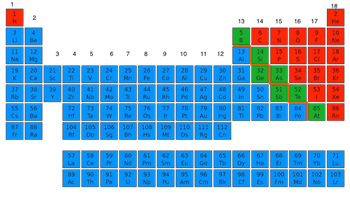
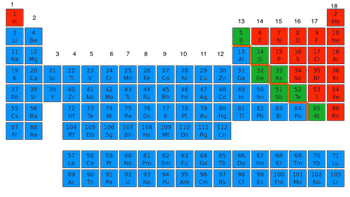
What color indicates the nonmetals?

1

blue

2

red

3

green

4

the colors do not indicate nonmetals

13

Multiple Choice

Question image

What color shows where metals are located on the periodic table?

1

blue

2

green

3

red

4

the colors do not indicate metals

14

Multiple Choice

What kind of bond will Potassium form with Sulfur?

1

ionic

2

covalent

3

metallic

4

no bond

15

Multiple Choice

Question image

What two types of atoms make a covalent bond?

1

2 Nonmetals

2

1 Nonmetal and 1 Metal

3

2 Metals

16

Multiple Choice

Hydrogen and Chlorine will from a _________ bond

1

ionic

2

covalent

3

metallic

17

Multiple Choice

MgO

1

ionic

2

covalent

3

metallic

18

Multiple Choice

Nitrogen and Oxygen will make a ____________ bond

1

ionic

2

covalent

3

metallic

19

Multiple Choice

Carbon and Oxygen will make a ___________ bond.

1

ionic

2

covalent

3

metallic

20

Multiple Choice

Ionic or covalent?
H2O
1
Ionic
2
Covalent

21

Multiple Choice

Ionic or covalent?
NaBr
1
Ionic
2
Covalent

22

Multiple Choice

Ionic bonds are between...
1
Metal and Non-metal
2
Non-metal and Non-metal
3
Metal and Metal

23

Multiple Choice

Is hydrogen considered a metal or a non-metal?
1
A metal
2
Nonmetal
3
Metalloid

24

Multiple Choice

Covalent bonds are between...
1
Metal and Non-metal
2
Non-metal and Non-metal
3
Metal and Metal

25

Multiple Choice

Question image
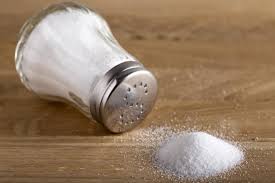
NaCl
1
Ionic
2
Covalent
3
Metallic
4
Polyatomic Ion 

26

Multiple Choice

Question image
CO2
1
Ionic
2
Covalent
3
Polyatomic Ion 
4
Metallic 

27

Multiple Choice

What is the proper name for the covalent compound N3F8?
1
Nitrogen Flouride
2
Nitrogen Fosfate
3
Trinitrogen Octaflouride
4
Nitrogen Pentaflouride

28

Multiple Choice

Name this covalent compound: CO
1
Carbon Oxide
2
Carbon Monoxide
3
Colorado
4
Carbon Oxygenide

29

Multiple Choice

What is the proper name for the covalent compound, CCl4
1
Carbon Chloride
2
Carbon Quadrachloride
3
Carbon Tetrachloride
4
Carbon Dichloride

30

Multiple Choice

Beryllium, Be, and chlorine, Cl, form an ionic compound. In order for the compound to be neutral, what must the formula look like?
1
Be2Cl
2
2BeCl
3
BeCl2
4
Be2Cl2

31

Multiple Choice

In the compound MgCl2, the subscript 2 indicates that
1
There are two magnesium ions for each ion of chlorine
2
The chloride ion is twice the size of the magnesium ion
3
Magnesium and chlorine form a double covalent bond.
4
There are two chloride ions for each magnesium ion.

32

Multiple Choice

Which of the following compounds does NOT contain molecules?
1
H2
2
NaCl
3
CO2
4
H2O

33

Multiple Choice

Noble gases will form chemical bonds with other elements
1
True
2
False
3
Sometimes

34

Multiple Choice

Which is most likely to form an ion of -1?
1
an element from group 17
2
a metal
3
an element from group 1
4
an element with atoms that have eight valence electrons

35

Multiple Choice

Ionic compounds form because _______ charges attract.
1
opposite
2
like

36

Multiple Choice

Ionic or covalent?
H2O
1
Ionic
2
Covalent

37

Multiple Choice

Ionic or covalent?
NaBr
1
Ionic
2
Covalent

38

Multiple Choice

Question image
The following statements are true for ionic bonding EXCEPT
1
bonding between metal and non metal
2
electrostatic forces between opposite charges
3
transferring of electrons
4
sharing of electrons

39

Multiple Choice

Which of these is not a real bond in chemistry?
1
James
2
Ionic
3
Covalent

40

Multiple Choice

Why do elements bond?
1
To be friends
2
To create a new element
3
To become stable

41

Multiple Choice

How are ionic bonds formed?
1
Transfer of electrons
2
Sharing of electrons

42

Multiple Choice

How are covalent bonds formed?
1
Sharing of electrons
2
Transfer of electrons

43

Multiple Choice

Atoms are most stable when their outer shell is complete.
1
true
2
false

44

Multiple Choice

Ionic bonds are between...
1
Metal and Non-metal
2
Non-metal and Non-metal
3
Metal and Metal

45

Multiple Choice

What is a valence electron?
1
The sum of neutrons and protons.
2
The # of electrons in the last shell.
3
A type of bond.
4
A popular compound.

46

Multiple Choice

Covalent bonds are between...
1
Metal and Non-metal
2
Non-metal and Non-metal
3
Metal and Metal

47

Multiple Choice

Is hydrogen considered a metal or a non-metal?
1
A metal
2
Nonmetal
3
Metalloid

48

Multiple Choice

Hydrogen and Chlorine will from a _________ bond

1

ionic

2

covalent

3

metallic

49

Multiple Choice

If two fluorine atoms bond they will make a _____ bond.

1

ionic

2

covalent

3

metallic

50

Multiple Choice

When chlorine gains an electron from sodium, chlorine becomes a ...

1

positive ion

2

negative ion

51

Multiple Choice

When sodium loses an electron to chlorine, sodium becomes a .......

1

positive ion

2

negative ion

52

Multiple Choice

NaCl

1

ionic

2

covalent

3

metallic

53

Multiple Choice

MgO

1

ionic

2

covalent

3

metallic

54

Multiple Choice

Nitrogen and Oxygen will make a ____________ bond

1

ionic

2

covalent

3

metallic

55

Multiple Choice

Carbon and Oxygen will make a ___________ bond.

1

ionic

2

covalent

3

metallic

56

Multiple Choice

When sulfur gains an electron from beryllium it becomes a...

1

positive ion

2

negative ion

57

Multiple Choice

When beryllium loses an electron to sulfur it becomes a...

1

positive ion

2

negative ion

58

Multiple Choice

Beryllium and sulfur will form a ______ bond

1

ionic

2

covalent

3

metalloid

59

Multiple Choice

Question image

In a covalent bond both non-metals _____ electrons.

1

transfer

2

share

60

Multiple Choice

Question image

When a non-metal gains an electron it becomes a...

1

positive ion

2

negative ion

3

metalloid

4

metal

61

Multiple Choice

Question image

In an ionic bond the non-metal wants to ______ electron(s).

1

lose

2

gain

3

share

62

Multiple Choice

Question image

When a metal loses an electron(s) it becomes a ...

1

positive ion

2

negative ion

3

metalloid

4

nonmetal

63

Multiple Choice

Question image

In an ionic bond the metal wants to ______ electrons.

1

lose

2

gain

3

share

64

Multiple Choice

The chemical bond between a non-metal and another non-metal will be a ________ bond.

1

metal

2

ionic

3

covalent

4

polar

65

Multiple Choice

The chemical bond between a metal and a non-metal will be a _____ bond.

1

metal

2

ionic

3

covalent

4

polar

66

Multiple Choice

All atoms/elements bond in order to ....
1
Have a full valence shell
2
Give away electrons or take electrons
3
Only share electrons
4
To create electrical currents for human use 

67

Multiple Choice

The octet rule means that all valence shells want to have the number...... 
1
1
2
9
3
8
4
16

68

Multiple Choice

Question image
(NO3) - 
1
Ionic
2
Covalent
3
Polyatomic Ion
4
Metallic 

69

Multiple Choice

Question image
NaCl
1
Ionic
2
Covalent
3
Metallic
4
Polyatomic Ion 

70

Multiple Choice

Question image
CO2
1
Ionic
2
Covalent
3
Polyatomic Ion 
4
Metallic 

71

Multiple Choice

Question image
Why does K become positive when it bonds to Cl to form KCl?
1
Because it loses an electron to have a full valence shell 
2
Because it gains an electron to have 2 valence electrons
3
Because it loses an electron to become negatively charged
4
Because Cl gives away its 7 electrons to Na to form an equal charge 

72

Multiple Choice

Question image
The correct name for NaCl is...
1
Sodium Chlorine
2
Sodium Chloride
3
Nickel Chloride
4
Sodium Choroxide 

73

Multiple Choice

Question image
What is a anion
1
a metal with a negative (-) charge
2
a non-metal with a negative (-) charge 
3
a metal with a positive (+) charge 
4
a non-metal with a positive (+) charge

74

Multiple Choice

Question image
What is a cation
1
a metal with a negative (-) charge
2
a non-metal with a negative (-) charge 
3
a metal with a positive (+) charge 
4
a non-metal with a positive (+) charge

75

Multiple Choice

What is the correct name for NO?
1
Mononitrogen Monoxide
2
Nitrogen Monoxide
3
Mononitrogen Dioxide
4
Nitrogen Oxide

76

Multiple Choice

What is the formula for diphosphorus pentoxide?

1

P2O5

2

PO5

3

P5O2

4

P2O6

77

Multiple Choice

The chemical formula of sulfur hexabromide is
1
SBr₆
2
S₆Br
3
S(VI)Br
4
S6Br

78

Multiple Choice

Silicon dioxide is the compound in sand. What is its formula?

1

SO2

2

NaO2

3

SiO2

4

SiO

79

Multiple Choice

Which formula is for phosphorus trichloride?

1

KCl3

2

PCl3

3

K3Cl

4

P3Cl

80

Multiple Choice

What bond is formed between a metal and a nonmetal?

1

Covalent bond

2

Ionic bond

3

Hydrogen bond

4

Metallic bond

81

Multiple Choice

What can be generalized about covalent bonds?

1

Electrons will be exchanged.

2

Electrons will be transferred.

3

Electrons will be given and taken.

4

Electrons will be shared.

82

Multiple Choice

What can be generalized about covalent bonds?

1

Electrons will be exchanged.

2

Electrons will be transferred.

3

Electrons will be given and taken.

4

Electrons will be shared.

Introduction to Covalent Bonding

media

Show answer

Auto Play

Slide 1 / 82

SLIDE