Lesson 4: Interaction
Presentation
•
Biology, Science
•
8th Grade
•
Medium
Maritess Jacinto
Used 1+ times
FREE Resource
27 Slides • 22 Questions
1
Lesson 4: Interaction
2
Activity 1
pp. 322-324
3
4
5
6
7
8
9
10
Activity 2
Food Web vs.Food Chain
11
12
13
14
15
Activity 3
pp. 331-32
16
17
18
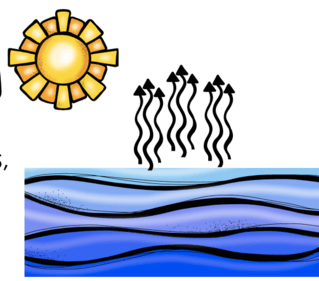
The water cycle shows the continuous movement of water within the Earth and atmosphere.
It is a complex system that includes many different processes.
Liquid water evaporates into water vapor, condenses to form clouds, and precipitates back to earth in the form of rain and snow.
19
20
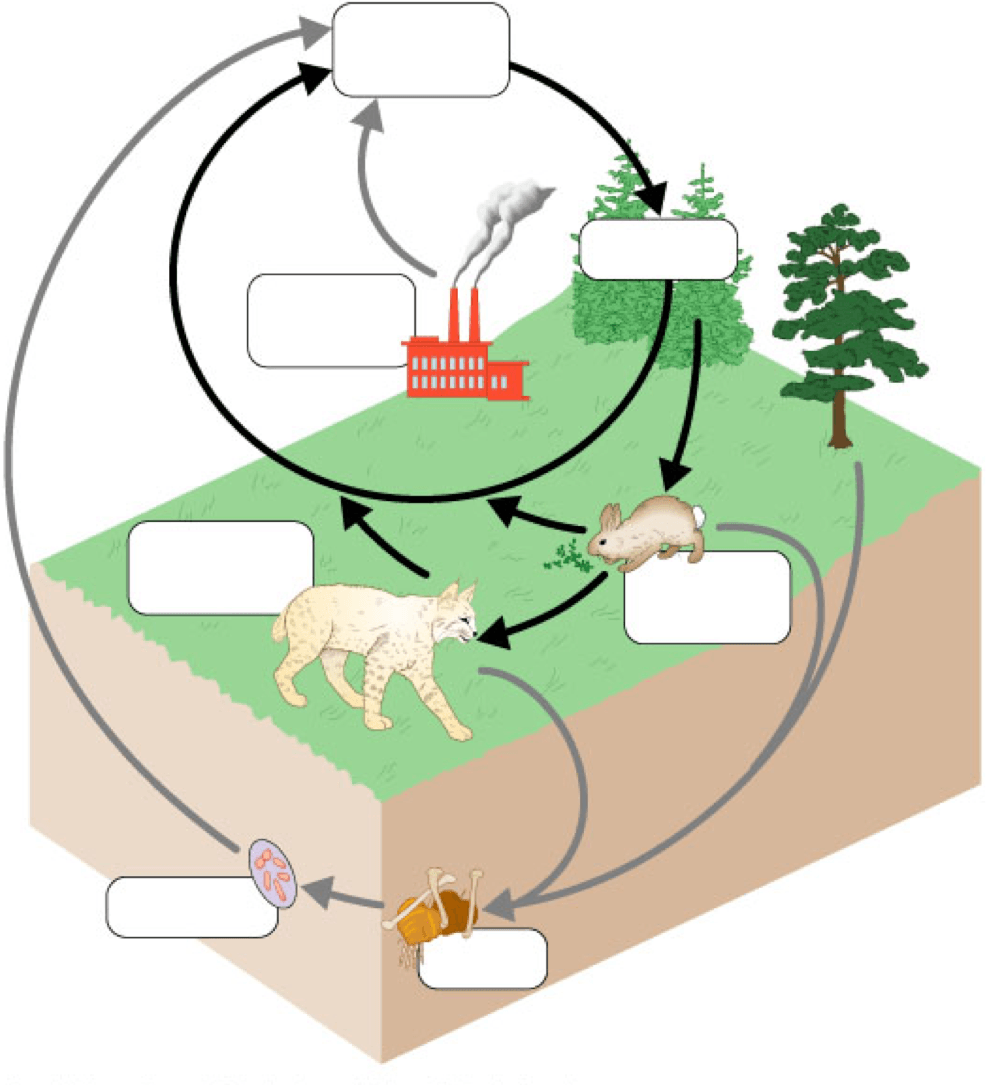
Carbon and Oxygen Cycle
They act separately but are dependent on each other because the carbon cycle gives off oxygen for the oxygen cycle to use, and in turn, the oxygen cycle emits carbon dioxide (CO2) which goes back into the carbon cycle. Plants are the main vehicle by which the oxygen and carbon cycles are connected
21
The nitrogen cycle describes how nitrogen moves between plants, animals, bacteria, the atmosphere (the air), and soil in the ground. Nitrogen is an important element to all life on Earth. Different Nitrogen States For Nitrogen to be used by different life forms on Earth, it must change into different states. Nitrogen in the atmosphere, or air, is N2. Other important states of nitrogen include Nitrates (N03), Nitrites (NO2), and Ammonium (NH4).
22
Processes in the Nitrogen Cycle
1. Fixation - Fixation is the first step in the process of making nitrogen usable by plants. Here bacteria change nitrogen into ammonium.
2. Nitrification - This is the process by which ammonium gets changed into nitrates by bacteria. Nitrates are what the plants can then absorb.
23
Processes in the Nitrogen Cycle
3. Assimilation - This is how plants get nitrogen. They absorb nitrates from the soil into their roots. Then the nitrogen gets used in amino acids, nucleic acids, and chlorophyll.
4. Ammonification - This is part of the decaying process. When a plant or animal dies, decomposers like fungi and bacteria turn the nitrogen back into ammonium so it can reenter the nitrogen cycle. Denitrification - Extra nitrogen in the soil gets put back out into the air. There are special bacteria that perform this task as well.
24
Why is nitrogen important to life?
Plants and animals could not live without nitrogen. It is an important part of many cells and processes such as amino acids, proteins, and even our DNA. It is also needed to make chlorophyll in plants, which plants use in photosynthesis to make their food and energy.
25
26
27
Multiple Choice
How are primary consumers different from secondary consumers?
Primary consumers eat only plants; secondary consumers eat other consumers.
Primary consumers eat other consumers; secondary consumers eat only plants.
Primary consumers eat plants and other consumers; secondary consumers eat plants and decompose matter.
Primary consumers eat plants and decompose matter; secondary consumers eat plants and other consumers.
28
Multiple Choice
How might a lack of sunlight disrupt the food web?
It would cause consumers to consume less.
It would prevent decomposers from decomposing matter
It would prevent producers from producing nutrients.
It would not disrupt the food web at all.
29
Multiple Choice
Through what process do producers make their own food?
Parthenogenesis
Photosynthesis
Meiosis
Mitosis
30
Multiple Choice
What can you infer from the fact that the disappearance of just one species can disrupt an entire food chain?
Every food chain depends entirely on a single species
Food chains are extremely fragile
Food chains can regenerate on their own
Food chains would not exist without humans
31
Multiple Choice
How is a food web different from a food chain?
Food webs contain only producers, not consumers.
Food webs do not include decomposers.
Food webs contain many different, linked food chains.
Food webs exist in aquatic environments; food chains exist in terrestrial environments.
32
Multiple Choice
33
Multiple Choice
34
Multiple Choice
The way energy is passed from one organism to another
food chain
energy
extinct
habitat
35
Multiple Choice
The way energy is passed from one organism to another
food chain
energy
extinct
habitat
36
Multiple Choice
After condensation, the droplets of water in the clouds fall to Earth in different forms...
precipitation
condensation
evaporation
37
Multiple Choice
38
Multiple Choice
39
Multiple Choice
40
Multiple Choice
41
Multiple Choice
42
Multiple Choice
The total amount of the carbon on Earth is constant.
True
False
43
Multiple Choice
44
Multiple Choice
45
Multiple Choice
46
Multiple Choice
47
Multiple Choice
How do plants get the nitrogen they need?
from the air
from the soil or water in which they live
from the Sun
from broken-down rocks
48
Multiple Choice
How do plants get the nitrogen they need?
from the air
from the soil or water in which they live
from the Sun
from broken-down rocks
49
Lesson 4: Interaction
Show answer
Auto Play
Slide 1 / 49
SLIDE

Similar Resources on Wayground
42 questions
Mitosis and Meiosis Review
Presentation
•
7th - 8th Grade
44 questions
Introduction to Cells
Presentation
•
7th Grade
45 questions
1b Elements, Compounds and Mixtures
Presentation
•
8th Grade
43 questions
Earth in Space
Presentation
•
7th - 8th Grade
45 questions
Atomic Structure Review
Presentation
•
8th Grade
45 questions
8th Grade Science STAAR writing prompts
Presentation
•
8th Grade
45 questions
Phrase and Verbal Practice
Presentation
•
8th Grade
42 questions
AKS 9B - Electromagnetic vs. Mechanical Waves
Presentation
•
8th Grade
Popular Resources on Wayground
20 questions
"What is the question asking??" Grades 3-5
Quiz
•
1st - 5th Grade
20 questions
“What is the question asking??” Grades 6-8
Quiz
•
6th - 8th Grade
10 questions
Fire Safety Quiz
Quiz
•
12th Grade
20 questions
Equivalent Fractions
Quiz
•
3rd Grade
34 questions
STAAR Review 6th - 8th grade Reading Part 1
Quiz
•
6th - 8th Grade
20 questions
“What is the question asking??” English I-II
Quiz
•
9th - 12th Grade
20 questions
Main Idea and Details
Quiz
•
5th Grade
47 questions
8th Grade Reading STAAR Ultimate Review!
Quiz
•
8th Grade
Discover more resources for Biology
16 questions
Types of Variables
Quiz
•
6th - 8th Grade
20 questions
Food Chains and Food Webs
Quiz
•
7th - 12th Grade
20 questions
Natural Selection
Quiz
•
8th Grade
10 questions
Exploring Evidence of Evolution
Interactive video
•
6th - 10th Grade
10 questions
Comparing Mitosis and Meiosis: Key Differences and Stages
Interactive video
•
6th - 10th Grade
10 questions
Exploring the Impact of Genetic Mutations
Interactive video
•
6th - 10th Grade
15 questions
Symbiosis
Quiz
•
6th - 10th Grade
19 questions
Food Chains
Quiz
•
4th - 9th Grade