Science 3 (3rd Semester Reviewer)
Presentation
•
Science
•
3rd Grade
•
Medium
+12
Standards-aligned
Vanessa Eracho
Used 10+ times
FREE Resource
71 Slides • 68 Questions
1
Science 3 (3rd Semester Reviewer)
2
KINDS OF WEATHER
3
4
5
6
7
8
9
10
11
RECAP TIME!
12
Multiple Choice
a scientists who study weather and climate
neurologists
meteorologists
13
Multiple Choice
Science deals with the study of weather and climate
Meteorology
Botany
14
Multiple Choice
long-term condition of the atmosphere, usually 30 years or more
weather
climate
15
Multiple Choice
condition of the atmosphere over a short period of time in a given place
Climate
Weather
16
Multiple Choice
Storm with large amounts of snow or blowing snow
winds are strong and fast
Snowy
Snow-storm
Windy
17
Multiple Choice
Strong winds move the leaves of plants.
But it is not raining.
Best time to fly a kite.
Stormy
Cloudy
Windy
18
Multiple Choice
The sun is shining brightly. The sky is clear. It is a fine weather.
Rainy
Sunny
Windy
19
Multiple Choice
The sky is covered with very dark clouds.
The wind is very strong and blows so fast.
There is heavy rain with thunder and lightning.
The place is flooded.
Stormy
Cloudy
Sunny
20
Multiple Choice
The sky is full of white cotton-like clouds.
The wind blows gently.
It is a fair weather.
Snowy
Cloudy
Windy
21
FACTORS THAT AFFECTS WEATHER CHANGES (WEATHER ELEMENTS)
EFFECTS OF WEATHER
22
23
24
TEMPERATURE
25
26
27
28
29
30
AIR PRESSURE
31
32
33
34
35
36
37
38
39
WIND
40
41
42
43
44
45
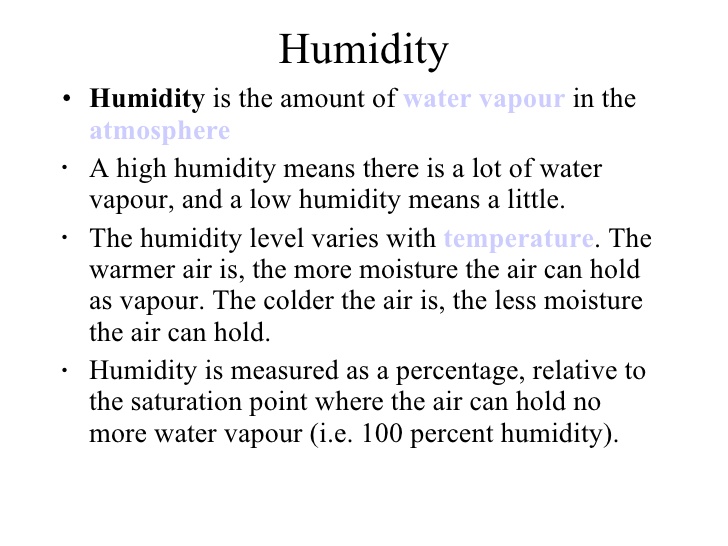
HUMIDITY
46
47
48
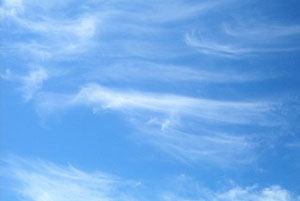
CLOUDS
49
50
PRECIPITATION
51
52
EFFECTS OF WEATHER
53
54
55
56
57
58
RECAP TIME!
59
Multiple Choice
how many weather elements are there
7
4
6
9
60
Multiple Choice
Low air pressure usually means...
sunny weather
rainy weather
partly cloudy weather
hot weather
61
Multiple Choice
The heating and rising of air and the cooling and sinking of air causes which of the following?
wind
rain
tides
62
Multiple Choice
63
Multiple Choice
What is air pressure?
How hot or cold something is.
Any form of water that falls to the ground from the clouds.
The weight of the air pressure down on the Earth per unit area.
Air that moves horizontally, or perpendicular to the ground.
64
Multiple Choice
How is air pressure measured?
Thermometer
Barometer
Psychrometer
Wind vane
65
Multiple Choice
How is temperature measured?
Wind vane
Thermometer
Barometer
Rain gauge
66
Multiple Choice
What is temperature?
The measure of how hot or cold something is
The amount of water vapor in the air compared to the amount of water vapor needed to reach saturation.
Air that moves horizontally, or parallel to the ground.
Evaporation
67
Multiple Choice
Which of the following is NOT CONSIDERED as a way of safety measures to observe during a bad weather?
Stay indoors during stormy days. You can play inside your home or read and study your lessons.
Listen to the radio and watch television to know the condition of the storm.
Store extra food and water when typhoon is coming.
During rainy days, play outside with your friends.
68
Multiple Choice
It is advised to drink enough water, eat nutritious food, and keep oneself clean to avoid getting sick.
69
Multiple Choice
Cough, colds, and flu are common diseases during the rainy season.
70
Multiple Choice
All animals need cold weather.
71
Multiple Choice
Weather affects people in what they do, what they eat, and what they wear.
72
Multiple Select
Choose the common ailments during Summer. (3)
Chicken Pox
Cough
Measles
Flu
Mumps
73
Multiple Select
Choose the common ailments during rainy days. (3)
Influenza
Cold
Cough
Mumps
Measles
74
Multiple Choice
The amount of water vapor in the air is known as ___.
dew point
humidity
relative humidity
rain
75
Multiple Choice
When the air is full of water and has a relative humidity of 100% it is said to be ___.
full
humid
saturated
warm
76
Multiple Choice
Why do land breezes occur at night?
Land cools off slower than water, so the air above water is cooler.
Water cools off faster than land, so the air above land is warmer.
Land heats up slower than water, so the air stays cooler during the day.
Water cools off slower than land, so the air above water is warmer.
77
Multiple Choice
Land and water absorb and release the sun’s heat in different ways. One result of this is a sea breeze. Which statement is true of sea breezes?
They originate in the day and blow toward the land.
They originate in the day and blow toward the water.
They originate in the evening and blow toward the land.
They originate in the evening and blow toward the water.
78
Multiple Choice
79
Multiple Choice
80
Multiple Choice
81
Multiple Choice
Do sea breezes typically happen during the day or night?
Day
Night
82
Multiple Choice
Do sea breezes typically happen during the day or night?
Day
Night
83
Multiple Choice
What are clouds made out of?
Molecules of pure oxygen
ozone and carbon dioxide
water droplets, dust, and smoke particles
78% nitrogen, 21% oxygen, and 1% other gases
84
Multiple Choice
Which type of cloud is the lowest in the sky?
Cirrus
Cumulus
Stratus
85
Multiple Choice
Which type of cloud is highest in the sky?
Cirrus
Cumulus
Stratus
86
Multiple Choice
87
Multiple Choice
What type of clouds are called "fair-weather clouds" and look like floating cotton?
Cumulus
Stratus
Nimbus
Cumulonimbus
88
Multiple Choice
Clouds form during the process of...
evaporation
condensation
precipitation
runoff
89
Multiple Choice
Which type of cloud is white and puffy?
cumulus
cirrus
stratus
cumulonimbus
90
Multiple Choice
91
Multiple Choice
92
Multiple Choice
This type of cloud is thin, wispy, and made of ice crystals
cumulus cloud
stratus cloud
cirrus cloud
cumulonimbus cloud
93
Earth's Rotation and Revolution
94
The earth has two types of motions, namely rotation, and revolution. Rotation is the movement of the earth on its axis. The movement of the earth around the sun in a fixed path or orbit is called Revolution.
95
96
RECAP TIME!
97
Multiple Choice
Day and night are caused by:
the Earth rotating on its axis
the Sun revolving around the Earth
the Sun rotating in its axis
the sun rising and setting every day
98
Multiple Choice
One REVOLUTION of the Earth around the Sun is equal to:
24 hours
365 days
28 days
1 month
99
Multiple Choice
At the same time, the Earth is rotating on its axis AND revolving around the sun.
True
False
100
Multiple Choice
The Earth ROTATING on its axis causes:
a year/365 days
the seasons
night and day
a hurricane
101
Multiple Choice
The Earth ROTATING on its axis causes:
a year/365 days
the seasons
night and day
a hurricane
102
Natural Objects in the Sky
103
Common natural things that we can see in the sky are clouds, raindrops, the Sun, the Moon, stars, and birds Some of the things in the sky are easy to see, and some things are harder to see. The Moon and stars are in the sky during the day, but we cannot usually see them because, during the day, the Sun brightens the sky. The Sun is actually a star, and it is the closest star to the Earth. As the Sun sets, it begins to dip below the horizon so that the Moon and stars become more visible. As the Sun goes down, the sunlight disappears, making other things in the sky more difficult to see.
104
The Sun
105
106
The SUN is a star, just like the other stars we see at night. The difference is distance -- the other stars we see are light-years away, while our sun is only about 8 light minutes away -- many thousands of times closer.
107
Officially, the sun is classified as a yellow medium, G2-type star, based on its temperature and the wavelengths or spectrum of light that it emits. There are lots of G2s out there, and Earth's sun is merely one of the billions of stars that orbit the center of our galaxy, made up of the same substance and components. The sun is composed of gas. It has no solid surface.
108
Parts of the Sun
109
110
111
The Stars
112
The stars are objects in the sky. Stars appear to twinkle in the night sky. Stars are big balls of hot gases. The hot gases give off light and appear in different colors according to their age. Stars can appear on Earth depending on their sizes, heat, and closeness to Earth. We cannot see stars in the day due to the sunlight from the sun, but we can see them at night.
113
114
The Moon
115
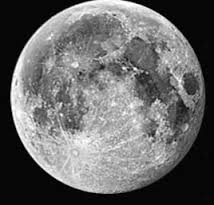
The Moon does not emit any light by itself; all parts of the Moon are lit by the Sun. When we see the Moon, we are actually seeing the sunlight reflected from the Moon. The Moon travels around the Earth in a small circle called an orbit. The Moon orbits the Earth about every 29½ days; this is called a “lunar month.” As the Moon rotates around the Earth, we see different parts of the sunlit half. These parts are known as the phases of the Moon.
116
117
118
RECAP TIME!
119
Multiple Choice
Name the moon phase
First Quarter
Full Moon
New Moon
120
Multiple Choice
Which phase of the moon is shown in the picture?
New
Cresent
Quarter
121
Multiple Choice
Which phase of the moon is shown in the picture?
New
Cresent
Quarter
122
Multiple Choice
As the moon's shape appears to get smaller, we say that the moon is _.
waning
waxing
123
Multiple Choice
What causes the moon to shine?
The sun
Its red-hot surface
Pixie dust
Electricity
124
Multiple Choice
What is the name of the explosion at the death of a massive star?
Supergiant
Supernova
Black Hole
Nebula
125
Multiple Choice
126
Multiple Choice
Our sun is a ____________ star.
main sequence G2
massive star
supernova
red giant
127
Multiple Choice
128
Multiple Choice
129
Multiple Choice
Which is the outer layer of the sun's atmosphere?
solar wind
corona
sunspots
chromosphere
130
Multiple Choice
The surface of the sun is called ______________________.
photosphere
chromosphere
sunspots
flares
131
Multiple Choice
132
Multiple Choice
133
Multiple Select
Choose all that make sense: The Sun ______
is made of hot gases
revolves around Earth
is the closest star to Earth
is a planet
134
Multiple Choice
Which picture shows rotating?
135
Multiple Choice
Which picture shows revolving?
136
Multiple Choice
What is the Sun?
A star
A planet
A moon
A constellation
137
Multiple Choice
Earth's only natural satellite is ______________.
the moon
the stars
the planet Mercury
the sun
138
Multiple Choice
An object in the sky the produces its own light is the ___________.
star
moon
Earth
cloud
139
WE ARE DONE REVIEWING!
Science 3 (3rd Semester Reviewer)
Show answer
Auto Play
Slide 1 / 139
SLIDE

Similar Resources on Wayground
125 questions
E5 Quiz 1.1 Reviewer
Presentation
•
5th Grade
125 questions
10.1
Presentation
•
4th Grade
132 questions
Positive and Negative Numbers
Presentation
•
6th Grade
135 questions
Text Features
Presentation
•
4th Grade
136 questions
English 2 4th GP Exam Reviewer
Presentation
•
2nd Grade
133 questions
Book 12
Presentation
•
1st Grade
130 questions
Untitled Presentation
Presentation
•
4th Grade
127 questions
sgk toán 4
Presentation
•
4th Grade
Popular Resources on Wayground
20 questions
STAAR Review Quiz #3
Quiz
•
8th Grade
20 questions
Equivalent Fractions
Quiz
•
3rd Grade
6 questions
Marshmallow Farm Quiz
Quiz
•
2nd - 5th Grade
20 questions
Main Idea and Details
Quiz
•
5th Grade
20 questions
Context Clues
Quiz
•
6th Grade
20 questions
Inferences
Quiz
•
4th Grade
19 questions
Classifying Quadrilaterals
Quiz
•
3rd Grade
12 questions
What makes Nebraska's government unique?
Quiz
•
4th - 5th Grade
Discover more resources for Science
12 questions
Plants Characteristics
Presentation
•
3rd Grade
7 questions
Marshmallow Farming
Quiz
•
3rd Grade
12 questions
Ecosystems
Quiz
•
3rd - 5th Grade
7 questions
Marshmallow Farming
Quiz
•
2nd - 4th Grade
7 questions
Marshmallow Farming
Quiz
•
2nd - 4th Grade
18 questions
Planets of the Solar System
Quiz
•
3rd - 4th Grade
10 questions
Exploring Light (Video & Questions)
Interactive video
•
1st - 5th Grade
21 questions
Organisms and Environments Life Science Practice
Quiz
•
3rd Grade