Search Header Logo
Unit 2 Review

Unit 2 Review

Assessment

Presentation

Chemistry

10th - 12th Grade

Medium

Created by

Andrew Baldwin

Used 12+ times

FREE Resource

16 Slides • 34 Questions

1
Unit 2 Review

media

2

Poll

How would you rate the your confidence with this unit?

Very Confident

Confident

Somewhat Confident

Not Very Confident

3

media

4

media

5

Multiple Choice

In the gold foil experiment, most of the positively charged alpha particles passed through the gold foil, but some were deflected or bounced back.  What did we conclude because of this?  
1
Atoms are small indivisible spheres
2
Atoms are mostly empty space with a small, dense, positive center
3
Atoms have negatively charged particles which orbit the nucleus
4
Light is a wave, not a particle

6

media

7

Multiple Choice

Question image

In Rutherford's famous "Gold Foil" experiment, some particles passed through the foil, some were deflected, and some were bounced straight back. This observation made Rutherford conclude

1

gold atoms have a solid nucleus

2

gold atoms can conduct electricity

3

gold atoms are denser than other metals

4

gold's elections orbit the nucleus at definite distances from the center

8

Multiple Choice

The cathode-ray tube was used to discover the ____ by ____.

1

electron by Thomson

2

electron by Dalton

3

proton by Thomson

4

proton by Dalton

5

electron by Rutherford

9

Multiple Choice

Question image

In the atomic model nicknamed the "plum pudding" model, what do the plums represent?

1

the nucleus

2

the atom

3

the electrons

4

the positive material

10

media

11

Multiple Choice

Question image

Look at this picture of Argon off the periodic table. Which of the following is true for this element?

1

18 protons

2

40 protons

3

22 protons

4

21.9 protons

12

media

13

media

14

Multiple Choice

The electron is not included in the calculations for the atomic mass because

1

It has negative charge

2

It is located in the outer energy levels of the atom

3

Its mass is basically zero

4

It attracts neutral particles

15

Multiple Choice

Measure mainly of the nuclear particles: protons + neutrons
1
Subatomic Particles
2
Atomic Number
3
Atomic Mass
4
Gluons

16

Multiple Choice

Subatomic particles with a negative charge

1

Electrons

2

Neutrons

3

Protons

4

Quarks

17

media

18

Multiple Choice

Question image

How many protons are in a Chlorine atom?

1

17

2

35

3

35.45

4

18

19

media

20

Multiple Choice

How many electrons are present in an atom of Be-9

1

2

2

4

3

5

4

9

21

Multiple Choice

How many protons, electrons, and neutrons does an atom with an atomic number of 50 and a mass number of 125 contain?

1

75 protons, 50 electrons, and 70 neutrons

2

50 protons, 50 electrons, and 75 neutrons

3

50 protons, 75 electrons, and 120 neutrons

4

50 protons, 75 electrons, and 50 neutrons

22

Multiple Choice

Question image

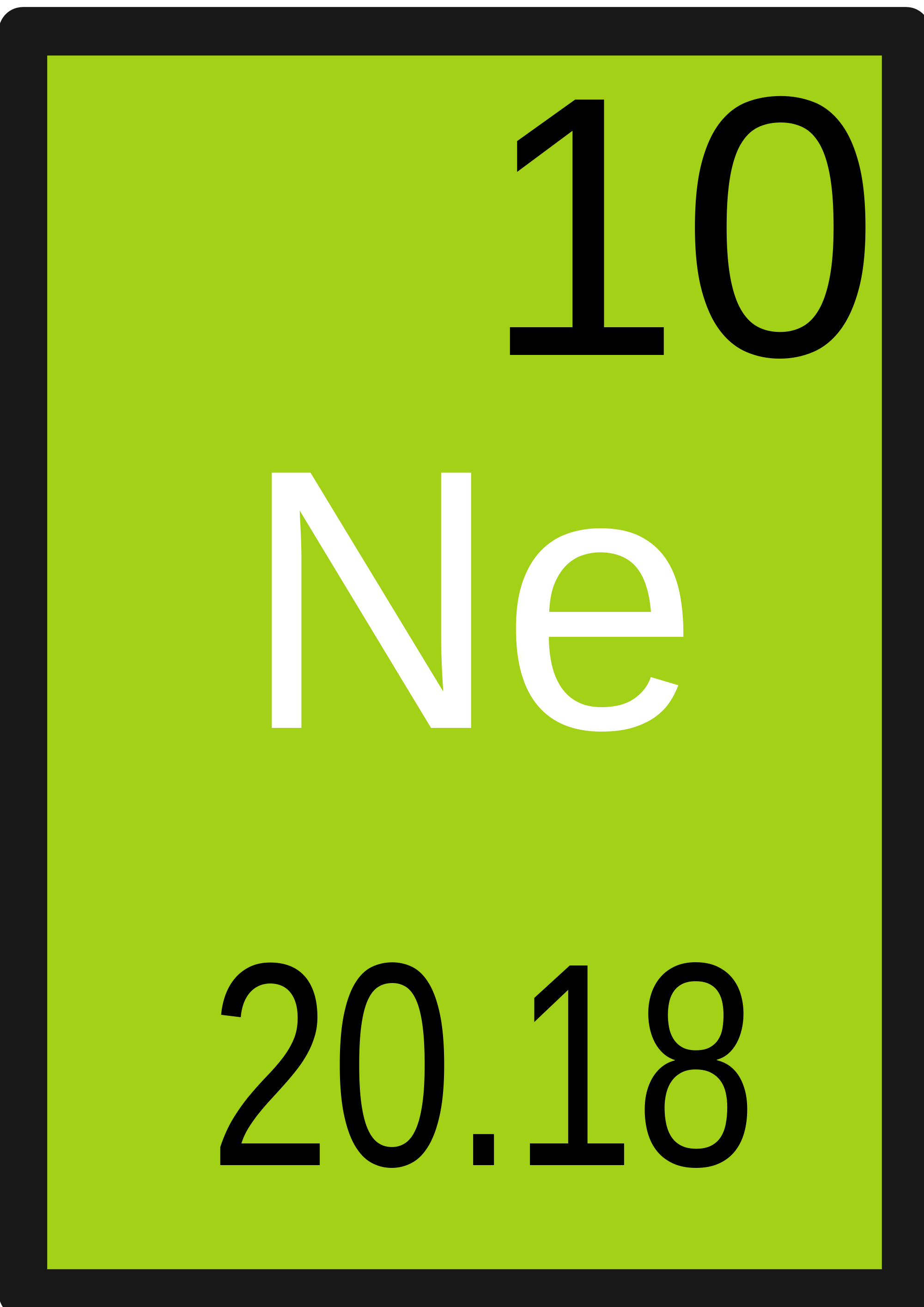
What is the atomic mass of Neon?

1

10

2

20.18

3

10.18

4

30.18

23

media

24

Multiple Choice

Question image
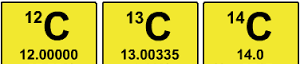
What do these isotopes of carbon all have in common?
1
neutrons & mass number
2
atomic number and neutrons
3
atomic number and electrons
4
protons, atomic number, and mass number

25

media

26

Multiple Choice

Question image
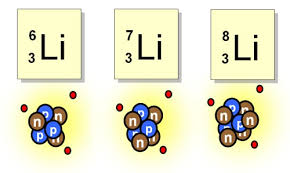
which atom has  4 neutrons?
1
Li-6
2
Li-7
3
Li-8
4
they have the same # of neutrons

27

Multiple Choice

Question image

How many neutrons does the isotope of lithium have?

1

8

2

3

3

4

4

5

28

Multiple Choice

Question image
How many neutrons does the isotope of lithium have?
1
8
2
3
3
4
4
5

29

Periodic Table Organization

Organization and groups

30

media
media
  • ​There are 7 periods.

  • Each row represents an added electron energy level.​

Periods (rows)

  • ​There are 18 groups

  • Each group in the main block elements is equal to the number of valence electrons. (Ex. group 13 = 3 valence electrons​

​​Groups (columns)

31

media
  • Elements in the same group have similar properties

    • The properties are tied to the electron configuration​

  • 5 main groups to know their properties

Some text here about the topic of discussion.

Groups/Families

32

media
media

As mentioned in the previous slide, as we add rows to the periodic table, we are adding energy levels to the atoms. This is the reason for the pattern seen above. As we proceed down the group, the atoms get larger. But as we go across the period, the atoms get smaller due to the increased nuclear size. The bigger nucleus increases the level of attraction and makes the atom smaller.

Atomic Size

The pattern seen here is inversely related to the image to the left. The graph above shows that as the atoms get bigger it is easier to remove electrons from the valence shell. And as the atoms get smaller, it is harder to remove electrons from the valence shell. This is the same pattern for electronegativity

​​Ionization energy

33

Electron configuration is used to show the location of electrons in the atom. Use the diagram above to refresh your mind. Remember the four orbital shapes and the four blocks of the periodic table. (refer to your periodic table if you still have it.) ​

Electron Configuration

media

34

Multiple Choice

The vertical columns on the periodic table are called:

1

periods

2

elements

3

groups

4

matter

35

Multiple Choice

The horizontal rows on the periodic table are called:

1

periods

2

elements

3

groups

4

matter

36

Multiple Choice

Which group are the Halogens in?

1

1

2

2

3

17

4

18

37

Multiple Choice

Which group are the Noble Gases in?

1

1

2

2

3

17

4

18

38

Multiple Choice

Which group are the Alkaline Earth Metals in?

1

1

2

2

3

17

4

18

39

Multiple Choice

Which element has the greatest ionization energy: Aluminum (Al)    or    Chlorine (Cl)?
1
Aluminum (Al)
2
Chlorine (Cl)

40

Multiple Choice

Which element has the greatest electronegativity: Nitrogen (N) or Arsenic (As)?
1
Nitrogen (N)
2
Arsenic (As)

41

Multiple Choice

Which is an alkali metal?
1
Magnesium
2
Iron
3
Sodium
4
Europium

42

Multiple Choice

I am a nonmetal


I am in period 2


I am in group 16/6A

1

Ba

2

Si

3

Ba

4

O

43

Multiple Choice

Of the halogens, which has the smallest radius?

1

F

2

Br

3

He

4

At

44

Multiple Choice

What atom matches this electron configuration?
1s22s22p63s23p64s23d10
1
Zinc
2
Copper
3
Nickel
4
Germanium

45

Multiple Choice

What electron configuration matches an oxygen atom?
1
1s22s22p63s2, 3p64s23d104p5
2
1s22s22p4
3
1s22s22p6
4
1s22s22p63s23p64s23d1

46

Multiple Choice

The electron configuration of an atom is 1s22s22p6.  The number of electrons in the atom is 
1
3
2
6
3
8
4
10

47

Multiple Choice

Question image

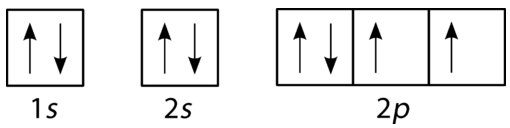
This orbital diagram represents:

1

Carbon

2

Boron

3

Nitrogen

4

Oxygen

48

Multiple Choice

Question image

What is incorrect about this orbital diagram?

1

Both arrows in the 2p box should be pointing up

2

There are too many electrons in the 1s orbital

3

In the 2p boxes, there should only be 1 electron in the first 2p box and one in the 2nd 2p box

4

All the arrows should be pointing up

49

Multiple Choice

Question image

This orbital diagram represents which element?

1

Sodium

2

Magnesium

3

Aluminum

4

Iron

50

Poll

How would you rate your confidence now?

very confident

confident

somewhat confident

not very confident

Unit 2 Review

media

Show answer

Auto Play

Slide 1 / 50

SLIDE