Search Header Logo
Ch. 13  Cardiovascular System

Ch. 13 Cardiovascular System

Assessment

Presentation

•

Biology

•

11th - 12th Grade

•

Practice Problem

•

Medium

Created by

Blake Pierce

Used 15+ times

FREE Resource

25 Slides • 56 Questions

1

Cardiovascular System

Part 1

Slide image

2

13.1: Introduction to the Cardiovascular System

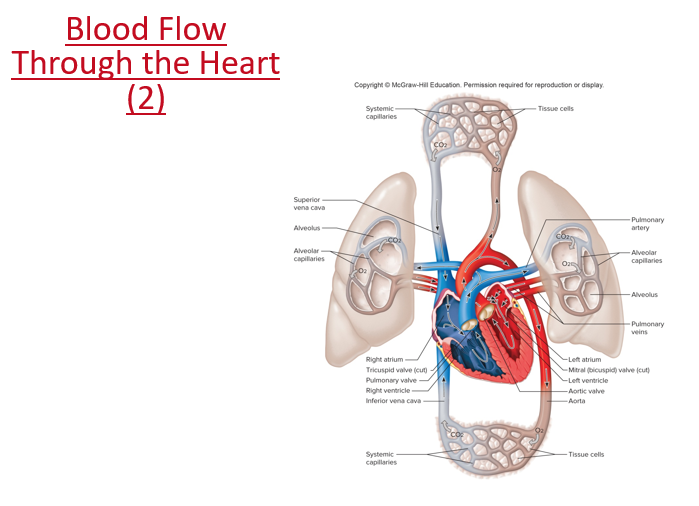
  • The cardiovascular system is a closed circuit that consists of the heart and blood vessels (arteries, capillaries, and veins)

  • Oxygen-poor blood is carried by the pulmonary circuit to the lungs, where it picks up oxygen and drops off carbon dioxide

  • The systemic circuit sends oxygen-rich blood to all body cells, where it drops of oxygen and picks up carbon dioxide

3

Slide image

4

13.2: Structure of the Heart


  • The average adult heart is 14 cm long and 9 cm wide

  • The base lies beneath the second rib

  • The apex extends to the fifth intercostal space 

5

Slide image

6

Coverings of the Heart

  • The pericardium is a membranous sac that encloses the heart

  • Pericardium consists of 2 portions: 

  • The outer, tough, connective tissue fibrous pericardium 

  • The inner, more delicate, double-layered serous pericardium, which consists of: 

  • Parietal pericardium- outer layer, lines the fibrous pericardium

  • Visceral pericardium (epicardium) inner layer that covers the heart 

  • Pericardial cavity and serous fluid-pericardial fluid

7

Slide image

8

Wall of the Heart

  • Epicardium (visceral pericardium): the outermost layer; a serous membrane made up of connective tissue and epithelium; provides protection by decreasing friction in the heart 

  • Myocardium: the middle layer; consists of cardiac muscle, and is the thickest layer of the heart wall; pumps blood out of heart chambers

  • Endocardiumthe inner layer; and is made up of connective tissue and epithelium

9

Slide image

10

Multiple Choice

Carries oxygen poor blood to the lungs

1

pulmonary circuit

2

systemic circuit

11

Multiple Choice

Carries oxygen rich blood to the body

1

pulmonary circuit

2

systemic circuit

12

Fill in the Blank

The superior portion of the heart is called the _______ and lies beneath the second rib.

13

Fill in the Blank

The inferior portion of the heart is called the ________ and extends to the 5th intercostal space.

14

Multiple Choice

The outer covering of the heart is the________, while the inner layer is the ____________.

1

serous pericardium, fibrous pericardium

2

fibrous pericardium, serous pericardium

15

Multiple Choice

The serous percardial layer that covers the heart is the

1

parietal pericardium

2

visceral pericardium

3

pericardial cavity

16

Multiple Choice

The __________ contains fluid for reducing friction between the layers.

1

parietal pericardium

2

visceral pericardium

3

pericardial cavity

17

Multiple Choice

The serous pericardial layer that lines the inner surface of the fibrous pericardium is the

1

parietal pericardium

2

visceral pericardium

3

pericardial cavity

18

Multiple Choice

Which layer of the wall of the heart is the thickest?

1

endocardium

2

epicardium

3

myocardium

19

Heart Chambers

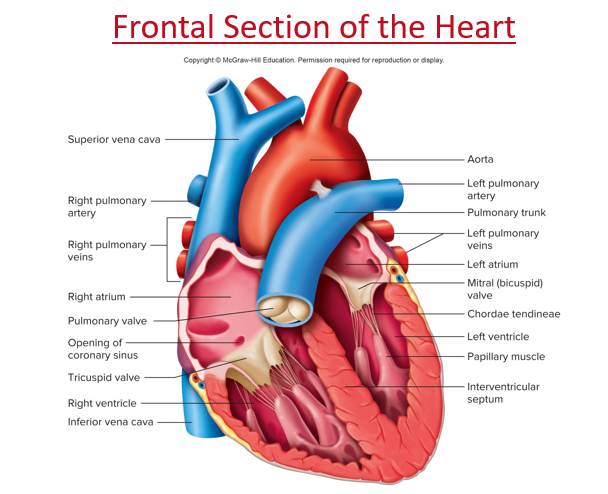
  • The heart contains 4 chambers: 2 upper chambers called atria, and 2 lower chambers called ventricles

  • Atria receive blood returning to the heart; they have thin walls and ear-like auricles projecting from their exterior

  • The thick-muscled ventricles pump blood out of the heart

  • •A septum separates the atrium and ventricle on the right from those on the left 

20

Valves

  • Each side has an atrioventricular (AV) valve to ensure one-way flow of blood from atria to ventricle

  • •The right AV (tricuspid) valve and left AV (bicuspid or mitral) valve have cusps to which chordae tendineae attach

  • •Chordae tendineae are attached to papillary muscles in the inner wall of the heart; these muscles contract during ventricular contraction to prevent the backflow of blood through the AV valves

21

Heart Chambers and Valves 

  • •The superior and inferior vena cavae bring blood back from the systemic circuit to the right atrium

  • •The coronary sinus drains blood from the myocardium (coronary circulation) into the right atrium

  • •The right ventricle has a thinner wall than the left ventricle, because it must pump blood only as far as the lungs, compared to the left ventricle pumping to the entire body

22

Heart Chambers and Valves 

  • •Each side of the heart also has a semilunar valve between the ventricle and the blood vessel into which blood is pumped:

  • •The right ventricle pumps blood to the lungs through the pulmonary trunk; at the base of the pulmonary trunk is the pulmonary semilunar valve, which prevents backflow of blood into the right ventricle

  • •The left ventricle pumps blood to the systemic circuit through the aorta; at the base of the aorta is the aortic semilunar valve, which prevents backflow of blood into the left ventricle

23

Slide image

24

Slide image

25

26

Fill in the Blank

The upper chambers of the heart are called the

27

Fill in the Blank

The lower chambers of the the heart are called the

28

Multiple Choice

Which valve is between the right atrium and right ventricle?

1

bicuspid (mitral)

2

aortic semilunar

3

pulmonary xemilunar

4

tricuspid

29

Multiple Choice

Which valve is between the left atrium and left ventricle is

1

bicuspid (mitral)

2

aortic semilunar

3

pulmonary semilunar

4

tricuspid

30

Multiple Choice

The _______ valve prevents back flow into the right ventricle

1

Bicuspid

2

Aortic semilunar

3

Pulmonary semilunar

4

Tricuspid

31

Multiple Choice

The ______ valve prevents back flow into the left ventricle.

1

Bicuspid

2

Aortic semilunar

3

Pulmonary semilunar

4

Tricuspid

32

Multiple Choice

Which ventricle wall is thinner?

1

Right ventricle

2

Left Ventricle

33

Fill in the Blank

What separates the right and left chambers of the heart?

34

Multiple Choice

The ______ wall is thicker because it has to pump blood to _________.

1

right, lungs

2

left, body

3

left, lungs

4

right, body

35

Multiple Select

Which valves have chordae tendineae attached to them?

1

Bicuspid

2

Aortic semilunar

3

Pulmonary semilunar

4

Tricuspid

36

Multiple Choice

The muscles that the chordae tendineae attach are called

1

auricles

2

cusps

3

pericardia

4

papillary

37

Fill in the Blank

Question image

Which letter identifies the right atrium?

38

Fill in the Blank

Question image

Which letter identifies the septum?

39

Fill in the Blank

Question image

Which letter identifies the bicuspid or mitral valve?

40

Fill in the Blank

Question image

Which letter identifies the left ventricle?

41

Fill in the Blank

Question image

Which letter is pointing to the left atrium?

42

Fill in the Blank

Question image

Which letter identifies the tricuspid valve?

43

Fill in the Blank

Question image

Which letter identifies the chordae tendineae?

44

Fill in the Blank

Question image

Which letter identifies the pulmonary semilunar valve?

45

Fill in the Blank

Question image

Which letter identifies the coronary sinus?

46

Blood Flow Through the Heart

  • Oxygen-poor blood returns to the right atrium via the venae cavae and coronary sinus

  • The right atrium contracts, forcing blood through the tricuspid valve into the right ventricle

  • The right ventricle contracts, closing the tricuspid valve, and forcing blood through the pulmonary valve into the pulmonary trunk and arteries

  • The pulmonary arteries carry blood to the lungs, where it enters alveolar capillaries, the site of gas exchange with the alveoli of the lungs; here the blood drops off carbon dioxide and picks up oxygen

47

Blood Flow Through the Heart

  • Oxygen-rich blood flows back to the left atrium of the heart via pulmonary veins

  • The left atrium pumps blood through the mitral (bicuspid) valve into the left ventricle

  • The left ventricle contracts, closing the mitral valve, opening the aortic valve, and pumping blood into the aorta for distribution to the systemic circuit of the body

48

Slide image

49

50

Blood Supply to the Heart

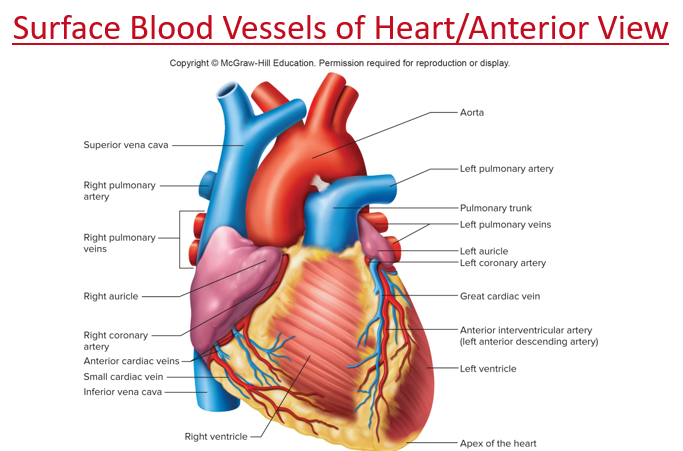
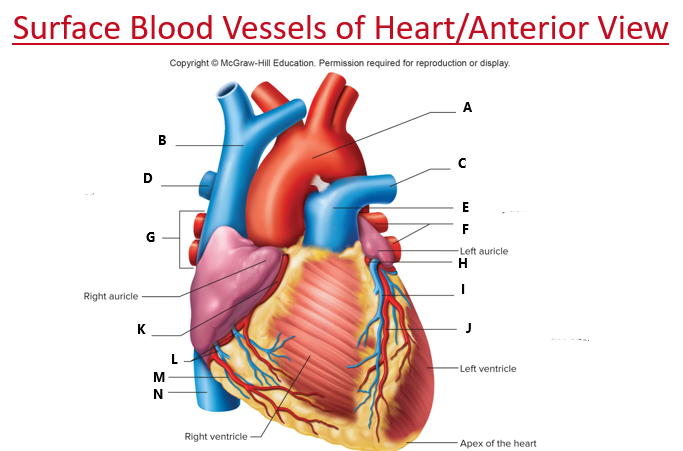
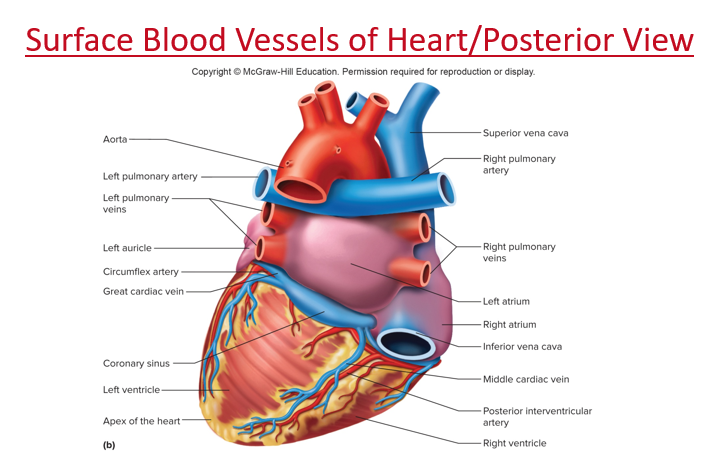
  • The first branches off of the aorta are the right and left coronary arteries, which carry oxygen-rich blood to the heart 

  • Branches of coronary arteries often have connections between them, called anastomoses; these provide alternate pathways for blood, in case a pathway becomes blocked

  • Cardiac veins drain blood from the heart muscle, and carry it to the coronary sinus, a large vein that empties into the right atrium

51

Slide image

52

Slide image

53

Fill in the Blank

Question image

Small cardiac vein?

54

Fill in the Blank

Question image

Left pulmonary artery?

55

Fill in the Blank

Question image

Superior vena cava?

56

Fill in the Blank

Question image

Right pulmonary veins?

57

Fill in the Blank

Question image

Great cardiac vein?

58

Fill in the Blank

Question image

Right coronary artery?

59

Fill in the Blank

Question image

Right pulmonary artery?

60

Fill in the Blank

Question image

Aorta?

61

Fill in the Blank

Question image

Left pulmonary veins?

62

Fill in the Blank

Question image

Left anterior descending artery?

63

Fill in the Blank

Question image

Inferior vena cava?

64

Fill in the Blank

Question image

Pulmonary trunk?

65

Fill in the Blank

Question image

Left coronary artery?

66

Fill in the Blank

Question image

Anterior cardiac veins?

67

Slide image

68

Slide image

69

Fill in the Blank

Question image

Middle cardiac vein?

70

Fill in the Blank

Question image

Aorta?

71

Fill in the Blank

Question image

Left pulmonary veins?

72

Fill in the Blank

Question image

Great cardiac vein?

73

Fill in the Blank

Question image

Superior vena cava?

74

Fill in the Blank

Question image

Right pulmonary artery?

75

Fill in the Blank

Question image

Right pulmonary veins?

76

Fill in the Blank

Question image

Inferior vena cava?

77

Fill in the Blank

Question image

Left pulmonary artery?

78

Fill in the Blank

Question image

Posterior interventricular artery?

79

Fill in the Blank

Question image

Circumflex artery?

80

Fill in the Blank

Question image

Middle cardiac vein?

81

Fill in the Blank

Question image

Coronary sinus

Cardiovascular System

Part 1

Slide image

Show answer

Auto Play

Slide 1 / 81

SLIDE