Search Header Logo
7th Grade Science Benchmark 3 Review

7th Grade Science Benchmark 3 Review

Assessment

Presentation

Science

6th - 8th Grade

Medium

NGSS
MS-PS1-5, MS-PS1-4, MS-PS3-4

+15

Standards-aligned

Created by

Caitlin Stiegler

Used 31+ times

FREE Resource

0 Slides • 42 Questions

1

Multiple Choice

Question image
What is the total number of atoms in an ammonia (NH3) molecule?
1
1
2
2
3
3
4
4

2

Multiple Choice

What is the Law of Conservation of mass?

1

Mass is created in a chemical reaction

2

Mass is created in a physical change

3

Mass is never created or destroyed

3

Multiple Choice

When molecules are cooling down they will move

1

slower

2

faster

4

Multiple Choice

Question image

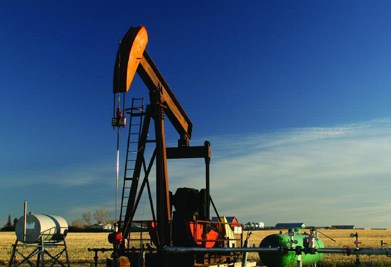
__________ is an energy resource that WILL run out in the next several hundred years.

1

Unlimited/Renewable Energy Resource

2

Limited/Nonrenewable Energy Resource

3

pollution

5

Multiple Choice

Solar energy can be replaced as fast as they are used so it is considered ____________.

1

limited

2

unlimited

6

Multiple Choice

How is a metamorphic rock made?
1
By intense heat and/or pressure
2
By compacting and cementing
3
Cooling and solidification of lava or magma

7

Multiple Choice

How is a sedimentary rock made?
1
By intense heat and/or pressure
2
By compacting and cementing
3
Cooling and solidification of lava or magma

8

Multiple Choice

How is a igneous rock made?
1
By intense heat and/or pressure
2
By compacting and cementing
3
Cooling and solidification of lava or magma

9

Multiple Choice

When tectonic plates collide (convergent) what landform is created?

1

folded mountains

2

tornados

3

rift valley

10

Multiple Choice

Where plates pull away from each other

1

Transform Boundary

2

Convergent Boundary

3

Divergent Boundary

11

Multiple Choice

__________ are formed when two continental plates collide.

1

Volcanoes

2

Strike-slip faults

3

folded mountains

12

Multiple Choice

Question image
What energy is pulling an arrow back 
1
kinetic energy
2
potential energy
3
energy

13

Multiple Choice

______ is the end result of a chemical reaction. (Right Side)

1

Product

2

Deleting atoms and matter

3

Subscript

4

Reactant

14

Multiple Choice

What is the left part of a chemical equation called?
2H2 + O2 --> 2H2O
1
Reactants
2
Products 
3
Yields 
4
Chemical Equation 

15

Multiple Choice

How many total atoms are in this compound? Al2O3

1

2

2

5

3

6

4

3

16

Multiple Choice

Is the following equation balanced?...
Al + O2 --> 2Al2O3
1
Yes!
2
No!

17

Multiple Choice

Balance the following equation:

___ H2+ ___ O2→___ H2O

1

1, 1, 3

2

2, 2, 2

3

1, 2, 1

4

2,1, 2

18

Multiple Choice

Is the following equation balanced?
4Fe + 3O2 --> 2Fe2O3
1
yes
2
no

19

Multiple Choice

How many Hydrogen are in 4H2O?
1
6
2
8
3
2
4
4

20

Multiple Choice

Question image
Is this equation balanced?
1
yes
2
no
3
Not enough information

21

Multiple Choice

The process going from a gas to a liquid is called ...
1
evaporation 
2
melting 
3
condensation 
4
sublimation 

22

Multiple Choice

Which of the following is a common sign that a chemical change has occurred?

1

A chemical has turned a different color, bubbled, and/or changed temperature.

2

A chemical has changed to a different state of matter, such as a liquid to a solid.

3

A chemical has changed size.

4

A chemical has become a different shape.

23

Multiple Choice

Natural resources that undergo a chemical process

1

Properties

2

Liquid

3

Synthetic Materials

24

Multiple Choice

What is a renewable resource?
1
An object you can reuse
2
An object you cannot reuse
3
Fossil fuels
4
Oil

25

Multiple Choice

What is the difference between natural and synthetic resources?

1

Natural are man-made, synthetic are found in nature

2

Natural occur in nature, synthetic are man-made

3

There is no difference

4

We don't use natural resources but we use synthetic resources

26

Multiple Choice

Question image
What does it mean to absorb energy?
1
To take energy in
2
Difference in temperature
3
Heat flow
4
Destroy energy

27

Multiple Choice

What materials would be good insulators for a handle on a pan or pot that would be used on the stove?

1

wood or plastic

2

metal or rubber

3

wood or rubber

4

copper or steel

28

Multiple Choice

Question image

What type of thermal energy transfer is the illustration an example of?

1

Conduction

2

Convection

3

Radiation

4

Evaporation

29

Multiple Choice

When a reaction ___________ heat, the reaction feels colder. This is called an _________________ reaction

1

Absorbs, endothermic

2

Releases, exothermic

3

Absorbs, exothermic

4

Releases, endothermic

30

Multiple Choice

When a reaction ___________ heat, the reaction feels hotter. This is called an _________________ reaction.

1

Absorbs, endothermic

2

Absorbs, exothermic

3

Releases, endothermic

4

Releases, exothermic

31

Multiple Choice

What is the organelle that contains the chlorophyll used in photosynthesis ?
1
mitochondria
2
ribosome
3
chloroplast
4
nucleus

32

Multiple Choice

What organisms undergo cellular respiration?

1

fungi

2

animals

3

plants

4

all organisms

33

Multiple Choice

What are the reactants in cellular respiration?
1
glucose and oxygen
2
glucose and carbon dioxide
3
water and carbon dioxide
4
oxygen and glucose

34

Multiple Choice

Which gas is needed for Cellular Respiration?

1

Oxygen

2

Carbon Dioxide

3

Water

4

Glucose

35

Multiple Choice

Question image
Which statement is true about this graph?
1
This function is always constant
2
This function is always increasing
3
This function is never increasing
4
This function is both increasing and decreasing

36

Multiple Choice

What would happen if their were no producers?

1

Every population would grow larger

2

Everything would die out

3

The animals would make their own food

37

Multiple Choice

Question image
In the energy pyramid below, which organism has the least amount of energy available?
1
Producers
2
Herbivores
3
Carnivores
4
Top Predator

38

Multiple Choice

Which of the following is the correct order of organization in living things from most basic (simple) to most complex?
1
a.  Organism, cell, tissue, organ, organ system
2
a.  Organ system, organ, tissue, cell, organism
3
a.  Cell, tissue, organ, organ system, organism
4
a.  Cell, organ, tissue, organ, organism, organ system

39

Multiple Choice

The smallest level of organization of life in an organism
1
tissue
2
cell
3
organ
4
organ system

40

Multiple Choice

A cell wall is ONLY in plants as a thick structure to PROTECT the plant, so ...

1

is very soft and flexible

2

is very rigid, and supports the plant cell, giving it its shape

41

Multiple Choice

The cell membrane is found in plants and animals. It is selectively permeable like a guard to protect the cell, which means...

1
All materials can enter and leave the cell
2
Certain things can enter while others cannot

42

Open Ended

Make a test question for your classmates to answer here!

Question image
What is the total number of atoms in an ammonia (NH3) molecule?
1
1
2
2
3
3
4
4

Show answer

Auto Play

Slide 1 / 42

MULTIPLE CHOICE