

The Human Body Part 3 Circulatory & Respiratory Systems

Presentation
•
Science
•
6th - 8th Grade
•
Practice Problem
•
Medium
+8
Standards-aligned

Abby Fancsali
Used 14+ times
FREE Resource
18 Slides • 17 Questions
1

The Circulatory and Respiratory Systems
2
Multiple Choice
What do the wrinkles in your brain do for you?
Keep the brain from drying out
Form Distinct Separations between parts of the brain
Nothing, they just look nice
Increase the surface area so you can have more room for nerves
3
Multiple Choice
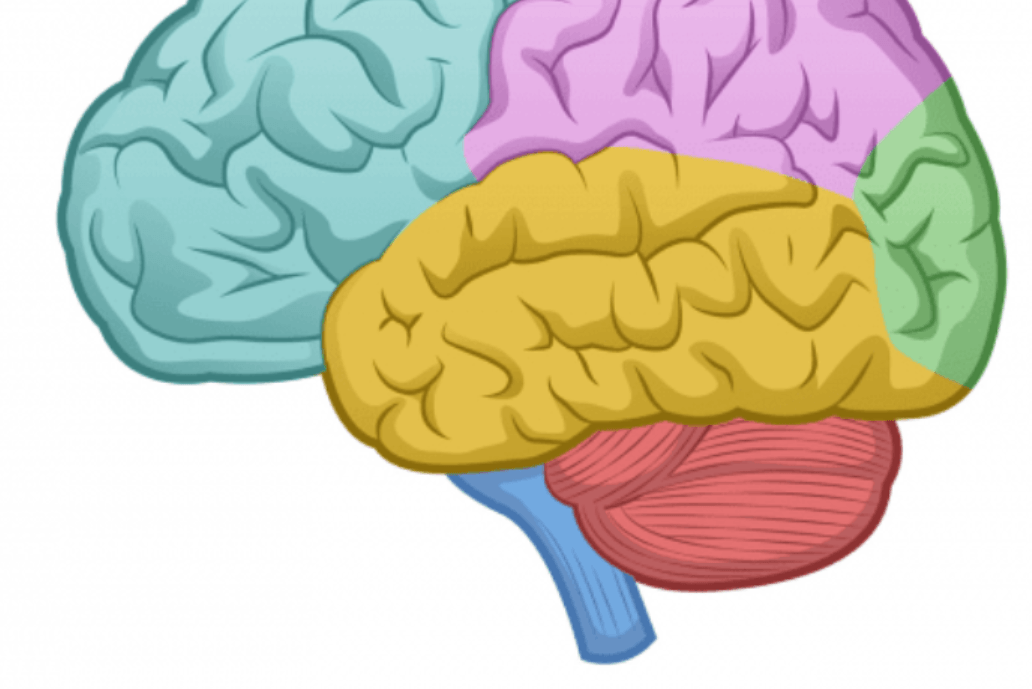
What structure is red in this picture?
Cerebrum
Cerebellum
Brain Stem
4
Multiple Choice
Which system is responsible for making blood cells?
Nervous System
Skeletal System
Muscle System
Circulatory System
5
Multiple Choice

What is the largest part of the brain?
Cerebrum
Cerebellum
Thalymus
Brainstem
6
Multiple Choice

What is the function of the nervous system?
to control and coordinate body functions and systems.
to protect the body from harm.
to identify pain and begin healing.
to break down food.
7
Multiple Choice
True or False: Your right hemisphere of your brain controls the left side of your body.
True
False
8
Multiple Select
Select all of the organs of the nervous system:
Brain
Heart
Spinal Cord
Nerves
Stomach
9

Lesson Objectives
Describe what the Circulatory System does
Know the parts of the circulatory system and how they work together
Know the parts of the respiratory system and how they transport air
10
What does the circulatory system do?
Every organ in your body needs both oxygen and nutrients to survive
The Circulatory system: The collection of organs that delivers oxygen, nutrients, immune cells, and hormones throughout the body and takes waste away
Hormones: Chemicals in your body that start important chemical reactions in cells

11
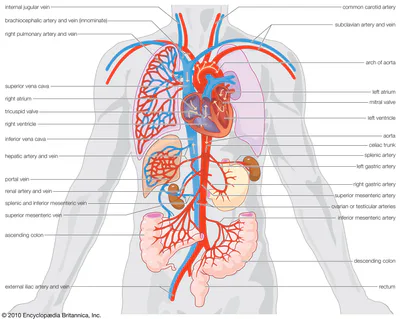
What are the parts of the Circulatory System
Your Circulatory system consists of three parts
Heart
Blood Vessels
Blood
12
The Heart
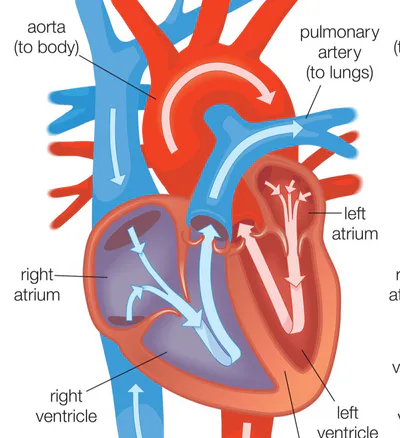
Heart: A muscular pump that drives blood around the body
Is about the size of your clenched fist
Has four chambers
Right Atrium and Right Ventricle
Left Atrium and Left Ventricle
The Right side of the heart sends blood to the lungs to get oxygen
The Left Side of the heart takes blood from the lungs and sends it to the rest of the body
13
What happens when the heart Pumps
Your heart pumping is an involuntary movement
Every heartbeat begins in the atria and pushes blood down into the ventricles
Once the ventricles fill up, they push blood out to its final location
Valves open and shut to keep blood moving in one direction and produces the "Lub-dubb" sound
Lub: closing of the atria
Dubb: Closing of the ventricles
14
15
Multiple Select
Select All the parts of the Circulatory System
Lungs
Heart
Blood
Blood Vessels
Brain
16
Drag and Drop
17
Multiple Choice
Why does blood only flow in one direction?
Gravity always pulls blood downwards
The brain sends signals to every blood cell to tell them where to go
The Valves of the heart close when full
Because Harry Stiles Said so
Because Everything in your body only goes in one direction
18
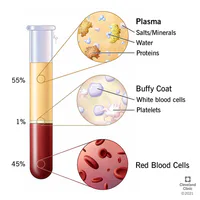
Parts of Blood-Plasma
Blood is made up of four parts
Plasma: A liquid that contains water, protein, hormones, nutrients, and wastes
About 55% of blood
carries blood throughout the body
19
Red Blood Cells
Most people have a flat donut shape
Transport oxygen to the body tissues
Contain the protein Hemoglobin that binds to oxygen

20
White Blood Cells
Are part of the Immune System
Fight/eat foreign bacteria
Different types do different things

21
Platelets
Small cells that form clots at wounds
Help prevent blood loss

22
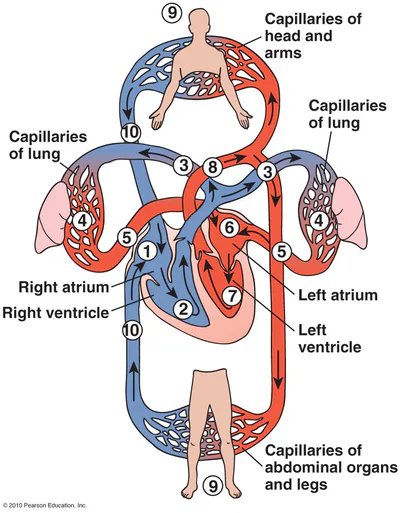
What are Blood Vessels?
Blood Vessels: tubes that carry blood throughout the body
Three main types
Arteries: Carry Blood Away from the heart to organs
Veins: Carry Blood to the Heart
Capillaries: Thin-walled Vessels where molecules travel from the blood to body tissues through diffusion
Are only a single cell thick
Blood Travels throughout the body in about one minute
23
Multiple Choice
What is the main role of White Blood Cells
To carry DNA through out the Body for repairs
To carry Oxygen throughout the Body
To Form Clots
To protect the body from foreign invaders
24
Dropdown
25
Multiple Choice
This component of blood is responsible for clotting
Red blood cells
White Blood cells
Platelets
Plasma
26
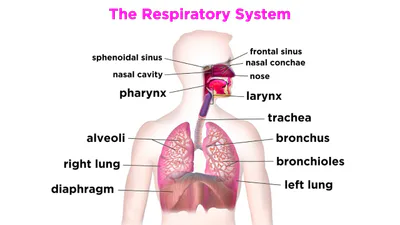
The Respiratory System
Takes in Oxygen and gets rid of Carbon Dioxide
27
Parts of The Respiratory System
Nose and Mouth: Entrance point for oxygen, the exit point for Carbon Dioxide
The nose contains hairs to trap dust and other particles
Pharynx: Connection between the nose and the rest of the throat

28
Parts of The Respiratory System
Larynx: Your Voice Box, where air and vocal cords produce sound
29
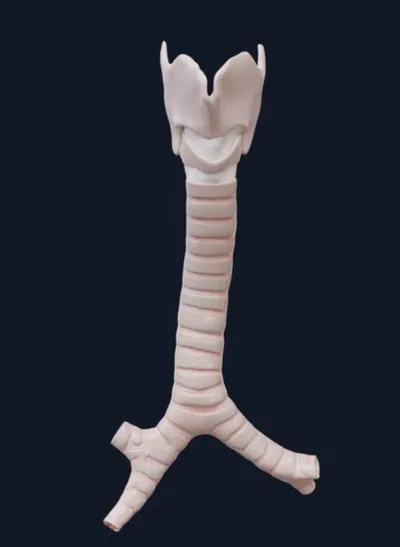
Parts of The Respiratory System
Trachea: "The wind Pipe", a tube in the throat that has stiff rings to keep it open
Leads to the lungs
30
Parts of The Respiratory System
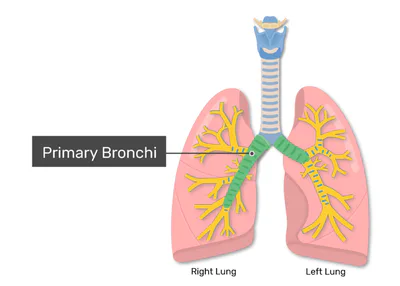
Bronchi: Tubes that split off of the trachea, and continue to branch off into smaller branches
Alveoli: Small Sacs at the end of the Bronchi where Gas exchange occurs
Oxygen enters the blood and Carbon Dioxide leaves the blood.
31
Parts of The Respiratory System
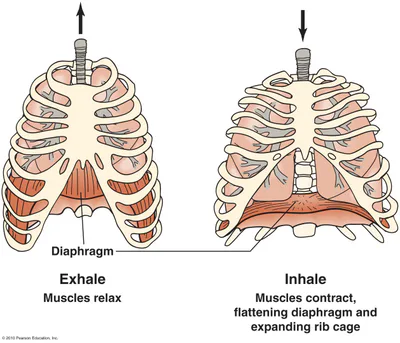
Diaphragm: A muscle at the bottom of your rib cage
Contracts and relaxes to allow more air into the lungs
Changes the pressure in the body to allow more air to flow
When irritated, it spasms and causes hiccups
32
Multiple Choice
Which part of your respiratory system contains your vocal cords
Trachea
Larynx
Pharynx
Alveoli
33
Hotspot
Where does Gas Exchange occur in the body?
34
Drag and Drop
35
Multiple Choice
What do the hairs in your nose do?
Trap particles that don't belong in your body
Absorb Oxygen that directly travels to your brain
Pull in more air when you are stressed
Provide more surface area for blood flow
The Circulatory and Respiratory Systems
Show answer
Auto Play
Slide 1 / 35
SLIDE
Similar Resources on Wayground

30 questions
The Waves Halftime Show
Presentation
•
6th - 8th Grade
26 questions
Mass Extinction
Presentation
•
6th - 8th Grade
28 questions
Absolute Dating
Presentation
•
6th - 8th Grade
32 questions
TCi Adaptation Lesson 3
Presentation
•
6th - 8th Grade
31 questions
States of Matter and Phase Changes
Presentation
•
6th - 8th Grade
32 questions
Circulatory System
Presentation
•
6th - 8th Grade
27 questions
Tropisms Notes
Presentation
•
6th - 8th Grade
27 questions
Genetics / Heredity Review
Presentation
•
6th - 8th Grade
Popular Resources on Wayground
6 questions
PRIDE Always and Everywhere
Presentation
•
12th Grade
20 questions
Lab Safety Quiz

Quiz
•
6th Grade
26 questions
KOR Review Kahoot Questions
Quiz
•
8th Grade
21 questions
Continents and Oceans
Quiz
•
6th Grade
12 questions
Unit Zero lesson 2 cafeteria
Presentation
•
9th - 12th Grade
20 questions
Parts of Speech
Quiz
•
5th Grade
10 questions
Riddles Riddles fun Riddles
Quiz
•
6th - 12th Grade
16 questions
Subject & Predicate
Quiz
•
5th Grade
Discover more resources for Science
20 questions
Lab Safety Quiz
Quiz
•
6th Grade
20 questions
Lab Safety
Quiz
•
5th - 8th Grade
20 questions
Scientific Method and Variables
Quiz
•
8th Grade
20 questions
Scientific method and variables
Quiz
•
8th Grade
27 questions
Counting Atoms - Subscripts
Quiz
•
8th Grade
10 questions
6.6D - Relative Density Review
Quiz
•
6th Grade
10 questions
Scientific Method and Variables
Quiz
•
6th Grade
14 questions
Science Variables
Quiz
•
7th Grade