Search Header Logo
Biology - Unit 8 Ecology (Alt Summer School 2021)

Biology - Unit 8 Ecology (Alt Summer School 2021)

Assessment

Presentation

Biology

10th Grade

Medium

NGSS
MS-LS2-3, MS-LS2-1, MS-LS2-2

+4

Standards-aligned

Created by

Alison Bowers

Used 2+ times

FREE Resource

12 Slides • 29 Questions

1

Biology - Unit 8 Ecology (Alt Summer School 2021)

Watch the videos and click on any links. Answer the questions to the best of your abilities. You need an 80% on this to get credit for this unit!
Slide image

2

Ecology...

  • zooms out from learning about individual organisms and how they work, to how individuals interact with each other and their nonliving environment

  • can be studied at different levels, such as within one population of organisms (like one herd of gazelle) to an entire biome (the different savannahs that exist on Earth)

3

4

Levels of Ecology Organization

A population ecologist would study very different things than an ecosystem ecologist. These levels are always existing together at the same time, but we use them as lenses to focus in on questions we're trying to answer.

Slide image

5

Trophic Pyramids

  • Trophic pyramids show energy being passed up the food chain as one organism consumes another

  • Always starts with primary producers (plants or other autotrophs that can make their own sugar)

  • Primary consumers would be any organism that is eating a plant (like a cow)

  • If I then eat the cow, I am a secondary consumer.

  • As a general rule, only 10% of the energy at the Primary Producer level is available for secondary consumers. That's why the pyramid gets smaller as you move up levels.

Slide image

6

Biodiversity

  • Producers form the base of every trophic pyramid

  • More producers means there is more food/energy available for higher level consumers

  • More energy available (a wider base to the pyramid) means the base can support MORE organisms in higher levels

  • This usually leads to MORE types of organisms in areas with lots of plant life

  • Ex: Tropical rainforests have HIGHER biodiversity than deserts.

Slide image

7

Food Webs

  • Be able to take organisms and construct an accurate food web

  • Be able to accurately show the flow of energy throughout an ecosystem

Slide image

8

Interactions

  • Biotic-Biotic interaction

  • Abiotic-Biotic interaction

  • Competitive Exclusion Principle

  • Carrying Capacity

Slide image

9

Vocabulary

  • Biotic vs Abiotic: biotic means living or once living, abiotic never was living and never will be living

  • Autotroph: an organism that can make its own sugars

  • Heterotroph: an organism that eats other organisms for food

  • Habitat: the place an organism lives

  • Niche: an organism's role in its environment

Slide image

10


All living things contain large amounts of carbon. Carbon is an element, but it can bond easily with MANY different things to form lots of different compounds. Plants take in their carbon from carbon dioxide. They use it during photosynthesis to make glucose, which is their sugar. Then they use some of that sugar to go through cellular respiration and make energy (ATP). The rest of that sugar is used to form the plant's tissues. When animals eat plants, they break down those tissues to get sugar for cellular respiration.

Slide image

11

Multiple Choice

You're a population ecologist. Which would you most likely study?

1

Studying the growth rate of the local population of salamanders

2

Studying how chemical contaminants interact with erosion caused by the water cycle

3

Studying interactions between two competing species of fish

12

Multiple Choice

Mrs. Bowers' classroom has you, other humans, fish, a set temperature, airflow, and various pieces of furniture. What does this describe?

1

A population

2

A community

3

An ecosystem

4

An individual organism

13

Multiple Choice

Where an organism lives
1
habitat
2
niche 
3
heterotrogh
4
biosphere

14

Multiple Choice

Question image
The rabbit in this food web would be considered a:
1
Decomposer
2
Producer
3
Secondary Consumer
4
Primary Consumer

15

Multiple Choice

Question image
What does a food web represent?
1
All connections of energy flow throughout all organisms in a habitat.
2
The specific ways that mutualism is carried out.
3
A single pathway or energy flow between organisms. 
4
How carnivores get their food. 

16

Multiple Choice

Consumer that eats plants
1
heterotroph
2
herbivore
3
producer
4
community

17

Multiple Choice

Question image
An organism that needs to eat other organisms to obtain energy is known as a:
1
Autotroph
2
Producer
3
Consumer
4
Mutualist

18

Multiple Choice

What does every food chain start with? (Even if it's not drawn or written there!)
1
producers
2
sun
3
consumer
4
decomposers

19

Multiple Choice

Question image

Identify the missed one

1

Epitome

2

Biome

3

Paratome

4

Parasite

20

Multiple Choice

An organism's place in the biotic environment and its role in an ecosystem is

1

Niche

2

Epitope

3

Habitat

4

Habit

21

Multiple Choice

If there are 100 KJ of energy available at the secondary consumer level, how many KJ of energy are available at the producer level?

1

10 KJ

2

1,000 KJ

3

10,000 KJ

4

1 KJ

22

Multiple Choice

What is the PRODUCT of the process used by producers that is passed on as energy throughout an ecosystem?

1

photosynthesis

2

Sun

3

glucose

4

carbon dioxide

5

water

23

Multiple Choice

Ruby-throated hummingbirds live in woodland areas, but also frequent gardens where flowering plants are plentiful. They hover to feed on flowers, nectar, and sap. During this floral feeding process, the birds pollinate many plants. These tiny birds are omnivores, sometimes feeding on insects and spiders.

1

Habitat of an autotroph

2

Niche of an autotroph

3

Niche of a heterotroph

4

Habitat of a heterotroph

24

Multiple Choice

If a scientist in New Zealand was studying how a group of herbivores interacted with a group of omnivores, and all of their abiotic surroundings, what level of ecology would she be studying?

1

Community

2

Population

3

Species

4

Ecosystem

5

Biome

25

Multiple Select

The two biggest factors that influence how much life an ecosystem can support are

1

water

2

sunlight

3

vegetation

4

space

26

27

Multiple Select

What limiting factors changed that allowed mosquitoes' population to boom in Dallas in 2012?

1

Mates

2

Food

3

Temperature

4

Space

28

Multiple Choice

Which limiting factor is density-DEPENDENT?

1

food

2

disease

3

space

4

all of these

29

Multiple Choice

When a population's growth levels off because they've hit the maximum number of individuals that their ecosystem can support, what is that called?

1

Carrying capacity

2

Logistic growth

3

Exponential growth

4

Linear growth

30

Multiple Select

What factors might limit a species' growth?

1

Available food

2

Predators

3

Competition with another species

4

Natural disasters

31

Multiple Choice

Question image

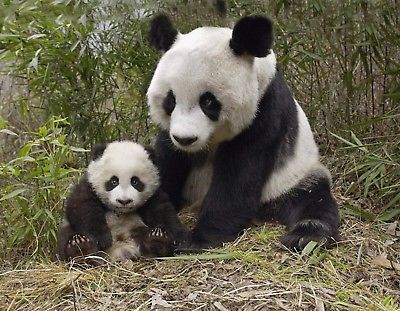
Animals such as pandas are long lived, mature slowly, and generally produce fewer offspring during their life spans but place a greater investment in each. What term is applied to this type of reproductive strategy?

1

K-strategy

2

r-strategy

32

Multiple Choice

A population’s emigration in one month totaled 2 individuals. During the same period, immigration was 12 individuals. Natality (births) was 8, and mortality was 15 due to a parasite infection. What was the net effect on the population size?

1

+5

2

+3

3

0

4

-4

33

Multiple Choice

Question image

Which of the following describes the population of elephants in Kenya from 1973-1989?

1

(immigration + births) – (emigration + deaths) = 0

2

(immigration + births) – (emigration + deaths) = 1

3

(immigration + births) – (emigration + deaths) < 0

4

(immigration + births) – (emigration + deaths) > 0

34

Multiple Choice

Which of the following is NOT an outcome of high population density?

1

mortality increase

2

predators tend to ignore prey that is overabundant

3

reduction in births

4

decreased resource availability

35

Multiple Select

Which contribute to a positive population growth?

1

immigration

2

positive birth rate

3

emigration

4

positive death rate

36

37

Multiple Choice

Question image

In an ecosystem, decomposers break down ___

1

worms

2

waste

38

Multiple Choice

Question image

Energy flows through a system of living things in a "what eats what" model called ___

1

the carbon cycle

2

a food chain

39

Multiple Choice

Question image

Organisms, like bacteria, insects and worms, that break down waste are called ___

1

carnivore

2

herbivores

3

decomposers

40

Multiple Choice

Question image

For lots of different living things, waste is actually a good source of ___

1

Shelter

2

energy

41

Multiple Select

Which best describes the importance of decomposers? Select ALL.

1

They break down waste that would otherwise be unusable for other organisms.

2

They reduce pollution in the ecosystem.

3

They return nutrients to soil and water.

4

They provide food for other organisms when they are eaten.

Biology - Unit 8 Ecology (Alt Summer School 2021)

Watch the videos and click on any links. Answer the questions to the best of your abilities. You need an 80% on this to get credit for this unit!

Slide image

Show answer

Auto Play

Slide 1 / 41

SLIDE