Physical Properties of Sea water
Presentation
•
Science
•
9th - 12th Grade
•
Easy
+5
Standards-aligned
Erin Rust
Used 42+ times
FREE Resource
6 Slides • 16 Questions
1
Physical Properties of Sea water
2
Ocean Water Density
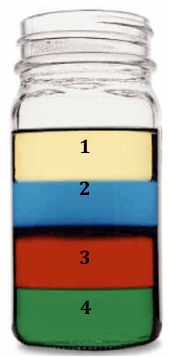
density varies with salinity and temperature
Cold water is denser than warm water and the same is true about salty water being more dense than freshwater
Because of these factors, seawater naturally stratifies
3
Ocean water layers
there are three layers in the ocean, the mixed layer, the thermocline and the deep zone
mixed layer the most biologically productive as it is where the sun enters into the ocean
thermocline separates the mixed layer from the deep zone
Below the thermocline is the deep zone which is usually the coldest and deepest layer
4
Multiple Choice
5
Multiple Choice
6
Multiple Choice
As salinity increases
Density increases
Density decreases
7
Multiple Choice
What is the boiling point of water ?
212 C
100 C
32 C
0 C
8
Multiple Choice
9
Light in the Ocean
Light typically is only found in 2% of the ocean's waters. The region where light is found is called the photic zone
the photic zone is usually no deeper than 600 meters in the clearest of waters
Water tends to absorb wavelengths of light starting at red and going all the water to violet at various depths
if you are a scuba diver diving at a depth below the absorption level of red wavelengths, red items will no longer appear red
10
Light in the Ocean
Below the photic zone is the aphotic zone. The aphotic zone is void of light
11
Multiple Choice
Would you find photosynthetic organisms in the aphotic zone?
Yes
No
12
Multiple Choice
What color of the rainbow (ROYGBIV) is first absorbed by the ocean?
Red
Orange
Yellow
Green
Blue
13
Open Ended
What is an example of an organism you might find in the photic zone?
14
Open Ended
What is an example of an organism you might find in the aphotic zone?
15
Multiple Choice
16
Multiple Choice
Phytoplankton are abundant in this ecosystem, because they are buoyant and float in the upper part of the water.
Intertidal zone (high tide)
Ocean (aphotic zone)
Ocean (photic zone)
Intertidal zone (low tide)
17
Multiple Choice
The zone in the oceans layers with the warmest temperatures that is warmed by sunlight and most life exist there?
Photic Zone
Depth
Water temperature
Mid- Ocean Ridge
18
Multiple Choice
MOST sealife lives in the:
Photic zone
Twilight zone
Midnight zone
Deep zone
19
Multiple Choice
Which ocean zone allows plants to grow??
midnight zone
photic zone
twilight zone
intertidal zone
20
Sound in the Ocean
Density increases the speed of sound
As temperaures increase, the speed of sound increases
21
Multiple Choice
22
Poll
How do you feel about today's lesson?
I've got it!
I still have questions.
I'm lost at sea.
Physical Properties of Sea water

Show answer
Auto Play
Slide 1 / 22
SLIDE

Similar Resources on Wayground
16 questions
Geosphere Refresher
Presentation
•
9th - 12th Grade
18 questions
Galaxies
Presentation
•
9th - 12th Grade
19 questions
Ionic Bonds
Presentation
•
9th - 12th Grade
19 questions
Unit 1 Lesson 3: Time and Seasons
Presentation
•
9th - 12th Grade
14 questions
Homologous VS Analogous
Presentation
•
9th - 12th Grade
20 questions
Human Population Growth Lesson
Presentation
•
9th - 12th Grade
17 questions
Unit 7: Heat Transfer
Presentation
•
9th - 12th Grade
Popular Resources on Wayground
10 questions
Fire Safety Quiz
Quiz
•
12th Grade
20 questions
Equivalent Fractions
Quiz
•
3rd Grade
20 questions
Main Idea and Details
Quiz
•
5th Grade
20 questions
Context Clues
Quiz
•
6th Grade
20 questions
Inferences
Quiz
•
4th Grade
36 questions
6th Grade Math STAAR Review
Quiz
•
6th Grade
19 questions
Classifying Quadrilaterals
Quiz
•
3rd Grade
12 questions
What makes Nebraska's government unique?
Quiz
•
4th - 5th Grade
Discover more resources for Science
38 questions
Biology EOC Review Game
Quiz
•
10th Grade
20 questions
Cell Biology and Biochemistry Quiz
Quiz
•
9th Grade
20 questions
Human Impact on the Environment Review #2
Quiz
•
9th Grade
15 questions
Chemical Reactions (Types of Chemical Reactions)
Interactive video
•
11th Grade
20 questions
Balancing Chemical Equations
Quiz
•
9th Grade
10 questions
Exploring the Layers of the Atmosphere
Interactive video
•
6th - 10th Grade
20 questions
Mendelian Genetics Review
Quiz
•
9th Grade
10 questions
Exploring Ecological Levels: Organism to Ecosystem
Interactive video
•
6th - 10th Grade