

Geography Ch-3 Our changing earth class 7

Presentation
•
Geography
•
7th Grade
•
Easy

Anusha Gupta
Used 11+ times
FREE Resource
16 Slides • 23 Questions
1
Geography Ch-3 Our changing earth class 7
2
Notes and Explanation in detail of Geography CH-4 Air Ncert Class-7 WITH SOME QUESTIONS AT THE LAST.
3
Overview
Atmosphere: An atmosphere is a layer of air surrounding our planet Earth. All living beings on this earth depend on the atmosphere for their survival. It is this mass of air that has made the temperature on the earth liveable.
4
Composition of the Atmosphere
In the atmosphere, nitrogen and oxygen are found in bulk quantities. Carbon dioxide, helium, ozone, argon and hydrogen are found in lesser quantities. Apart from these gases, tiny dust particles are also present in the air. Nitrogen is the most plentiful gas in the air. When we inhale, we take some amount of nitrogen into our lungs and exhale it.
Nitrogen is essential for plants to survive. They cannot take nitrogen directly from the air. Bacteria, that live in the soil and roots of some plants, take nitrogen from the air and change its form so that plants can use it.
5
Composition of the Atmosphere (contd.)
Oxygen is the second most plentiful gas in the air. Humans and animals take oxygen from the air as they breathe. During photosynthesis, green plants produce oxygen. In this way, oxygen content in the air remains constant.
Carbon dioxide is another important gas. Green plants use carbon dioxide to make their food and release oxygen. Humans or animals release carbon dioxide. The amount of carbon dioxide released by humans or animals seems to be equal to the amount used by the plants which make a perfect balance.
6
Structure of the Atmosphere
The atmosphere is divided into five layers starting from the earth’s surface. These are Troposphere, Stratosphere, Mesosphere, Thermosphere and Exosphere.
Troposphere: This layer is the most important layer of the atmosphere. Its average height is 13 km and the air we breathe exists here. In this layer, all-weather phenomena like rainfall, fog and hailstorm occur.
Stratosphere: Above the troposphere lies the stratosphere. It extends up to a height of 50 km. This layer is free from clouds and associated weather phenomenon, which makes it most ideal for flying aeroplanes. It contains a layer of ozone gas.
7
Structure of the Atmosphere (contd.)
Mesosphere: This is the third layer of the atmosphere. It lies above the stratosphere. It extends up to a height of 80 km. Meteorites burn up in this layer on entering from space.
Thermosphere: In thermosphere, temperature rises very rapidly with increasing height. Ionosphere is a part of this layer. It extends between 80-400 km. This layer helps in radio transmission. In fact, radio waves transmitted from the earth are reflected back to the earth by this layer.
Exosphere: The uppermost layer of the atmosphere is known as exosphere. This layer has very thin air. Light gases like helium and hydrogen float into space from here.
8
Weather and Climate
Temperature
The temperature that we feel every day is the temperature of the atmosphere. The degree of hotness and coldness of the air is known as temperature. The temperature changes between day and night and season to season. Summers are hotter than winters.
Insolation
An important factor that influences the distribution of temperature is insolation. Insolation is the incoming solar energy intercepted by the earth. The amount of insolation decreases from the equator towards the poles. Therefore, the temperature decreases in the same manner.
9
Weather and Climate (contd.)
Temperature in cities is much higher than that of villages. The concrete and metals in buildings and the asphalt of roads get heated up during the day. This heat is released during the night. Also, the crowded high rise buildings of the cities trap the warm air and thus, raise the temperature of the cities.
10
Weather and Climate (contd.)
Air Pressure
Air pressure is defined as the pressure exerted by the weight of air on the earth’s surface. As we go up the layers of the atmosphere, the pressure falls rapidly.
The air pressure is highest at sea level and decreases with height. Horizontally the distribution of air pressure is influenced by the temperature of the air at a given place.
In areas where temperature is high the air gets heated and rises. This creates a low-pressure area. Low pressure is associated with cloudy skies and wet weather. In areas having lower temperature, the air is cold and heavy.
11
Weather and Climate (contd.)
Air Pressure
Heavy air sinks and creates a high pressure area. High pressure is associated with clear and sunny skies. The air always moves from high-pressure areas to low-pressure areas.
12
Weather and Climate (contd.)
Wind
The movement of air from high-pressure areas to low-pressure areas is called wind. Winds can be broadly divided into three types.
Permanent winds – The trade winds, westerlies and easterlies are the permanent winds. These blow constantly throughout the year in a particular direction.
Seasonal winds – These winds change their direction in different seasons. For example monsoons in India.
Local winds – These blow only during a particular period of the day or year in a small area.
13
Weather and Climate (contd.)
When water evaporates from land and different water bodies, it becomes water vapour. Moisture in the air is known as humidity. When the air is full of water vapour we call it a humid day. As the air gets warmer, its capacity to hold the water vapour increases and so it becomes more and more humid.
When the water vapour rises, it starts cooling. The water vapour condenses causing formation of droplets of water. Clouds are masses of such water droplets. When these droplets of water become too heavy to float in the air, then they come down as precipitation.
Precipitation that comes down to the earth in liquid form is called rain. On the basis of mechanism, there are three types of rainfall: the convectional rainfall, the orographic rainfall and the cyclonic rainfall.
14
THANK YOU !!
NOW LET'S HAVE SOME QUESTIONS

15
QUESTIONS STARTS NOW !!
16
Multiple Choice
1. Which of these is not caused by Exogenic forces?
EARTHQUAKE
SEA WAVES
GLACIERS
RIVER
17
Multiple Choice
2. Seismic waves are of
Two types
Three types
Five types
Four types
18
Multiple Choice
3. As the river enters the plain it twists and turns forming large bends known as
Meanders
Leeves
Delta
Waterfalls
19
Multiple Choice
Large deposits of loess is found in
Malaysia
Australia
India
China
20
Multiple Choice
The rivers of ice are known as
Sand-dunes
Oxbow lakes
Glaciers
Distributaries
21
Multiple Choice
Which is not the work of wind as an agent of erosion and deposition?
Mushroom rocks
Sand dunes
Loess
Arches
22
Multiple Choice
Seismic waves are of
Two types
Three types
Four types
Five types
23
Multiple Choice
As the river enters the plain it twists and turns forming large bends known as
Meanders
Leeves
Waterfalls
Delta
24
Multiple Choice
Which of these is not caused by Exogenic forces?
Earthquake
Sea waves
Glaciers
River
25
Multiple Select
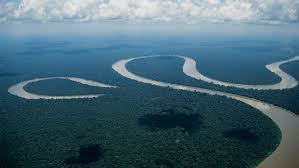
As the river enters the plain it twists and turns forming large bendes known as ...................
meanders
ox-bow lake
26
Multiple Select

A massive earthquake hit Bhuj town on..............
26 january 2001
26 january 2002
27
Multiple Select
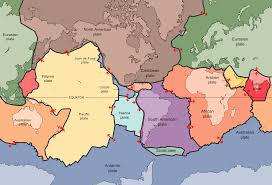
The lithosphere is broken into a number of .........
Cups
Plates
28
Multiple Choice

Ox bow lakes are found in:
Glaciers
River valleys
Deserts
29
Multiple Choice

Mushroom rocks are found in:
Deserts
River valleys
Glaciers
30
Multiple Choice
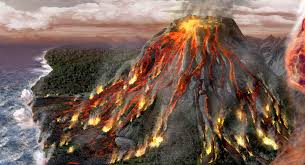
Which is caused by the sudden movements of the earth?
Volcano
Folding
Flood plain
31
Multiple Choice

Which is not an erosional feature of sea waves?
Cliff
Beach
Sea cave
32
Multiple Choice

From the following picture name the landform which is denoted by "B"👇
Meanders
Leeves
Cliff
Oxbow lakes
33
Multiple Choice
Which of the following is not favourable measure for earthquake preparedness?
Safe spot
Spreading awareness
Stand near the glass window
Stay away from fire places
34
Multiple Choice
Angel falls found __________ in South America
Algeria
Brazil
Peru
Venezuela
35
Multiple Choice
Which is not an erosional feature of sea waves?
Sea cave
Beaches
Cliff
Sea stacks
36
Multiple Choice
Large deposits of loess is found in
Malaysia
Australia
India
China
37
Multiple Choice
The rivers of ice are known as
Sand-dunes
Oxbow lakes
Glaciers
Distributaries
38
Multiple Choice
Which is not the work of wind as an agent of erosion and deposition?
Mushroom rocks
Sand dunes
Loess
Arches
39
THANK YOU !!
AND HERE OUR LESSON GETS OVER AND I HOPE YOU LIKED THE LESSON AND UNDERSTOOD THE CONCEPT.

Geography Ch-3 Our changing earth class 7
Show answer
Auto Play
Slide 1 / 39
SLIDE
Similar Resources on Wayground

32 questions
West Africa
Presentation
•
7th Grade
36 questions
Los verbos regulares en español
Presentation
•
7th Grade
37 questions
Kanada - środowisko przyrodnicze
Presentation
•
8th Grade
33 questions
World Climates, Environments, & Biomes
Presentation
•
7th Grade
33 questions
Sub-Saharan Africa Geography
Presentation
•
7th Grade
34 questions
Population and Settlement Patterns (3.2 & 3.3)
Presentation
•
7th Grade
34 questions
SS7G7a Southwest Asia: Where People Live & Trade
Presentation
•
7th Grade
33 questions
Organs & Organ Systems
Presentation
•
7th Grade
Popular Resources on Wayground
10 questions
Safety Day 2026 – Student Review

Quiz
•
9th Grade
21 questions
Continents and Oceans
Quiz
•
6th Grade
20 questions
Parts of Speech
Quiz
•
5th Grade
16 questions
Subject & Predicate
Quiz
•
5th Grade
25 questions
Multiplication Facts
Quiz
•
5th Grade
12 questions
Map Skills
Quiz
•
3rd Grade
22 questions
Continents and Oceans
Quiz
•
5th Grade
15 questions
Rounding Decimals
Quiz
•
5th Grade
Discover more resources for Geography
11 questions
49b Establishment of Israel Remediation
Presentation
•
7th Grade
38 questions
49a and 49c - Partitioning leads to Conflict Remediation
Presentation
•
7th Grade
21 questions
Key Vocabulary Definitions Quiz
Quiz
•
7th Grade
0 questions
U2 Physical Features
Quiz
•
7th Grade
21 questions
Continents and Oceans
Quiz
•
7th Grade
18 questions
Europe Test
Quiz
•
7th Grade
50 questions
U.S. 50 States Map Practice
Quiz
•
5th - 8th Grade
50 questions
US States & Capitals
Quiz
•
7th Grade