Search Header Logo
1G2 Science Chapter 8 Atoms and Molecules

1G2 Science Chapter 8 Atoms and Molecules

Assessment

Presentation

Chemistry, Science

7th - 10th Grade

Medium

8.5A

Standards-aligned

Created by

X Y

Used 7+ times

FREE Resource

7 Slides • 30 Questions

1

1G2 Science Chapter 8 Atoms and Molecules

media

2

Lesson Objectives

At the end of the topic, you should be able to:

  • Compare the size of an atom with the size of everyday object.

  • show an appreciation of how, in practice, models are constructed, justified and continuously revised as they are used to probe new phenomena and collect additional data (e.g., the various atomic models)

Some text here about the topic of discussion

3

Lesson Objectives

At the end of the topic, you should be able to:

  • describe an atom as an entity that is electrically neutral and is made up of a positively charged nucleus (protons and neutrons) with negatively charged electrons moving around the nucleus

  • recognise that atoms have mass that is mainly contributed by the mass of the nucleus

Some text here about the topic of discussion

4

Lesson Objectives

At the end of the topic, you should be able to:

  • show an awareness that the atoms of an element have a unique number of protons

  • Drawing of electronic configuration for Group 1 to 18 elements

Some text here about the topic of discussion

5

6

Multiple Choice

Which subatomic particles are found in the nucleus of an atom?
1
Protons and Electrons
2
Protons and Neutrons
3
Neutrons and Electrons
4
Protons, Neutrons and Electrons

7

Multiple Choice

What electrical charge does a proton have?
1
+1
2
0
3
-1
4
+2

8

Multiple Choice

Which subatomic particle has a negative charge?

1

proton

2

neutron

3

electron

4

all of the above

9

Multiple Choice

What best describes a neutron?

1

It is located outside of the nucleus and has a negative charge

2

It is located inside of the nucleus and has a positive charge

3

It is located outside the nucleus and has no charge

4

It is located inside the nucleus and has no charge

10

Multiple Choice

What best describes a proton?

1

It is located outside the nucleus and has a positive charge.

2

It is located inside the nucleus and has a positive charge.

3

It is located inside the nucleus and has no mass

4

It is located inside the nucleus and has no charge.

11

Multiple Choice

What best describes an electron?

1

It is located outside of the nucleus and has a negative charge

2

It is located outside of the nucleus and has no charge

3

It is located inside the nucleus and has a mass

4

It is located inside of the nucleus and has no mass

12

Multiple Choice

The _________ of an element equals the number of protons in an atom of that element.

1

mass number

2

atomic weight

3

atomic number

4

isotopes

13

Multiple Choice

Question image

What part of the atom is indicated by the red sphere?

1

nucleus

2

electron cloud

3

electrons

4

neutrons

14

Multiple Choice

Atoms of the same element must always have the same number of _________
1
electrons
2
neutrons
3
isotopes
4
protons

15

Multiple Choice

How many electrons does a sodium atom have?

1

23

2

11

3

12

4

34

16

Multiple Choice

How many protons does an aluminum atom have?

1

27

2

14

3

40

4

13

17

18

Multiple Choice

This particle determines what element you have - the elements identity.
1
electron
2
proton
3
neutron
4
valence shell

19

Multiple Choice

Which particle has a positive charge?
1
electron
2
orbital
3
proton
4
neutron

20

Multiple Choice

Question image
What is the atomic number of this atom?
1
8
2
16
3
24
4
none of the above

21

Multiple Choice

Question image
What is the atomic number of this atom?
1
7
2
14
3
21
4
none of the above

22

Multiple Choice

Question image
What is the atomic number of this atom?
1
1
2
2
3
3
4
4

23

Multiple Choice

Question image
What is the atomic number of this atom?
1
2
2
4
3
6
4
none of the above

24

Multiple Choice

Question image
What is the atomic number of this atom?
1
9
2
10
3
19
4
27

25

Multiple Choice

Question image
What is the atomic number of this atom?
1
4
2
5
3
9
4
none of the above

26

Multiple Choice

Question image
What is the atomic number of this nucleus?
1
1
2
3
3
4
4
7

27

Multiple Choice

What is the atomic number?
1
the number of protons
2
the number of protons and neutrons
3
the number of neutrons
4
the number of protons and electrons

28

Multiple Choice

The atomic number of Nitrogen
1
7
2
6
3
8
4
9

29

Multiple Choice

The atomic number of Lithium is
1
3
2
4
3
5
4
6

30

Multiple Choice

The atomic number of Hydrogen is
1
1
2
2
3
3
4
4

31

Multiple Choice

The atomic number of Titanium is
1
22
2
23
3
20
4
24

32

33

Multiple Choice

What is the correct definition for isotopes?

1

atoms with the same number of protons and neutrons

2

Atoms of the same element with the same number of protons but different number of neutrons

3

Atoms with the same number of neutrons but different number of protons

4

Atoms with no mass

34

Multiple Choice

Two isotopes of carbon are carbon-12 and carbon-14.  These isotopes differ from one another by two protons.
1
true
2
false

35

Multiple Choice

Question image
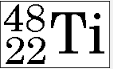
How many protons does this isotope of titanium have?
1
48
2
22
3
26
4
70

36

Multiple Choice

Question image
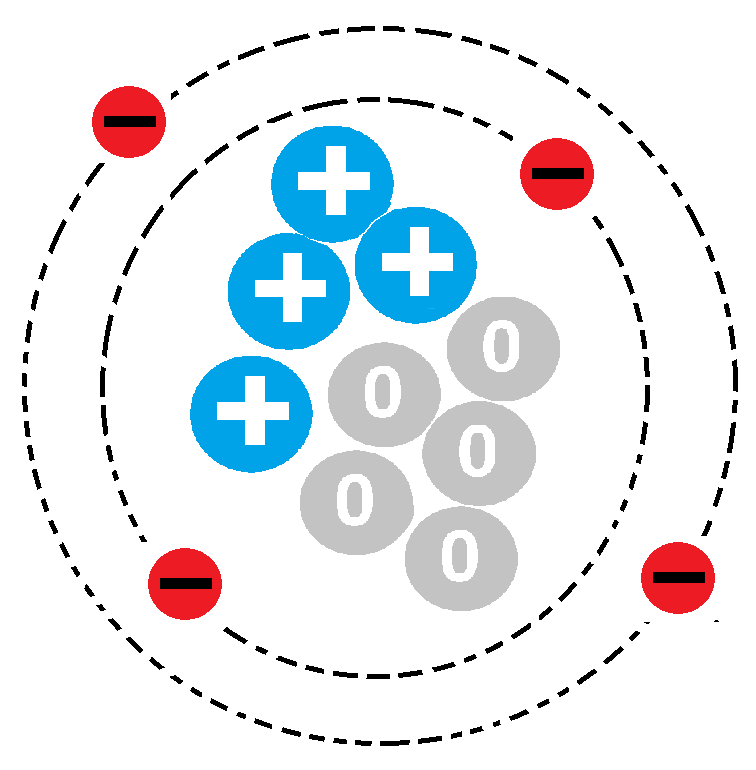
How many neutrons does the isotope of lithium have?
1
8
2
3
3
4
4
5

37

Multiple Choice

Question image
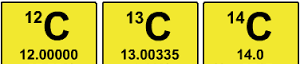
What do these isotopes of carbon all have in common?
1
neutrons & mass number
2
atomic number and neutrons
3
atomic number and electrons
4
protons, atomic number, and mass number

1G2 Science Chapter 8 Atoms and Molecules

media

Show answer

Auto Play

Slide 1 / 37

SLIDE