

Nutrition: Autotrophic & Heterotrophic

Presentation
•
Biology, Science
•
8th Grade
•
Practice Problem
•
Easy
+1
Standards-aligned

Jesús Mendoza
Used 75+ times
FREE Resource
10 Slides • 6 Questions
1
Nutrition: Autotrophic & Heterotrophic
In this lesson, we'll study the difference between autotrophs and heterotrophs and explain different modes of nutrition in heterotrophs. We'll also look at how modes of nutrition impact food web efficiency, and thus commercial agriculture.

2
What Are Modes of Nutrition?
Every moment you're alive, your body is using energy, even if you're just sitting here reading this lesson. Where does that energy come from? Our energy is acquired through eating food, like pizza for lunch. Organisms that depend on other organisms for food, and thus energy, like us, are called heterotrophs.

3
Multiple Choice
4
Although eating might seem like the only way to get food, think for a minute about how plants get their food. They don't eat, but rather they create their own food from sunlight or chemicals that are then used to generate the energy they need to grow and reproduce. Organisms that make their own food are called autotrophs. Today, we're going to look in more detail at each of these modes of nutrition and examine how they impact agriculture and our food supply.

5
Multiple Choice
6
Autotrophs
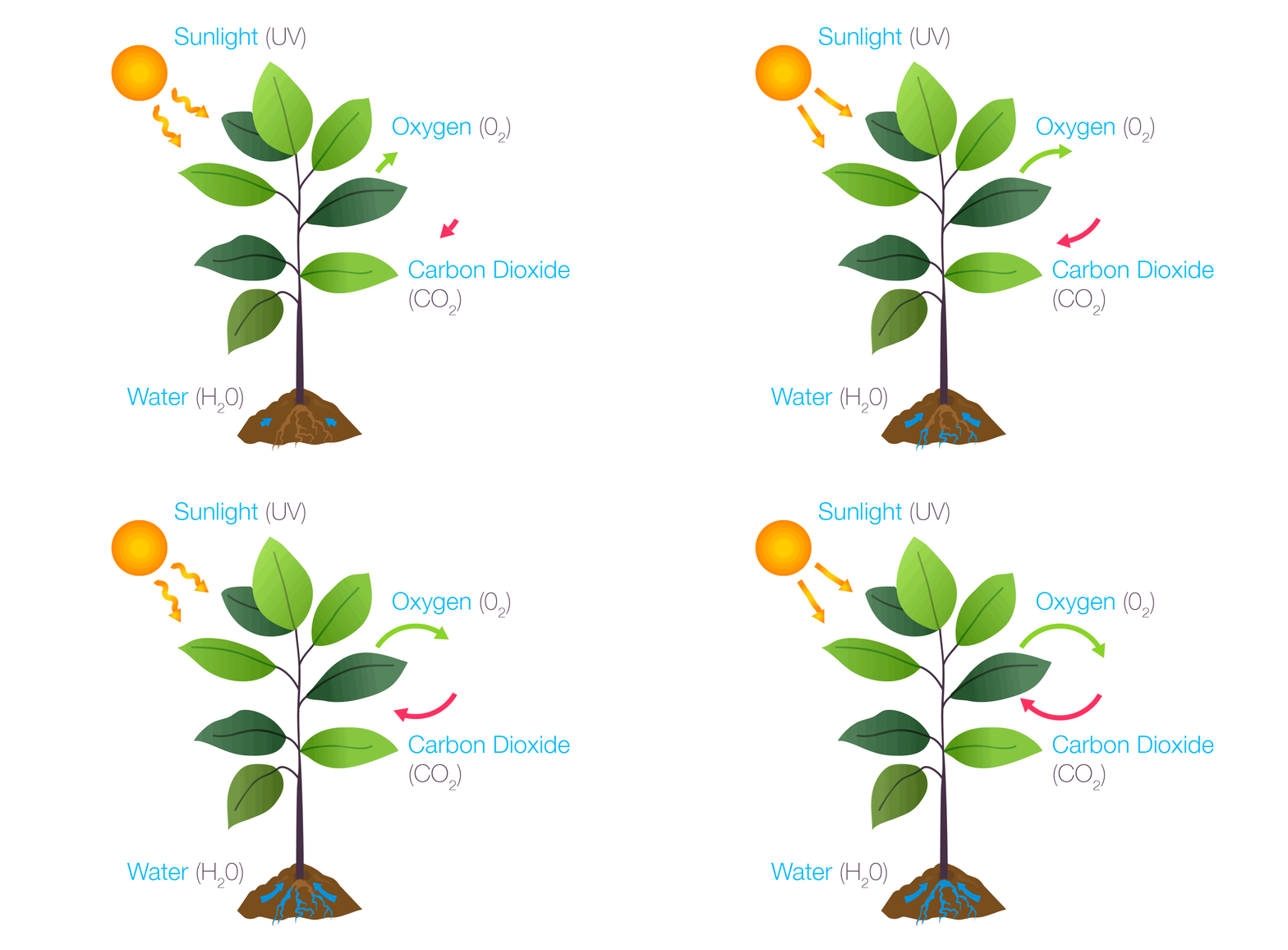
Autotrophs make their own food. Typically, we think of plants as autotrophs, and this is true, but there are other kinds as well. Plants, algae, phytoplankton, and some bacteria are photosynthetic, meaning they use sunlight to make sugar, which they then use to make energy. Photosynthetic organisms are green because they contain a pigment called chlorophyll that does photosynthesis. Some other types of bacteria are also autotrophic, but they are chemosynthetic. They use the energy stored in chemicals, usually released from deep-sea vents, to make their food, and then energy.
7
Multiple Choice
8
Autotrophs form the basis of all food webs. They gather energy from inorganic sources, like chemicals or the sun, and convert it into a form that other animals can use. Energy is transferred from the autotrophs to consumers that eat them and then to carnivores that eat those animals. Without autotrophs, all of our food webs would collapse.

9
Multiple Choice
10
Since there is so much energy available to this layer of the food web, autotrophs have the greatest number of organisms in an ecosystem. Think of how many blades of grass there are in a field compared to how many bears you typically see. Autotrophs also have an easier time finding a suitable environment. All they need are the right conditions and plenty of sunlight or chemicals to survive and flourish.

11
Multiple Choice
12
Heterotrophs
Heterotrophs depend on other organisms for food. Some heterotrophs, called herbivores, only eat plants. The herbivores only get 10% of the energy available from the autotrophs, because the producers used 90% of their energy to grow and reproduce. So, there are substantially fewer herbivores in an ecosystem compared to autotrophs since they get less energy. Consider our field. There are millions of blades of grass, but only one herd of about twenty deer.

13
Multiple Choice
14
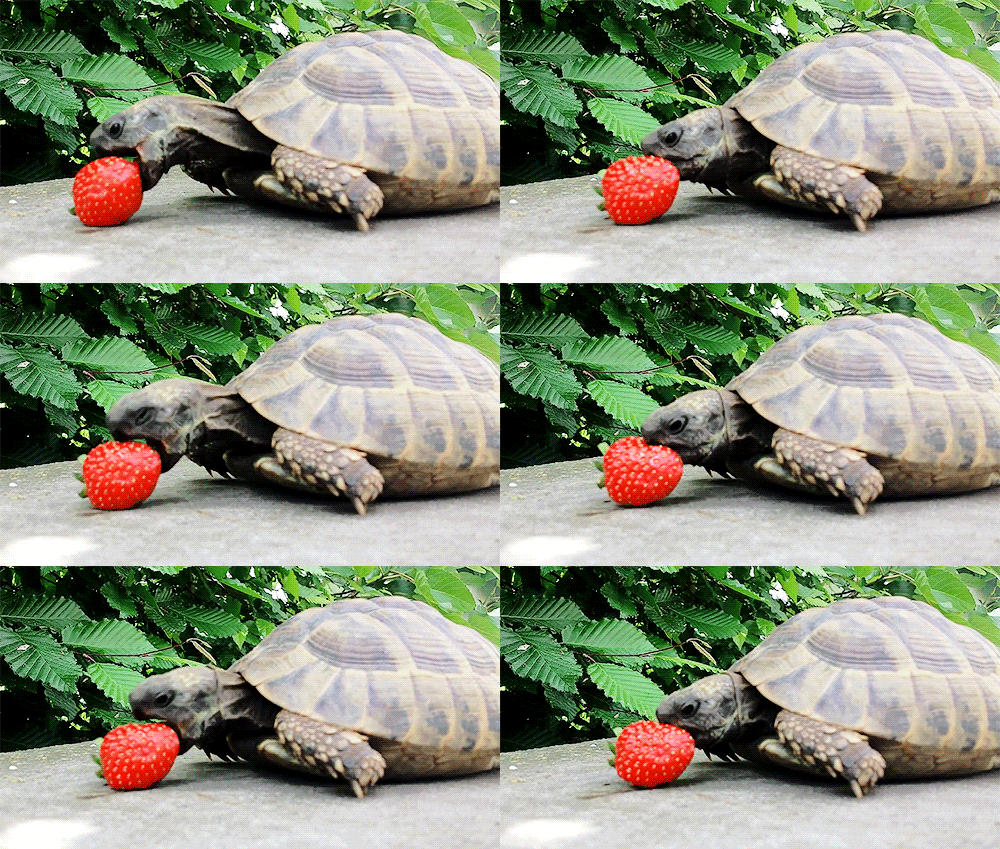
Omnivores eat plants too, but they also can eat meat. These animals might consume herbivores or plants. If the omnivores are eating the herbivores, they get even less energy. They only get 10% of the energy the herbivores get, so they end up with only 1% of the energy that was present in the autotrophs. Thus, there are going to be even fewer of these heterotrophs compared to the herbivores.
15
Carnivores only eat meat. they are typically the smallest group in an ecosystem since there is even less energy available as you move up to the food chain. Carnivores need a steady diet of other heterotrophs, so they will only be available to live in locations that contain prey, unlike plants that only require sunlight and water.

16
Nutrition: Autotrophic & Heterotrophic
In this lesson, we'll study the difference between autotrophs and heterotrophs and explain different modes of nutrition in heterotrophs. We'll also look at how modes of nutrition impact food web efficiency, and thus commercial agriculture.
Show answer
Auto Play
Slide 1 / 16
SLIDE


