Search Header Logo
Lesson 11.1: The cell

Lesson 11.1: The cell

Assessment

Presentation

Science

6th - 8th Grade

Easy

Created by

Andrea Chirinos

Used 9+ times

FREE Resource

11 Slides • 22 Questions

1

Lesson 11.1: The cell

by Andrea Chirinos

2

​The cell

The smallest unit that can live on its own and that makes up all living organisms and the tissues of the body. A cell has three main parts: the cell membrane, the nucleus, and the cytoplasm.

media

3

Multiple Choice

The smallest unit of life in a living thing.

1

kingdom

2

cell

3

organs

4

phylum

4

​Prokayote vs Eukaryote cells

  • Prokaryote: Unicellular

  • Eukaryotes: Multicellular​

  • ​Most procaryotic cells hace cell walls

  • ​Very few eukaryotic cells hace cell walls.

  • ​PRO rhymes with no

  • ​Eu rhymes with do

media

5

Multiple Select

Small simple cells are called

1

prokaryotic

2

eukaryotic

6

Multiple Select

Multicellular organisms are

1

eukaryotic

2

prokaryotic

7

Multiple Select

Unicellular organisms are usually

1

prokaryotic

2

eukaryotic

8

Multiple Select

Which cells are more complex and larger?

1

prokaryotic

2

eukaryotic

9

​Types of cells

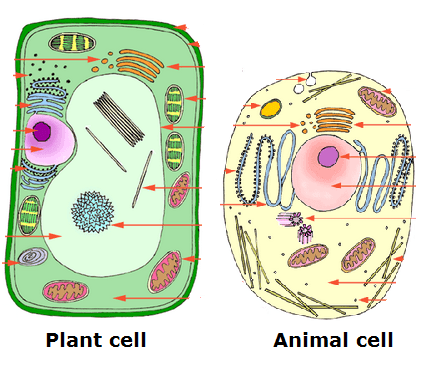
Plant cells have certain distinguishing features, including chloroplasts, cell walls, and intracellular vacuoles. Photosynthesis takes place in chloroplasts; cell walls allow plants to have strong, upright structures; and vacuoles help regulate how cells handle water and storage of other molecules.

media

10

Multiple Choice

Surrounds the plant cell and maintains the cell shape and structure.

1

Cell wall

2

Cell membrane

3

Nucleus

4

Ribosome

11

Multiple Choice

Has CHLOROPLASTS.

1

Plant Cell Only

2

Animal Cell Only

3

Both

12

​Types of cell

​Animal cells

Are typical of the eukaryotic cell, enclosed by a plasma membrane and containing a membrane-bound nucleus and organelles. Unlike the eukaryotic cells of plants and fungi, animal cells do not have a cell wall.

media

13

Multiple Choice

Has MANY SMALL VACUOLES.

1

Plant Cell Only

2

Animal Cell Only

3

Both

14

Multiple Choice

Both a plant and animal cells have a cell wall

1

True

2

False

15

​Structure of a cell

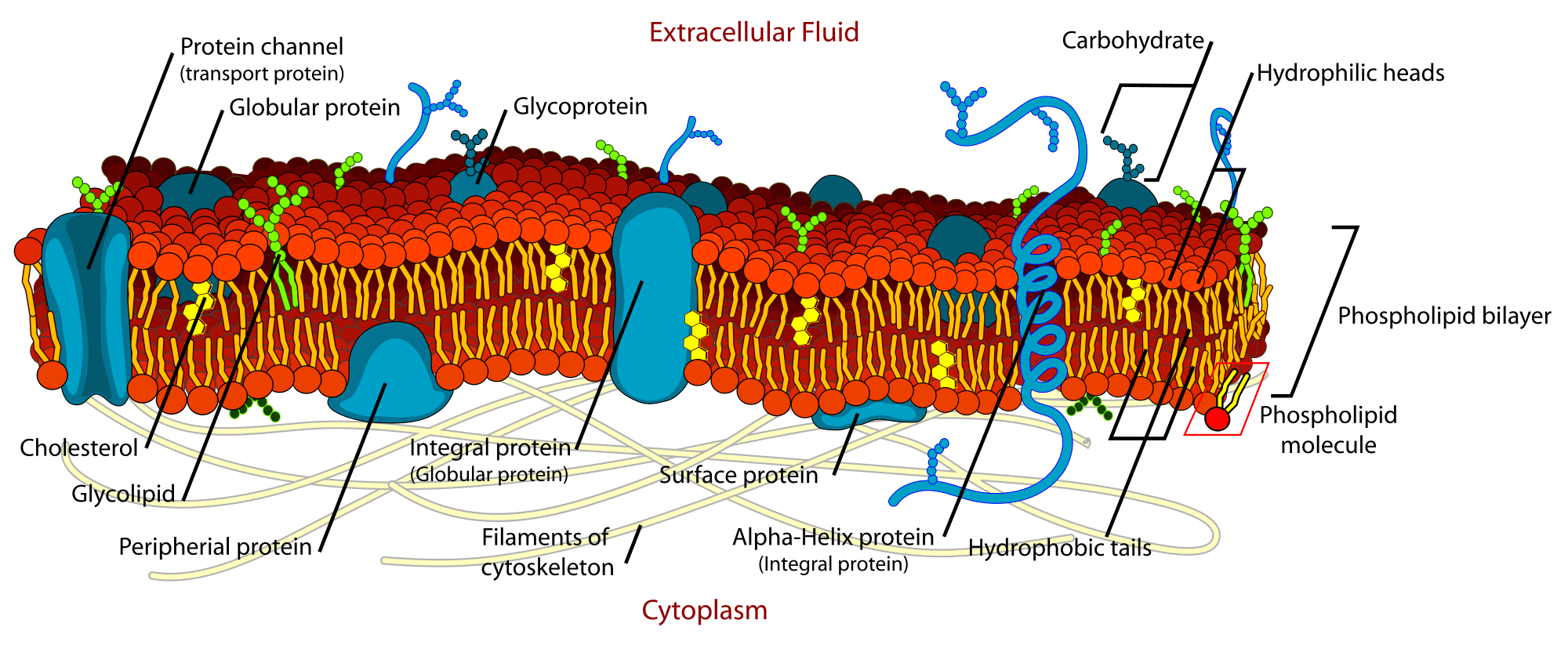
The cell membrane: Cell membranes serve as barriers and gatekeepers. They are semi-permeable, which means that some molecules can get in but others can't.

media

16

Structure of a cell

Cytoplasm: The cytoplasm is the gel-like fluid inside the cell. . It provides a space where other organelles can operate.

​Organelles: Are small structures within the cytoplasm that carry out functions necessary to maintain homeostasis in the cell

media

17

Multiple Choice

Question image

What is this image?

1

cell membrane

2

proteins

3

carbohydrates

4

lipids

18

Multiple Choice

The function of the plasma membrane is....

1

to regulate what enters and leaves the cell.

2

fight bacteria and viruses that enter the cell.

3

provide rigid support and protection to the cell.

4

make sure each cell can move

19

Multiple Choice

Question image

Function of the cytoplasm

1

The function of the cytoplasm is to maintain the integrity of these genes.

2

The cytoplasm is help retain waste products.

3

The cytoplasm it is functions as a micro-machine for making proteins.

4

The cytoplasm is responsible for holding the components of the cell and protects them from damage.

20

​Cell structure

Mithocondria: Membrane-bound cell organelles (mitochondrion, singular) that generate most of the chemical energy needed to power the cell's biochemical reactions. Chemical energy produced by the mitochondria is stored in a small molecule called adenosine triphosphate (ATP).

media
media

21

Multiple Choice

Question image

This organelle powers the cell by burning fuel they get from the food we eat. 

1

Mitocondria

2

nucleus

3

lysosomes

4

cytoplasm

22

Multiple Choice

Question image

What is the full name of the molecule ATP?

1

Adenine Diphosphate

2

Adenosine Diphosphate

3

Adenine Triphosphate

4

Adenosine Triphosphate

23

​Cell structure

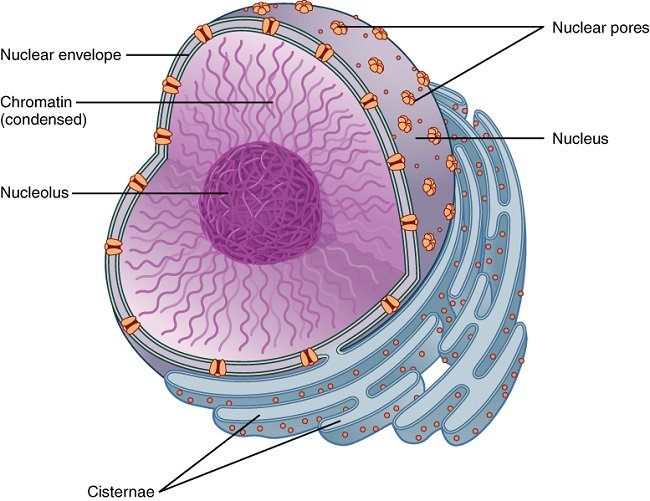
Nucleous: controls and regulates the activities of the cell (e.g., growth and metabolism) and carries the genes, structures that contain the hereditary information.

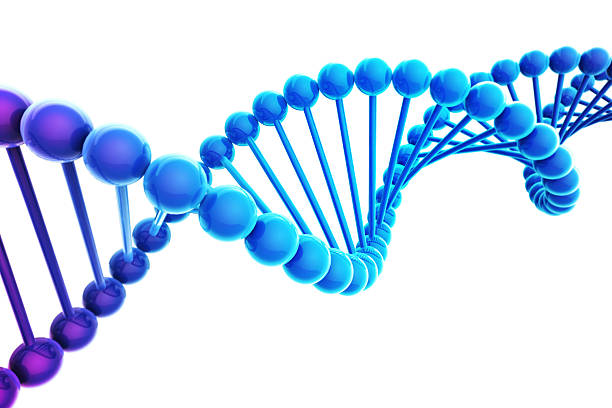
Chromosomes: a molecule of DNA. A key part of the process that ensures DNA is accurately copied and distributed.

Ribosomes: are tiny particles consisting of RNA.

media

24

Multiple Choice

Question image

The control center of the cell.

1

cytoplasm

2

nucleus

3

nucleoplasm

4

chromatin

25

Multiple Choice

Question image

A double stranded helix that holds the code for all the cells in the body.

1

RNA

2

DNA

3

Chromatin

4

Nucleus

26

Multiple Choice

Question image

Cellular Respiration occurs within me and I am in BOTH plant and animal cells. I am a....

1

Nucleus

2

Golgi Body

3

Cytoskeleton

4

Mitochondria

27

​Plant cell structures

media

Cell wall: surrounds the cell membrane of plant cells and provides strength and protection

Chloroplasts: convert light energy into chemical energy by photosynthesis.

Vacuole: help maintain water balance.

28

Multiple Select

Question image

What distinguishes a plant cell from an animal cell? (How do you tell them apart) Hint: There's 3 ways (Check all 3)

1

Central Vacuole

2

Mitochondria

3

Cell Wall

4

Ribosomes

5

Chloroplasts

29

Multiple Choice

Question image

Photosynthesis takes place within me. I am a...

1

Mitochondria

2

Cell Wall

3

Chlorine

4

Chloroplast

30

​Animal cell structure

​vacuole: generally small and help sequester waste products.

​lysosomes: function as the digestive system of the cell

media
media

31

Multiple Choice

Question image

I like to be thought of as the "storage bubble" for both plant and animal cells. I am a...

1

Cell Membrane

2

Cytoskeleton

3

Vacuole

4

Endoplasmic Reticulum

32

Multiple Choice

Animal and Plant Cells are...

1

Shopkoytes

2

Eukaryotes

3

Prokaryotes

4

The building blocks of non-living things

33

Poll

Question image

So far ...

GREAT! I understand everything

Good, I'm giving my best

So, so , I will review again

HELP! I'm lost

Lesson 11.1: The cell

by Andrea Chirinos

Show answer

Auto Play

Slide 1 / 33

SLIDE