Search Header Logo
Looking Back C1, C2, C3 & C4

Looking Back C1, C2, C3 & C4

Assessment

Presentation

•

Chemistry

•

9th - 11th Grade

•

Medium

Created by

Munira Intan

Used 4+ times

FREE Resource

10 Slides • 44 Questions

1

​CHEMISTRY

​Looking C1, C2, C3 & C4

media
media

2

Multiple Choice

How can you stop the movement of particles?

1

Increase the temperature

2

Decrease the temperature

3

You can't.

4

Hold them still with your hands.

3

Open Ended

Question image

4

media

5

Multiple Choice

Question image

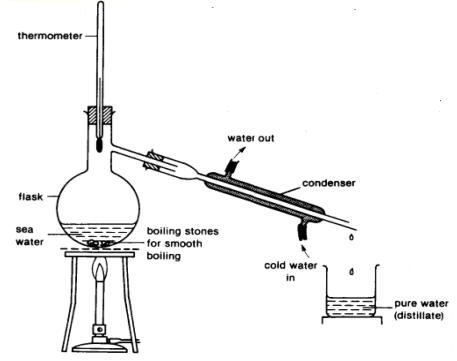
What is the name of this separation technique?

1

Simple distillation

2

Fractional distillation

3

Boiling

4

Evaporation

6

Multiple Choice

Which of the following statements tells us that a sample of liquid is pure water?

1

It is colourless.

2

It leaves no residue when filtered.

3

It boils at 100oC.

4

It is odourless.

7

Multiple Choice

Which separation technique is used to obtain pure water from seawater?

1

Simple distillation

2

Filtration

3

Chromatography

4

Evaporation

8

Multiple Choice

Question image

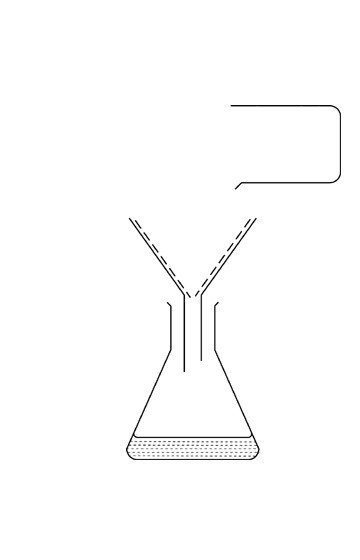
What is the name of this separation technique?

1

distillation

2

filtration

3

evaporation

4

chromatography

9

Multiple Choice

What is the physical property on which fractional distillation depends?

1

different boiling points

2

different melting points

3

different solubilities

4

different densities

10

Multiple Choice

Question image

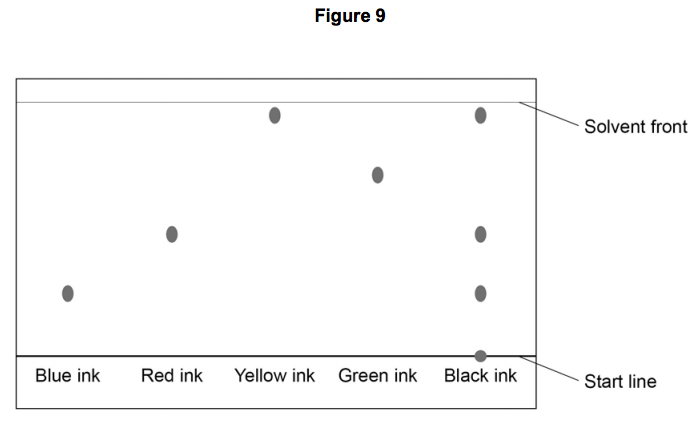
Which ink is most soluble?

1

Blue

2

Red

3

Yellow

4

Green

11

Multiple Choice

Question image

Which ink is a mixture?

1

Blue

2

Red

3

Yellow

4

Black

12

Multiple Choice

Question image

Referring to the chromatogram, black ink contains

1

Blue, red and yellow ink only

2

Blue, red, yellow and green ink

3

Blue and yellow ink

4

Black ink only

13

Multiple Choice

Question image
1

A

2

B

3

C

4

D

14

Multiple Choice

Question image
1

A

2

B

3

C

4

D

15

Multiple Choice

Question image
1

A

2

B

3

C

4

D

16

Multiple Choice

Question image
1

A

2

B

3

C

4

D

17

Multiple Choice

Question image
1

A

2

B

3

C

4

D

18

Multiple Choice

Question image
1

A

2

B

3

C

4

D

19

Multiple Choice

Question image
1

A

2

B

3

C

4

D

20

Multiple Choice

Pure Copper Sulphate Crystals can be obtained by ________.

1

Centrifugation

2

Distillation

3

Crystallisation

4

Filtration

21

Multiple Choice

The process of cooling of crystals should be done at a ________ rate

1

Fast

2

Moderate

3

Slow

4

Any

22

Multiple Choice

Crystallisation is based on the ____________

1

Difference in melting point

2

Difference in boiling point

3

Difference in pressure

4

Difference in solubility

23

Multiple Choice

Question image
1

A

2

B

3

C

4

D

24

media

25

media

26

Multiple Choice

A substance that cannot be separated or broken down into simpler substances by chemical means is?

1

Mixture

2

Element

3

Compound

4

Molecule

27

media

28

Multiple Choice

Question image

What do elements in the same group (family) have in common with each other?

1

Properties and valence electrons

2

Atomic number and valence electrons

3

Chemical symbol and atomic mass

4

Atomic mass and atomic number

29

Multiple Choice

Question image
Which element has similar properties to Chlorine (Cl)? 
1
Fluorine
2
Sulfur
3
Boron
4
Oxygen

30

Multiple Choice

Question image
How many electrons does Si contain? (click to see image)
1
14
2
28
3
2
4
4

31

Multiple Choice

Neon has 10 electrons. The electrons fill the energy levels in Neon like this...

1

Two in the first, four in the second and four in the third.

2

Four in the first, Four in the second and two in the third.

3

Two in the first and eight in the second.

4

Two in the first, two in the second and six in the third.

32

Multiple Choice

What does the nucleus consist of?
1
Protons + Electrons
2
Neutrons + Electrons
3
Atoms
4
Protons + Neutrons

33

Multiple Choice

Question image

Isotopes are the atoms of the same element with the same number of.............. but different number of............

1

electrons/neutrons

2

neutrons/protons

3

protons/neutrons

4

electrons/protons

34

Multiple Choice

Question image

What do these isotopes of carbon all have in common?

1

neutrons & mass number

2

atomic number and neutrons

3

atomic number

4

protons, atomic number, and mass number

35

media

36

media

37

Multiple Choice

Question image

How many VALENCE ELECTRONS does Chlorine have?

1

2

2

7

3

8

4

10

5

17

38

Multiple Choice

Why are the noble gases so unreactive?

1

They made a group decision not to react

2

They have a large number of electrons

3

They don't like to give up electrons

4

They have a full outer shell of electrons

39

media

40

Multiple Choice

A charged particle that has gained or lost electrons is called a _____.
1
molecule
2
ion
3
isotope
4
element

41

Multiple Choice

What usually forms the positive ion?

1

Metal

2

Nonmetals

3

None

42

Multiple Choice

Metals form ions by _____________ electrons, nonmetals form ions by   ___________ electrons. 
1
losing, gaining
2
gaining, losing
3
 losing, losing
4
gaining, gaining

43

Multiple Choice

Which of these statements about the halogens is incorrect?

1

They are reactive because they easily gain one electron

2

They form ions with a charge of +1

3

They include fluorine, chlorine, bromine and iodine

4

They get less reactive as their atomic number increases

44

Multiple Choice

The laboratory test for oxygen is that

1

it relights a glowing splint

2

it relights a burning splint

3

it changes lime water to milky

4

it makes a glowing splint go out

45

Multiple Choice

Turns limewater milky

1

Hydrogen

2

Oxygen

3

Ammonia

4

Carbon dioxide

46

Multiple Choice

Makes a squeaky pop sound when lit

1

Hydrogen

2

Oxygen

3

Chlorine

4

Ammonia

47

media

48

media

49

Multiple Choice

Question image

What metal was found in the unknown?

1

sodium

2

lithium

3

copper

50

Multiple Choice

Why do you think are there different colors emitted?

1

Because of the absorption of heat from the flame

2

Because heat is released

3

Because of the absorption of light

51

Multiple Choice

What particles in the heated compounds are responsible for the production of the colored light?

1

proton

2

neutron

3

electron

4

proton and neutron

52

Multiple Choice

What compound gives off red color when heated over a flame?

1

Lithium

2

Strontium

3

Potassium

4

Calcium

53

Multiple Choice

What is the color of the light that potassium compounds give off?

1

Yellow-orange

2

Purple

3

Pinkish red

4

Green

54

Poll

RATE YOUR UNDERSTANDING

1

2

3

4

5

​CHEMISTRY

​Looking C1, C2, C3 & C4

media
media

Show answer

Auto Play

Slide 1 / 54

SLIDE