

Lesson 17: Energy Transformations

Presentation
•
Science
•
8th Grade
•
Easy
+5
Standards-aligned

Micah Davis
Used 97+ times
FREE Resource
10 Slides • 7 Questions
1
More than meets the eye

2
When you microwave popcorn, turn on Spotify, or flip on a light, you are relying on energy transformations to make those different appliances work. Energy can transform from one form to another. In the case of the microwave, electric energy is transformed into radiant energy.

3
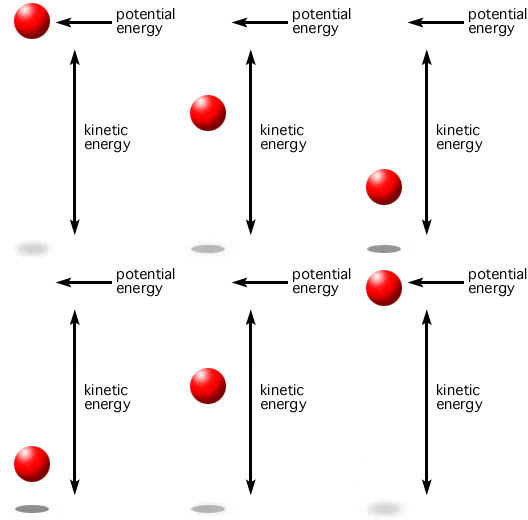
Potential energy and kinetic energy are strongly related. As an object begins moving, it is increasing in kinetic energy and decreasing in potential energy. As it slows, its potential energy moves up and its kinetic energy decreases. In the GIF to the right, the ball reaches maximum potential energy at the height of its bounce because it has slowed to a stop in the air before approaching the ground again.
4
The Law of Conservation of Energy states that energy can be transformed from one form to another or transferred from one region to another, but it cannot be destroyed. This means that for any closed system, the amount of energy remains constant and the amount of energy in the universe is constant.

5
If energy is conserved and never destroyed, then how does a car stop moving? If it stops moving, isn't its mechanical energy destroyed and that's why it stops? Actually, when you apply the brakes on a car, the tires and actions of the brake pads convert the mechanical energy of the car into thermal energy via friction. In fact, in many cases, when we are transforming energy into various forms, energy is lost as thermal energy. This is the case for light bulbs, computers, and batteries.

6
Thermal Energy - We use thermal energy in our heaters, in warming lamps, in stoves, in ovens, and in combustion engines. In the case of an electric heater, that is a conversion of electrical energy from the power plant into thermal energy from the heater. In the case of a combustion engine, that is the conversion of thermal energy into mechanical energy. You could also argue that a combustion engine converts chemical energy into thermal energy by burning fuel which is used to produce mechanical energy.

7
Chemical Energy - Photosynthesis, the creation of glucose molecules inside a plant for food, is an example of radiant energy from the sun being converted into chemical energy which is stored in the plant. We also produce mechanical energy through chemical energy in our metabolism: digesting food and breaking down sugar, fats, and proteins to move our muscles and continue living. This chemical energy is also used to keep our body temperature up, which is a conversion of chemical energy into thermal energy.

8
Radiant Energy - Radiant energy is used in microwaves, cell phones, radio waves, and light bulbs. All of these devices convert electrical energy to radiant energy for different purposes. Cell phones also convert the radiant energy of waves into sound energy. They also convert sound energy into radiant energy when you speak into the microphone. The conversion process includes multiple steps. When you're listening to someone speak on the phone, the radiant energy from their phone and the towers is converted into electrical energy by your phone which then converts that electrical energy into sound energy.

9
Electric Energy - Most of the devices we use on a daily basis use electric energy in some form. We can use electric fans which convert electric energy into mechanical energy. We can use electric heaters which convert electric energy into thermal energy. We even use cell phones which convert electric energy into both radiant energy and sound energy. Electric energy is often converted for us to use it in some other way, but electric energy is also created via other forms of energy: thermal (in the case of geothermal), mechanical (in the case of wind and hydroelectric energy), and chemical (in the case of coal plants and natural gas plants).
10
Whenever energy changes form, there is some energy lost in the form of heat. You feel this heat on your phone when it's charging and you can even feel this heat when next to a high-powered computer. Light bulbs produce heat because of this fact as well. Thermal energy that is lost and cannot be used is called waste energy.

11
Multiple Choice

12
Multiple Choice

13
Multiple Choice

14
Multiple Choice

15
Multiple Choice

16
Multiple Choice

17
Multiple Choice

More than meets the eye
Show answer
Auto Play
Slide 1 / 17
SLIDE
Similar Resources on Wayground

14 questions
Simple Machines & Mechanical Systems
Presentation
•
8th Grade
16 questions
Biomes
Presentation
•
8th Grade
16 questions
Metric Conversions Notes
Presentation
•
8th Grade
12 questions
Fossils
Presentation
•
8th Grade
12 questions
Living Things
Presentation
•
KG
13 questions
Physical and Chemical Changes
Presentation
•
8th Grade
10 questions
Open, Closed and Isolated Systems
Presentation
•
8th Grade
14 questions
Atoms and Molecules
Presentation
•
8th Grade
Popular Resources on Wayground
21 questions
Continents and Oceans

Quiz
•
6th Grade
20 questions
Parts of Speech
Quiz
•
5th Grade
16 questions
Subject & Predicate
Quiz
•
5th Grade
25 questions
Multiplication Facts
Quiz
•
5th Grade
12 questions
Map Skills
Quiz
•
3rd Grade
22 questions
Continents and Oceans
Quiz
•
5th Grade
15 questions
Rounding Decimals
Quiz
•
5th Grade
20 questions
Brand Labels
Quiz
•
5th - 12th Grade
Discover more resources for Science
20 questions
Newton's Laws of Motion
Quiz
•
8th Grade
20 questions
Scientific Method and Variables
Quiz
•
8th Grade
20 questions
Scientific method and variables
Quiz
•
8th Grade
20 questions
Claim, Evidence and Reasoning (CER)
Quiz
•
6th - 8th Grade
21 questions
Newton's Laws of Motion
Quiz
•
8th Grade
20 questions
Elements, Compounds and Mixtures
Quiz
•
8th Grade
10 questions
Exploring Chemical and Physical Changes

Interactive video
•
6th - 10th Grade
26 questions
Force - Net Force, Balanced and Unbalanced Forces
Quiz
•
8th Grade