Search Header Logo
4.5 Cell Growth and Division

4.5 Cell Growth and Division

Assessment

Presentation

Biology

11th - 12th Grade

Medium

Created by

Lloyd Cascabel

Used 1+ times

FREE Resource

8 Slides • 39 Questions

1

Cell Growth and Division

by Lloyd Cascabel

2

Review

​Yesterday, we discussed that one characteristic of life is the capability of an organism to reproduce. Different organisms have different mechanisms of reproduction.

​Please answer the next few questions regarding this concept.

3

Multiple Choice

In asexual reproduction, all of the offspring are:
1
Physically Identical
2
Genetically Identical
3
Physically and Genetically Identical
4
Not Identical

4

Multiple Choice

A hydra reproduces when an outgrowth, or bud, forms and continues to develop until it falls off of the parent. This is an example of:

1

Binary Fission

2

Sporulation

3

Budding

4

Vegetative Propagation

5

Multiple Choice

How many parent(s)are needed for asexual?
1
4
2
1
3
9
4
100

6

Multiple Choice

Question image

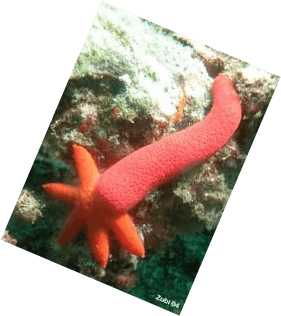
In the past, Fishermen catch starfish, cut them up with knives, and then throw their pieces back in the ocean. They thought this would kill the starfish. What they did not know was that each piece of starfish will grow into a whole new individual. What type of asexual reproduction is taking place?

1
Regeneration
2
Vegetative propagation
3
Budding
4
Fission

7

Multiple Choice

What are some of the facts about asexual reproduction?
1
Takes only one mate to reproduce and takes a longer time to reproduce
2
Takes a shorter amount of time to reproduce and it takes two mates to reproduce
3
Reproduces diverse offspring and takes a longer time to reproduce
4
Takes only one mate to reproduce and takes a shorter time to reproduce

8

Multiple Choice

Question image

Which of the following types of Reproduction is shown by the image

1

Sexual

2

Binary fission

3

Vegetative Propagation

4

Spore Formation

9

Multiple Choice

Sexual reproduction requires _____ parents and asexual reproduction requires ___ parents
1
1,1
2
2,2
3
2,1
4
1,2 

10

Multiple Choice

Question image

This is an example of asexual reproduction by...

1

budding

2

binary fission

3

spore formation

4

vegetative propagation

11

Multiple Choice

Sexual reproduction results in

1

Genetically unique offspring

2

Genetically identical offspring

12

Multiple Choice

Sexual reproduction results in

1

No variation

2

Large amounts of variation

13

Multiple Choice

Which of the following describes the main advantages of sexual reproduction?

1

requires lots of time/energy

2

no new gene combos can arise

3

genetic diversity

4

looks identical to the parent

14

Cell Cycle

Reproduction and regeneration of worn out tissues depends on cellular activities. About 2 trillion cells are produced in an adult human body everyday. Each of these cells is a product of cell division. But before a cell divides, it needs to be able to properly grow and develop. This process is called cell cycle and is divided into four parts– G1, S, G2, and M.

media

15

G1

The entire process where the cells are growing and preparing for division is called INTERPHASE.

​Interphase is further divided into 3 parts:

​G1 – stands for 1st gap. A cell that receives a signal from neighboring cells to divide in response to an injury or a growth hormone begins the process of growth where it increase its mass and trigger the duplication of organelles.

media
media

16

S Phase

S Phase – the second part of the cell cycle. S stands for synthesis of DNA. After the cell has increase its size, it continues on with duplicating its DNA. Making sure that there are two equal copies of the genetic information. All of these are happening in the nucleus.

media
media

17

G2

G2 – the 2nd Gap. Before G2, a checkpoint sees to it that S Phase has appropriately copied the DNA. When all the DNA has been copied, the cell continues to grow and develop, producing enzymes and continuously increasing its size to prepare well for division. Another set of checkpoints will be present at the end of this stage to ensure that the cell is prepared for division.

media
media

18

M Phase

M Phase – refers to 'mitosis'. Nonetheless, this can be a bit misleading as mitosis is only one part of it. More appropriately, it should be called cell division which is further divided into Mitosis and Cytokinesis.

​Mitosis refers to nuclear division that produces two identical cells nuclei within one cell.

Cytokinesis is the division of the membrane and cytoplasm (including all its organelles.)

media
media

19

Multiple Choice

What is the cell cycle?
1
The gradual development of something, especially from a simple to a more complex form.
2
The study of heredity and the variation of inherited characteristics.
3
The branch of biology that deals with the relations of organisms to one another and to their physical surroundings.
4
The series of events that take place in a cell leading to its division and duplication of its DNA to produce two daughter cells.

20

Multiple Choice

What happens in the first part of Interphase?
1
Mitosis
2
Cell Growth
3
DNA Replication
4
Anaphase

21

Multiple Choice

What part of the cell cycle results in the splitting of the new cells?
1
Interphase
2
Mitosis
3
Metaphase
4
Cytokinesis

22

Multiple Choice

What does DNA Replication mean?
1
DNA is made.
2
DNA makes new cells. 
3
DNA copies itself.
4
DNA starts the cell cycle.

23

Multiple Choice

True or False. 
After a cell goes through cytokinesis, it starts mitosis all over again.
1
True
2
False

24

Multiple Choice

During which stage of the cell cycle does mitosis and cytokinesis occur?
1
Interphase
2
S phase
3
M phase
4
G1 phase

25

Multiple Choice

During what phase of the cell cycle is DNA replicated?
1
G1 phase
2
S phase
3
G2 phase
4
M phase

26

Multiple Choice

During what phase of the cell cycle does the cell grow?
1
G1 phase
2
S phase
3
M phase
4
Cytokinesis

27

Multiple Choice

During what phase of the cell cycle does the cell do its final preparation for mitosis?

1
G1 phase
2
S phase
3
G2 phase
4
M phase

28

Multiple Choice

Put the following stages of the cell cycle in order: G2, S, G1, M. 
1
G1, S, G2, M
2
S, G1, G2, M
3
G1, M, G2, S
4
M, G1, S, G2

29

Multiple Choice

Question image
Why would it be important to replicate DNA before a cell divides in mitosis or meiosis?
1
In order for genetic information to be transferred into daughter cells.
2
In order for the cell to be able to increase in size.
3
In order for the DNA to be contained in the nucleus.
4
In order for the cell to re-order the DNA sequencing in the new cells.

30

Multiple Choice

Put the following actions in order: DNA replicates, cell grows, cell divides, cell prepares for mitosis. 
1
DNA replicates, cell grows, cell prepares for mitosis, cell divides
2
cell grows, cell prepares for mitosis, DNA replicates, cell divides
3
cell grows, DNA replicates, cell prepares for mitosis, cell divides
4
DNA replicates, cell prepares for mitosis, cell grows, cell divides

31

​There are two parts to how our body cells divide – Mitosis and Cytokinesis.

​Mitosis is the division of the nucleus and it is divided into 4 steps:

​- Prophase, Metaphase, Anaphase, Telophase

​just remember P.M.A.T

media

​Cell Division

32

Multiple Choice

Which of these lists presents the stages of the cell cycle in the correct order?
1
interphase, mitosis, cytokinesis
2
cytokinesis, mitosis, interphase
3
mitosis, interphase, cytokinesis
4
interphase, cytokinesis, mitosis

33

Multiple Choice

Nuclear membrane breaks down, spindle fibers form describes:

1

Prophase

2

Anaphase

3

Metaphase

4

Telophase

34

Multiple Choice

Question image

What are the "X" shaped things in the drawing.

1

PMATs

2

Chromosomes

3

Ribosomes

4

Telophase

35

Multiple Choice

Question image
Identify the stage of mitosis.
1
interphase
2
prophase
3
metaphase
4
anaphase

36

Multiple Choice

Question image

What stage of mitosis is depicted here

1

Prophase

2

Anaphase

3

Telophase

4

Metaphase

37

Multiple Choice

Question image

What stage of mitosis is depicted here

1

Prophase

2

Metaphase

3

Anaphase

4

Telophase

38

Multiple Choice

Spindle fibers attach, centrioles line chromosomes in the center of the cell describes:

1

Prophase

2

Telophase

3

Metaphase

4

Anaphase

39

Multiple Choice

Question image

This is what phase of Mitosis?

1

Interphase

2

Prophase

3

Metaphase

4

Anaphase

5

Telophase

40

Multiple Choice

Centrioles pull the chromosomes apart towards the opposite sides of the cell describes:

1

Prophase

2

Metaphase

3

Telophase

4

Anaphase

41

Multiple Choice

Question image

What stage of mitosis is depicted here

1

Prophase

2

Metaphase

3

Anaphase

4

Telophase

42

Multiple Choice

Question image

What phase of mitosis is in the picture?

1

Interphase

2

Prophase

3

Metaphase

4

Anaphase

5

Telophase

43

Multiple Choice

Question image

During what phase of Mitosis do the chromosomes line up in the Middle

1

Metaphase

2

Prophase

3

Telophase

4

Anaphase

44

Multiple Choice

PMAT helps us remember the correct order of the phases of Mitosis. Which of the following has the phases of Mitosis in the correct Order

1

Interphase, Mitosis, Cytokinesis

2

Prophase, Metaphase, Anaphase, Prophase

3

Anaphase, Telophase, Prophase, Telophase

4

Prophase, Metaphase, Anaphase, Telophase

45

Multiple Choice

Question image

Fruit fly body cells have 8 chromosomes. After mitosis, you would expect a resulting fruit fly daughter cell to have ...

1

16 chromosomes.

2

46 chromosomes.

3

8 chromosomes.

4

4 chromosomes.

46

Multiple Choice

Question image
Name the phase:
1
Anaphase
2
Telophase
3
Metaphase
4
Prophase

47

Multiple Choice

Question image

What stage of mitosis is depicted here

1

Prophase

2

Metaphase

3

Anaphase

4

Telophase

Cell Growth and Division

by Lloyd Cascabel

Show answer

Auto Play

Slide 1 / 47

SLIDE