

Simple Diffusion

Presentation
•
Biology
•
10th - 11th Grade
•
Medium
+1
Standards-aligned

Rose Marsh
Used 10+ times
FREE Resource
12 Slides • 10 Questions
1
By R Marsh, Ph.D.
Simple Diffusion In Cells
2

Homeostasis:
A process by which biological systems maintain stability while adjusting to changing external conditions
3
Diffusion

Diffusion
The net movement of molecules or atoms from one area of high concentration to an area of low concentration.
Caused by random movement.
4
Gradient: High to Low

Gradient:
The difference in the concentration of a substance between two areas is called the concentration gradient
The bigger the difference, the steeper the concentration gradient and the faster the molecules of a substance will diffuse.
5
Equilibrium

Equilibrium:
The state in which the concentrations of the diffusing substance in the two compartments are the same or become equal.
6
Equilibrium

Rate of Diffusion:
Can be affected by:
Changes in temperature
Changes in concentration difference (number of atoms)
The medium or what the molecules are diffusing through
7

8

Simple Diffusion
The particles move along a concentration gradient in a solution through a semipermeable membrane (barrier that will only allow some molecules to pass through while blocking the passage of other molecules) attain equilibrium on both sides.
9

Simple Diffusion:
Characteristics
Across a semipermeable membrane, does not allow everything through.
Requires a concentration gradient across the cell membrane
It is a passive transport mechanism, require no energy
Does not need a carrier transport protein
Random motion
10

11
12
Multiple Choice
Passive Transport uses ____ energy
no
a lot of
a little bit of
some
13
Multiple Choice
Passive Transport is the movement of particles across the membrane from an area of [ ___ ] to an area of [ ___ ]
high to low
low to high
low to low
high to high
14
Multiple Choice
The condition in which all acting influences are balanced.
equilibrium
see-saw
net movement
hydrolysis
15
Multiple Choice
What's another word for equilibrium that means "balanced internal condition of cells?"
equality
hydrolysis
hypertonic
homeostasis
16
Multiple Choice
This is when the concentration of particles is higher in one area than another.
concentration gradient
concentration
osmosis
17
Multiple Choice
What does a 'region with high concentration' mean?
An area with a SMALL number of particles
An area with a LARGE number of particles
An area with an UNEVEN number of particles
An area with no particles
18
Multiple Choice
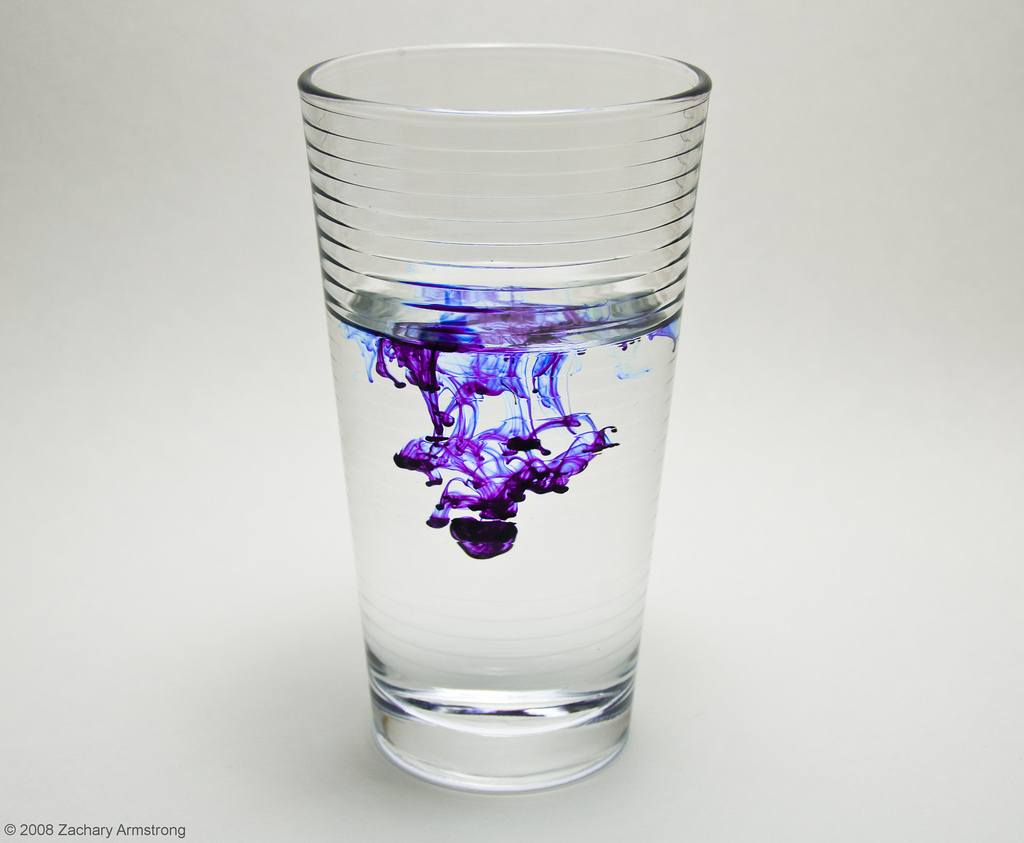
Where is there a low concentration of dye?
at the bottom of cup
in the color
at the top of cup
no concenteraion gradient
19
Multiple Choice
When does diffusion stop?
After a day and a night
When the particles are evenly spread out
When there are no particles left
When all the particles leave the system
20
Multiple Choice
21
Multiple Choice

What type of diffusion is this:
simple diffusion
facilitated diffusion
22

Interactive Worksheets | Wizer.me
You can open this webpage in a new tab.
By R Marsh, Ph.D.
Simple Diffusion In Cells
Show answer
Auto Play
Slide 1 / 22
SLIDE
Similar Resources on Wayground

19 questions
Biomes
Presentation
•
9th - 12th Grade
20 questions
Digestive System Crash Course
Presentation
•
KG - 12th Grade
13 questions
Succession Lesson
Presentation
•
9th - 11th Grade
19 questions
osmosis
Presentation
•
11th Grade
20 questions
Chromosomes
Presentation
•
10th Grade
14 questions
Incomplete Dominance & Codominance
Presentation
•
10th Grade
18 questions
Cellular respiration
Presentation
•
11th - 12th Grade
15 questions
Unit 5B DNA Replication and Protein Synthesis Review
Presentation
•
9th - 10th Grade
Popular Resources on Wayground
19 questions
Naming Polygons

Quiz
•
3rd Grade
10 questions
Prime Factorization
Quiz
•
6th Grade
20 questions
Math Review
Quiz
•
3rd Grade
15 questions
Fast food
Quiz
•
7th Grade
20 questions
Main Idea and Details
Quiz
•
5th Grade
20 questions
Context Clues
Quiz
•
6th Grade
20 questions
Inferences
Quiz
•
4th Grade
19 questions
Classifying Quadrilaterals
Quiz
•
3rd Grade
Discover more resources for Biology
50 questions
Biology Final Review
Quiz
•
10th Grade
15 questions
Biology EOC Review P2
Quiz
•
10th Grade
20 questions
Food Chains and Food Webs
Quiz
•
7th - 12th Grade
20 questions
Biology EOC Review 1
Quiz
•
10th Grade
50 questions
NC EOC Biology Review part 1
Quiz
•
9th - 12th Grade
15 questions
Evolution and Natural Selection Review
Quiz
•
10th Grade
10 questions
Exploring Food Webs and Energy Pyramids

Interactive video
•
6th - 10th Grade
15 questions
Evidence of Evolution
Quiz
•
8th - 12th Grade