Search Header Logo
Grade 7 Unit 6 Cells Homework

Grade 7 Unit 6 Cells Homework

Assessment

Presentation

•

Science

•

7th Grade

•

Medium

•
NGSS
MS-LS1-7, MS-LS1-2, MS-LS1-6

+6

Standards-aligned

Created by

Leanna Weimer

Used 11+ times

FREE Resource

8 Slides • 59 Questions

1

Grade 7 Unit 6 Cells Homework

By Leanna Weimer

2

Section 1: Cell Parts and Functions

media

3

4

Multiple Choice

Which of the following is not a part of The Cell Theory?

1

The cell is the smallest living unit in all organisms.

2

The cell is the largest living unit in all organisms.

3

All living things are made of cells.

4

All cells come from other pre-existing cells.

5

Multiple Select

What structures do all cells have in common? Check all that apply.

1

Genetic material

2

Endoplasmic reticulum

3

Ribosomes

4

Cytoplasm

5

Cell wall

6

Multiple Choice

Eukaryotes have a nucleus, prokaryotes do not.

1

True

2

False

7

Multiple Choice

Eukaryotes have membrane-bound organelles, prokaryotes do not.

1

True

2

False

8

Multiple Choice

Which cell part is responsible for protein folding, and transporting molecules around the cell?

1

Ribosomes

2

Golgi apparatus

3

Endoplasmic reticulum

4

Vacuoles

9

Multiple Choice

Power plants of the cell, produces ATP through cellular respiration

1

Lysosome

2

Mitochondria

3

Nucleolus

4

Smooth endoplasmic reticulum

10

Multiple Choice

Controls what passes through a cell

1

Cell membrane

2

Cell wall

3

Rough endoplasmic reticulum

4

Vacuoles

11

Multiple Choice

Functions include detoxification, and lipid production

1

Cell membrane

2

Smooth endoplasmic reticulum

3

Rough endoplasmic reticulum

4

Golgi apparatus

12

Multiple Choice

Which of the following is false?

1

Plant cells have chloroplasts, where photosynthesis occurs.

2

Plant cells have a large vacuole for storage of water and other substances.

3

Plant cells have a cell wall that protects the cell membrane.

4

Plant cells are lacking a nucleus.

13

Multiple Choice

What has the instructions for making a protein?

1

DNA

2

Ribosomes

3

Endoplasmic reticulum

4

Golgi apparatus

14

Section 2

media

15

16

Multiple Choice

Question image

The cell membrane is important for maintaining ____________________ because it controls what enters and leaves the cell

1

cell membrane

2

homeostasis

3

water

4

enzymes

17

Multiple Choice

Question image

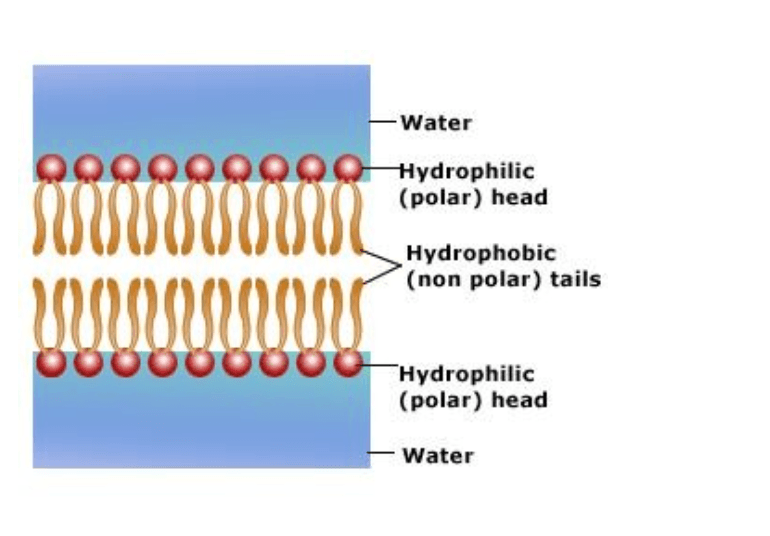
what is this image?

1

DNA

2

RNA

3

water

4

Phospholipid bilayer diagram

18

Multiple Choice

What is simple diffusion?

1

when molecules spread from an area of high to an area of low concentration

2

it controls what enters and leaves the cell

3

how food and candy travel across the membrane

4

When molecules for from areas of low concentration to high

19

Multiple Choice

Are endocytosis and exocytosis forms of passive or active transport?

1

passive transport

2

active transport

20

Multiple Choice

What is a scenario where a cell may need to perform a form of endocytosis.

1

when transporting large molecules

2

when transporting small molecules

3

when transporting amazon packages

4

when releasing a very large molecule from the cell

5

when releasing a very small molecule from the cell

21

Multiple Choice

Question image

For water to travel across the cell membrane at a substantial rate, the water molecules travel through protein channels known as aquaporins. (how??)

1

simple diffusion

2

facilitated diffusion

3

active transport

22

Multiple Choice

Which process does NOT require the cell to use ATP.

1

Passive transport

2

Active transport

3

Endocytosis

4

Exocytosis

23

Multiple Choice

What kind of transport does not require energy?
1
Active 
2
Vacuole 
3
Passive 
4
Na/K Pump 

24

Multiple Choice

Which of the following is the best example of osmosis? 
1
NA/K Pump 
2
Water moving though the cell membrane 
3
Kidneys 
4
Photosynthesis 

25

Multiple Choice

Active transport does not require energy.
1
True 
2
False 

26

Multiple Choice

Osmosis is the movement of... 
1
salt 
2
sugar 
3
water 
4
none of these 

27

Section 3: Cellular Energy

media

28

29

Multiple Choice

Question image
Which structures shown in the Figure make up the ADP molecule?
1
A and B
2
A, B and C
3
A, B, C, and D
4
C and D

30

Multiple Choice

What does the "TP" in ATP stand for?
1
2 phosphates
2
tri (3) phosphates
3
Two proteins
4
tri (3) proteins

31

Multiple Choice

Question image

What type of macromolecule is ATP/ADP?

1

Carbohydrate

2

Nucleic Acid

3

Lipid

4

Protein

32

Multiple Choice

What is the function of ATP in living things?
1
provides energy for cells
2
stores genetic information
3
provides structure in the nucleus

33

Multiple Choice

What organisms need to make ATP to survive?

1

plants

2

animals

3

bacteria

4

fungi

5

all organisms need to make ATP

34

Multiple Choice

Question image

ATP is used to power many cellular processes!

Illustrations have been placed from the video to help refresh your memory.

What is this image?

1

active transport

2

muscle contraction

3

cell signaling

4

chromosomes being separated in cell division.

35

Multiple Choice

Question image

ATP is used to power many cellular processes!

Illustrations have been placed from the video to help refresh your memory.

What is this image?

1

active transport

2

muscle contraction

3

cell signaling

4

chromosomes being separated in cell division.

36

Multiple Choice

Question image

ATP is used to power many cellular processes!

Illustrations have been placed from the video to help refresh your memory.

What is this image?

1

active transport

2

muscle contraction

3

cell signaling

4

chromosomes being separated in cell division.

37

Multiple Choice

The primary source of energy for life on Earth is __

1

ATP Energy

2

Kinetic Energy

3

Oxygen

4

Sunlight

38

Multiple Choice

Oxygen is used to break down glucose molecules and releases energy in a process called

1

photosynthesis

2

cellular respiration

3

cytokinesis

4

fermentation

39

Multiple Choice

Cellular respiration takes place in a eukaryotic cell's 
1
golgi complex
2
endoplasmic reticulum
3
nucleus
4
mitochondria

40

Multiple Choice

The equation:
C6H12O+ 6O--> 6CO+ 6H2O + ATP
is the equation for which of the following processes?
1
photosynthesis
2
fermentation
3
endocytosis
4
cellular respiration

41

Multiple Choice

The equation:
6CO+ 6H2O + Sunlight --> C6H12O+ 6O2
is the equation for which of the following processes?
1
endocytosis
2
cellular respiration
3
photosynthesis
4
fermentation

42

Multiple Choice

Which substance in green plants needs to absorb sunlight during photosynthesis?

1

chlorophyll

2

cytoplasm

3

oxygen

4

water

43

Multiple Choice

The sum of all chemical reactions in the human body is known as

1

feedback

2

metabolism

3

dynamic equilibrium

4

biological adaptation

44

Multiple Choice

Cellular respiration is the process by which 
1
cells use oxygen to create energy from food
2
plant cells create glucose
3
cells grow and reproduce
4
cells breakdown food without using oxygen

45

Multiple Choice

Photosynthesis takes place in
1
chloroplasts
2
mitochondria
3
lysosomes
4
the nucleus

46

Multiple Choice

Cellular respiration takes place in
1
chloroplasts
2
mitochondria
3
the nucleus
4
endoplasmic reticulum

47

Multiple Choice

Question image
The picture best represents what process?
1
photosynthesis
2
osmosis
3
cellular respiration
4
fermentation

48

Multiple Choice

A marathon runner completes two-thirds of a race when he suddenly collapses. He experiences rapid breathing, abdominal pain, and episodes of vomiting. What most likely happened to him?
1
he was using energy without having enough oxygen
2
he suddenly contracted a stomach virus
3
his muscles were tearing due to the length of the race
4
he was starving and needed to eat

49

Multiple Choice

Bacteria and yeast cells produce energy only through the process of
1
fermentation
2
cellular respiration
3
photosynthesis
4
lactic acid

50

Multiple Choice

What term means without oxygen?
1
aerobic
2
hydrophobic
3
anaerobic
4
hydrophillic

51

52

Multiple Choice

What makes your nails get longer, cuts heal, and your body grow?

1

Mitosis

2

Nucleus

3

Magic

53

Multiple Choice

Mitosis makes IDENTICAL (the same) cells.

1

True

2

False

54

Multiple Choice

Rapid crazy uncontrolled cell growth is called:

1

Cancer

2

Mitosis

3

Virus

55

Multiple Choice

During the cell cycle _______ is spent in Mitosis

1

10%

2

90%

3

2 days

56

Multiple Choice

Where is your DNA stored?

1

Nucleus

2

Mitochondria

3

Cell wall

57

Multiple Choice

How many Chromosomes do you have?

1

46

2

23

3

92

58

Multiple Choice

What letters show the stages of division in Mitosis

1

PMAT

2

PSAT

3

TMAP

59

Multiple Choice

What helps the chromosomes move

1

Spindles

2

Spirals

3

Spaghettis

60

Multiple Choice

What is the last stage of Mitosis

1

Telephase

2

Prophase

3

Anaphase

61

Multiple Choice

Question image

What is this phase of Mitosis?

1

Prophase

2

Metaphase

3

Anaphase

4

Telophase

62

Multiple Choice

Question image

What is this phase of Mitosis?

1

Prophase

2

Metaphase

3

Anaphase

4

Telophase

63

Multiple Choice

Which of these phases of mitosis take place first?
1
anaphase
2
telophase
3
prophase
4
metaphase

64

Multiple Choice

At the end of Mitosis, how many cells are there?

1

1

2

2

3

3

4

4

65

Multiple Choice

Question image
Fruit fly body cells have 8 chromosomes. After mitosis, you would expect a resulting fruit fly daughter cell to have ...
1
16 chromosomes.
2
46 chromosomes.
3
8 chromosomes.
4
4 chromosomes.

66

Multiple Choice

When DNA is wound together tightly with protein it forms:

1

proteins

2

chromosomes

3

a nucleus

4

none of the above

67

Multiple Choice

Which of these is NOT part of mitosis?

1

Prophase

2

Metaphase

3

Anaphase

4

Telophase

5

Interphase

Grade 7 Unit 6 Cells Homework

By Leanna Weimer

Show answer

Auto Play

Slide 1 / 67

SLIDE