

Art History Study Guide

Presentation
•
History, Arts
•
5th - 12th Grade
•
Hard

Jesucita Menz
Used 20+ times
FREE Resource
11 Slides • 0 Questions
1
By Jesucita Menz
2
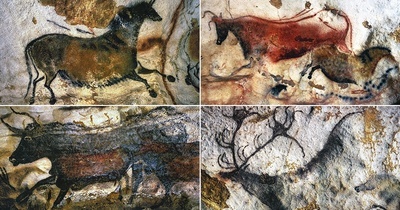
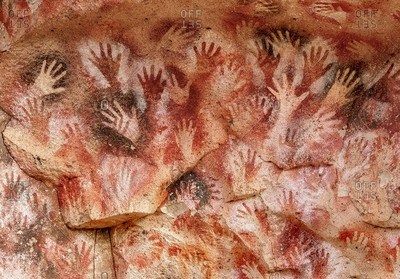
Are the oldest form of human expression that date back up to 60,000 years. They were first created by Neanderthal man and consist mainly of animals, tools, and some astronomy.
Cave Paintings
include the Lascaux and Cueva de las Manos (Cave of the Hands) caves, both found in Spain.
Famous Examples
3
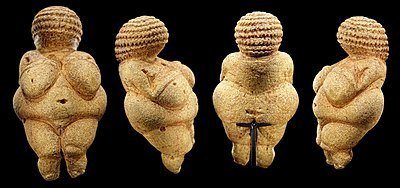
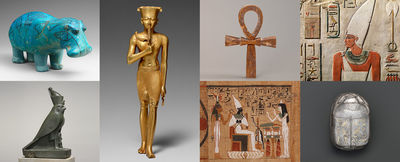
refers to art made by civilizations that had developed writing made approximately between 30,000 b.c. and 400 a.d. These include China, India, Mesopotamia, Persia, Palestine, Egypt, Greece, and Rome. It can be seen or considered as stone art, but historians and archaeologists have found examples of pottery, sculptures, and paintings.
Ancient Art
is one of the oldest examples. She is around 30,000 years old. She doesnt have a people or culture. She was made in the stone age. Some small sculptures have even been found to be made of mammoth tusks.
Venus of Willendorf
4
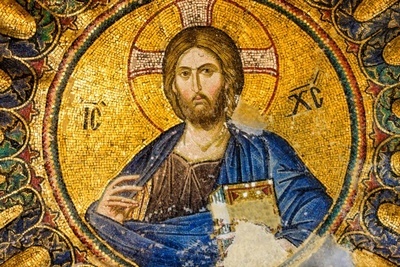
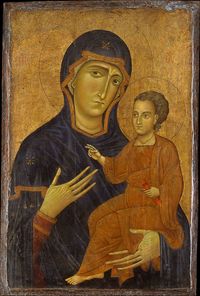
is made up mainly of illuminated manuscripts, stained glass, tapestries, mosaics, and metalwork. Its strongly characterized by bright colors, Christian iconography, metallic materials such as gold leaf, and ornate patterns. Established in Europe, especially Italy, but spread through the Middle East, and Africa.
Medieval Art
The images were flat and lacked deep space or dimension. It was made between 500 ad and just before the Renaissance. It can be divided into 3 periods; Byzantine, Romanesque, and Gothic. Developed during the Dark Ages in Europe.
5
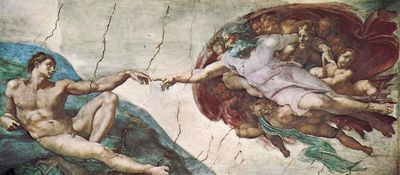
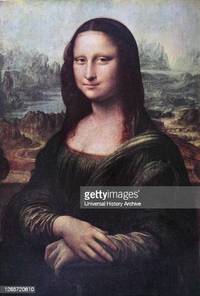
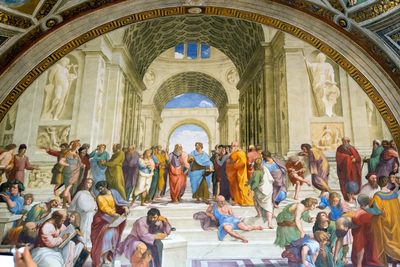
means rebirth, revival, or renewal. Art made after the Dark ages in Europe, mainly Italy, between 1400 and 1600 a.d. The most famous artists are the Ninja Turtles"; Leonardo, Michaelangelo, Raphael, and Donatello.
Artists developed one-point linear perspective, and oil-paints. There were new advances in all the sciences and technology.
Artists became obsessed with the human body to the point of dissecting bodies to represent muscular characteristics more accurately.
Renaissance Art
Michaelangelo, The Sistine Chapel
Leonardo Da Vinci, The Mona Lisa
Raphael, The School of Athens
6
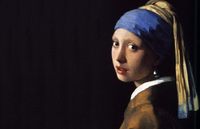

European art made between1600-1725 ad. Dramatic, grande, fancy and exaggerated, drastic use of light versus dark known as chiaroscuro. Heavier and darker undertones.
Baroque 1600-1725
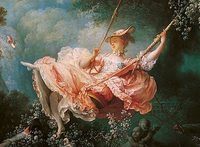
European art made between 1720-1760. Also very fancy, but more romantic, feminine, light and airy. Strong use of pastels, and soft, curved lines.
Rococo 1720-1760
or new classical; a revolt of Rococo; more formal, and serious, straight lines, crisp edges, simple and direct use of color. 1760-1830
Neoclassical 1760-1830
Johannes Vermeer, The Girl with the Pearl Earring
Jean-Honoré Fragonard's The Swing
Jacques-Louis David, Oath of the Horatii
7
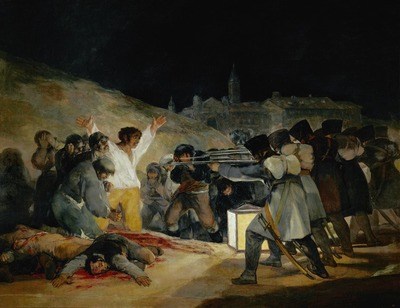

European art from 1800-1850.
First movement in art where artists were allowed to express their feelings, psychology, emotional states, ideas, thoughts, or feelings on current events as opposed to logic, reason, and reality.
Romanticism 1800-1850
European art from 1848-1900.
For the first time in history, it is socially acceptable for artists to depict everyday life naturally and realistically as opposed to portraits of aristocracy, or religious paintings.
Realism 1848-1900
Francisco Goya, The 3rd of May 1808 in Madrid, or “The Executions,”
Jean-Francois Millet, The Gleaners
8
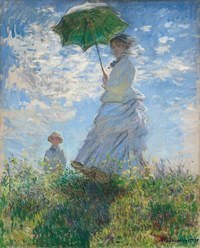
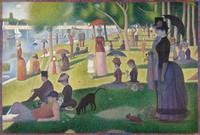
Catching a first impression at a glance, quick small strokes, rough application of paint, capturing qualities of light, unblended, muted colors. MANET, MONET, SEURAT, RENOIR, VAN GOGH
Impressionism 1870-1900
Developed as a scientific approach to painting as a reaction to impressionism by Georges Seurat. Placing small dots of pure color are optically mixed by the eye to create a striking image.
Pointillism 1880-1920
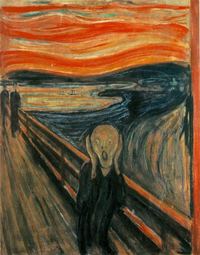
A reaction to realism, it used symbols to represent ideas, thoughts, or feelings. The paintings were darker in mood, used flat colors, and sought to express the artist's inner thoughts as poetry on the surface.
Symbolism 1880-1910
Claude Monet, Woman with Parasol
Georges Seurat, A Sunday Afternoon on the Island of La Grande Jette
Edvard Munch, The Scream
9
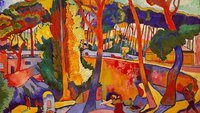
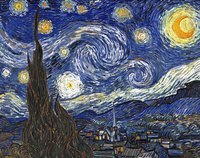

Fauves- French for "Wild Beasts" coined by a critic for how repulsive he thought their artwork was. Characterized by strong brushstrokes in non-natural, strong complimentary colors. First of its kind.
Fauvism 1905-1908
Also characterized by bright, bold colors and strong brushstrokes, expressionism is an extension of its previous styles but more in tune with the artist's emotions.
Expressionsim 1905-1925
Is the idea fathered by Pablo Picasso of capturing different angles of the same object simultaneously and fusing them together into one image, in that everything is nuanced and multi-faceted, especially humans.
Cubism 1908-1920
Andre Derain, The Turning Road
Vincent Van Gogh, Starry Night
Pablo Picasso, Girl with a Mandolin
10
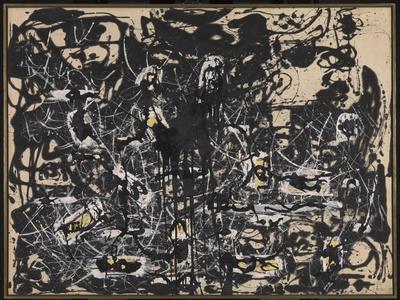
Art style influenced by the Surrealists in that your ideas can come from the subconscious AND be nonrepresentational, an exploration of the mind through the elements if you will. Key artists-de Kooning, Rothko, Pollock
Abstract Expressionism 1910-present
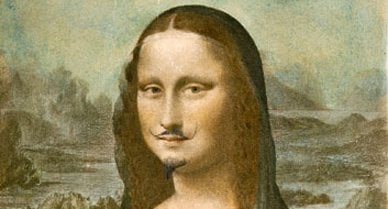
An anti-art movement that was art. It was a revolt right after World War I to all the atrocities and new technology of war. Art can be anything, and everything is art. It's not just for the eyes, it's for the mind too. Key artists- Man Ray, Jean Arp
Dada 1916-1923
Yellow Islands, Jackson Pollock
L.H.O.O.Q. Mona Lisa, Marcel Duchamp, 1919
11
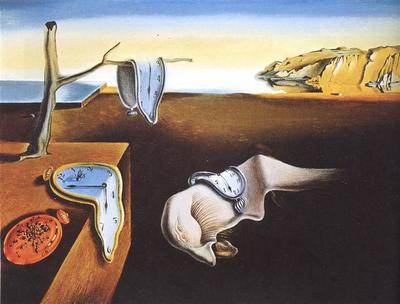

A realistic representation of the subconscious. Artists were drawing from their dreams.
Surrealism 1923-present
Drew inspiration from popular culture. Artists wanted to represent what was in their real lives, a mirroring of mass production, commercialization, and consumerism.
Pop Art late 50s-early 60s
Untitled from Marilyn Monroe, Andy Warhol, 1967
The Persistence of Memory, Salvador Dali, 1931
By Jesucita Menz
Show answer
Auto Play
Slide 1 / 11
SLIDE
Similar Resources on Wayground

10 questions
Civil War Compromises
Presentation
•
KG - 12th Grade
10 questions
One-Step Inequalities: Lesson 2
Presentation
•
6th - 12th Grade
10 questions
INPUT AND OUTPUT DEVICES
Presentation
•
4th - 12th Grade
7 questions
Elements of Art 1
Presentation
•
6th - 12th Grade
10 questions
Perspective in History
Presentation
•
5th - 12th Grade
8 questions
Music Theory Unit 1
Presentation
•
5th - 12th Grade
9 questions
ΖΩΑ ΣΕ ΡΟΥΧΑ
Presentation
•
KG
9 questions
οι 4 εποχές
Presentation
•
KG
Popular Resources on Wayground
10 questions
Safety Day 2026 – Student Review

Quiz
•
9th Grade
21 questions
Continents and Oceans
Quiz
•
6th Grade
20 questions
Parts of Speech
Quiz
•
5th Grade
16 questions
Subject & Predicate
Quiz
•
5th Grade
25 questions
Multiplication Facts
Quiz
•
5th Grade
12 questions
Map Skills
Quiz
•
3rd Grade
22 questions
Continents and Oceans
Quiz
•
5th Grade
15 questions
Rounding Decimals
Quiz
•
5th Grade
Discover more resources for History
15 questions
Unit 3 - Part 1 Road to Revolution
Quiz
•
8th Grade
15 questions
Jamestown Settlement
Quiz
•
4th - 5th Grade
25 questions
WWII Assessment
Quiz
•
8th Grade
25 questions
The American Revolution
Quiz
•
7th - 10th Grade
15 questions
The Bill of Rights
Quiz
•
8th - 12th Grade
18 questions
American Revolution Review
Quiz
•
8th Grade
14 questions
Weekly Wrap Up #3: CE.1a/e -Fundamental Principles
Quiz
•
8th Grade
6 questions
District Assessment Review #1
Quiz
•
6th Grade