Ecology
Presentation
•
Science
•
8th Grade
•
Medium
+5
Standards-aligned
Used 83+ times
FREE Resource
8 Slides • 28 Questions
1
Ecology -the study of the interaction between organisms and their environment
2
Biotic factors include living factors that can affect populations in an ecosystem. This includes:
Other organisms (plants/consumers).
Biotic Factors
3
Abiotic Factors include anything in an environment that is considered nonliving.
Abiotic Factors
4
Multiple Select
Choose all the abiotic factors listed
water
mates
space
temperature
predators
5
Multiple Select
Choose all the biotic factors listed
sunlight
food
predators
disease
water
6
Multiple Choice
What abiotic factor would plants compete for?
Food
Sunlight
Parasites
predators
7
Multiple Choice
Water is a compound that consists of 2 hydrogen atoms and 1 oxygen atom. Up to 60% of an adult human is made up of water. Water is an example of what type of factor?
Biotic
Abiotic
8
Multiple Choice
An angler fish has a fleshy growth on its head that gives off light. This part acts as a lure to help the angler fish catch its prey. An anglerfish is an example of which type of factor?
Biotic
Abiotic
9
These type of relationships describe the interaction between organisms where one species BENEFITS from the relationship.
Symbiotic Relationships
10
The clownfish give sea anemone food and in return they get protection.
They BOTH BENEFIT!
Mutualism
The turtle gives space for algae to grow, and the turtle is unaffected. ONLY the algae benefits, but the turtle is unaffected.
Commensalism
The kookaburra lays its eggs in another birds nest so their young can be raised. The young are raised alongside the other birds.
Parasitism
11
MUTUALISM
Let's watch a video of a Mutualistic relationship in the Tropical Rainforest.
12
Multiple Choice
Ostriches and gazelles feed next to each other. They both watch for predators. Because the visual abilities of the two species are different, they can each identify threats that the other animal may not see as readily.
symbiosis
parasitism
mutualism
commensalism
13
Multiple Choice
14
Multiple Choice
Epiphytes are a class of plants that grow in the crooks of tree branches. They simply use the tree branches as a way to be higher—closer to the sunlight needed for photosynthesis. The trees aren’t affected by this relationship.
symbiosis
parasitism
mutualism
commensalism
15
Multiple Choice
This is any close relationship between any two different species in an ecosystem
symbiosis
parasitism
mutualism
commensalism
16
Multiple Choice
Aphids are tiny insects that live on and eat the leaves of plants, removing vital nutrients from the plants.
Predation
Parasitism
Commensalism
Mutualism
17
Multiple Choice
18
Multiple Choice
Where do parasites such as aphids, fleas, or mistletoe live?
Inside the host
Outside the host
19
Multiple Choice
Mistletoe extracts water and nutrients from the spruce tree to the detriment of the spruce. This is an example of which type of symbiosis?
Commensalism
Mutualism
Parasitism
20
Multiple Choice
21
Multiple Choice
22
For any population to thrive, there must be enough food, water and liviing space. These are called limiting factors because they limit how many organisms can live in an environment.
Limiting Factors
23
Multiple Choice
24
Multiple Choice
A group of elephants gets stuck in mud at the edge of the river from a recent mud slide. A lion waits for an elephant to get tired before it attacks. What is the limiting factor to the elephant population?
Predator-Prey Relationships
Natural Disaster
Herbivory Effect
Competition
25
Multiple Choice
26
Multiple Choice
If there was a wildfire in the forest that destroyed the plant life, what would happen to the herbivore population?
Herbivores would decrease due to a lack of food
Herbivores would increase due to an increase of food
Herbivores would not be affected
Herbivores would decrease due to an increase in predators
27
Multiple Choice
What is a population?
All the organisms living in an area
The living and non-living organisms in an area
A group of the same species living in an area
28
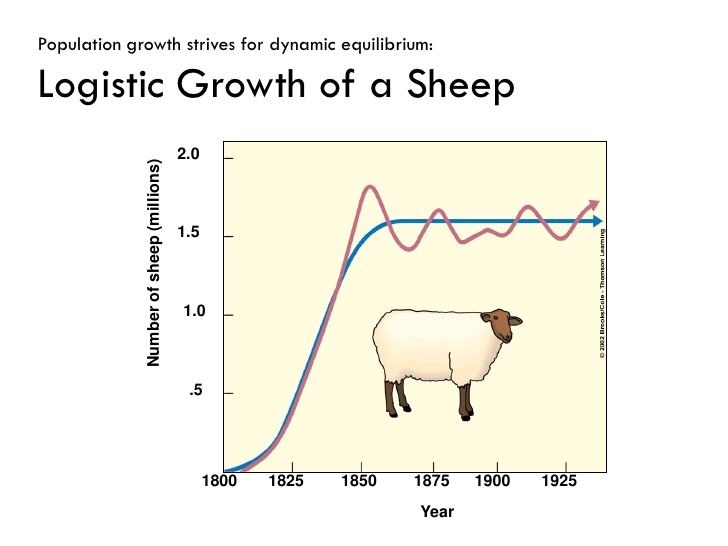
The largest population an environment can support.
Carrying Capacity
29
Multiple Choice
What happens if a population grows past its carrying capacity?
The population keeps growing
The population starts to die off
The entire species will go extinct
The carrying capacity just increases
30
Multiple Choice
What is the carrying capacity of the graph?
1000
8000
800
600
31
Multiple Choice
32
Multiple Choice
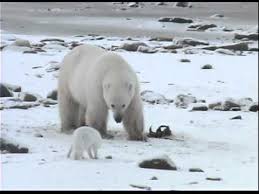
Two arctic fox are fighting with a polar bear for a sea lion carcass. One fox distracts the bear while the other eats. What type of limiting factor is the polar bear?
Predator-Prey Relationships
Competition
Herbivory Effect
Weather
33
Multiple Choice
34
Multiple Choice
When the death rate rises and the birth rate lowers...
population increases
population decreases
population stays the same
all of these
35
Multiple Choice
Which of the following would likely be a limiting factor to a population?
Abundance of food
Living near a water source
Presence of a natural predator
Multiple sources for shelter
36
Multiple Choice
What happens if a population goes over its carrying capacity?
It will continue to grow
It will eventually decrease due to a lack of resources
It will die immediately
It will get unlimited resources
Ecology -the study of the interaction between organisms and their environment
Show answer
Auto Play
Slide 1 / 36
SLIDE

Similar Resources on Wayground
29 questions
Cohesion, Adhesion, and Surface Tension
Presentation
•
8th Grade
31 questions
Force and Velocity
Presentation
•
8th Grade
33 questions
Counting Atoms
Presentation
•
8th Grade
33 questions
8.L.4.1 & 8.L.4.2 Review
Presentation
•
8th Grade
28 questions
Atoms and the Periodic Table Review
Presentation
•
8th Grade
31 questions
EM Spectrum (Waves)
Presentation
•
8th Grade
32 questions
Effects of Rotation and Revolution
Presentation
•
8th Grade
32 questions
Lesson: Density, Mass, & Volume
Presentation
•
8th Grade
Popular Resources on Wayground
20 questions
STAAR Review Quiz #3
Quiz
•
8th Grade
20 questions
Equivalent Fractions
Quiz
•
3rd Grade
6 questions
Marshmallow Farm Quiz
Quiz
•
2nd - 5th Grade
20 questions
Main Idea and Details
Quiz
•
5th Grade
20 questions
Context Clues
Quiz
•
6th Grade
20 questions
Inferences
Quiz
•
4th Grade
19 questions
Classifying Quadrilaterals
Quiz
•
3rd Grade
12 questions
What makes Nebraska's government unique?
Quiz
•
4th - 5th Grade
Discover more resources for Science
8 questions
Amoeba Sister Asexual vs Sexual Reproduction
Interactive video
•
8th Grade
19 questions
Introduction to Properties of Waves
Presentation
•
6th - 8th Grade
16 questions
Interactions within Ecosystems
Presentation
•
6th - 8th Grade
45 questions
Food Webs
Quiz
•
6th - 8th Grade
50 questions
Stars, Galaxies, HR Diagram
Quiz
•
8th Grade
40 questions
Unit F1 Review
Quiz
•
8th Grade
20 questions
Energy Transformations
Quiz
•
6th - 8th Grade
46 questions
8th Science STAAR Review
Quiz
•
8th Grade