
- Resource Library
- Science
- Earth & Space Science
- Biogeochemical Cycles
- Carbon, Nitrogen, And Oxygen Cycles

Carbon, Nitrogen, and Oxygen Cycles

Presentation
•
Science
•
8th Grade
•
Medium
+5
Standards-aligned

John Ver Vers
Used 148+ times
FREE Resource
16 Slides • 18 Questions
1

How much energy moves to the next trophic level?
2

Explain how the flow of energy within
food webs is interconnected with the
cycling of matter (including water,
nitrogen, carbon dioxide and oxygen).
TODAY’S LEARNING TARGET
3

On Earth, organisms (including
humans) are constantly using
matter from our environment, such
as carbon, nitrogen, and water.
Why doesn’t planet Earth ever run
out of these materials? What do
you think happens to the matter
after you consume or use it?
4

The Cycling of Matter in Ecosystems
● The Earth constantly receives
energy from the sun
● The amount of matter does
not change, just its form
● Matter is recycled from
organisms to the
environment and back again
● There are three
main cycles:
○ Carbon
○ Nitrogen
○ Water
5

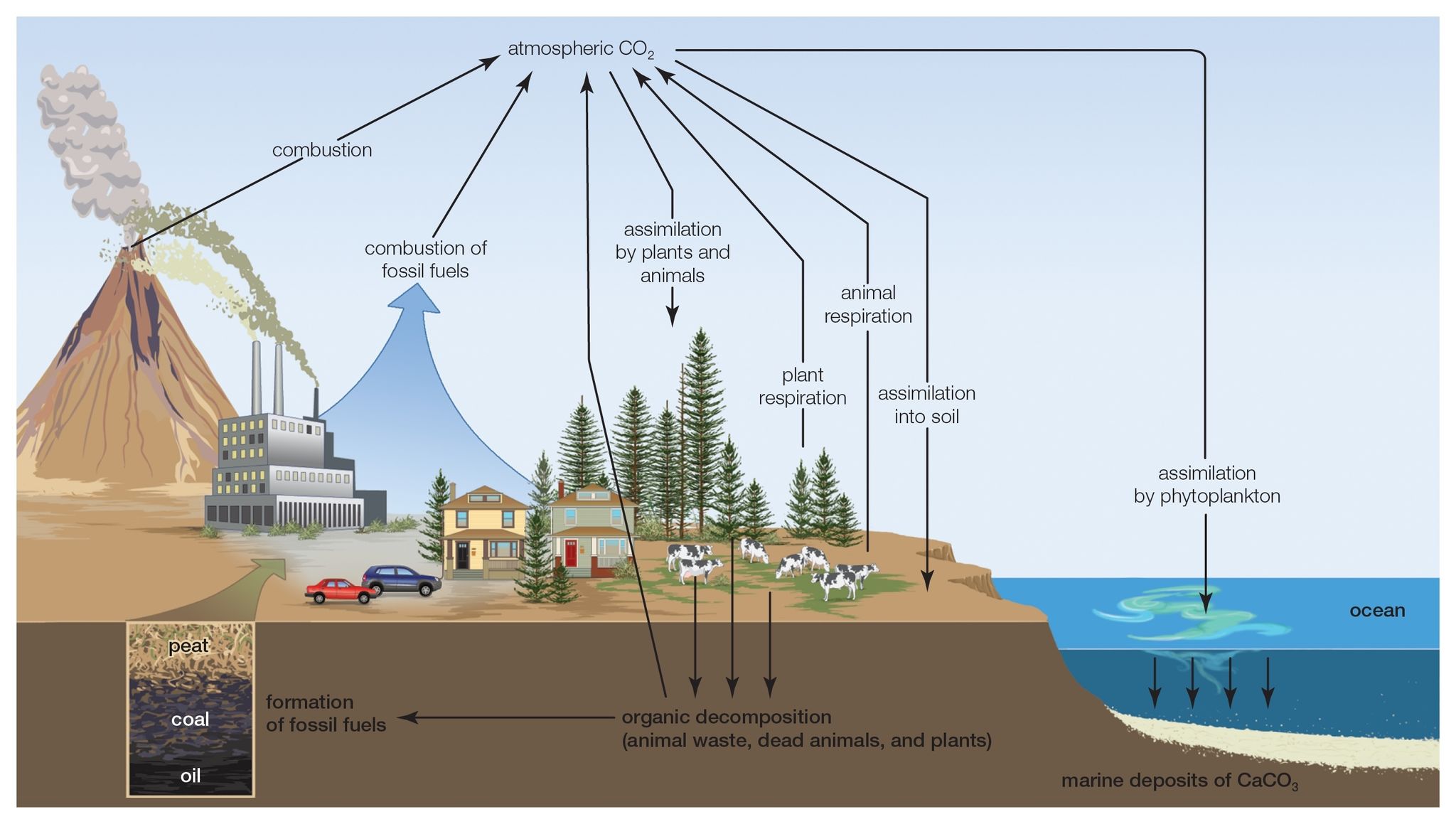
THE CARBON CYCLE
• Carbon moves among the air, the ground, and the plants/animals
• Carbon is found in all living organisms, the atmosphere, gasoline
and many rocks
• Carbon stored in organisms can not be reused until the organism
is eaten or decomposed.
• Decomposition
– Bacteria or other decomposers break down dead organisms
– Carbon dioxide is released into the atmosphere in this
process
• Combustion (burning) of wood or other organic material
produces large amounts of CO2 released into the atmosphere.
6

7
THE SUN IS A DIRECT PART OF THIS CYCLE!
Carbon is the building block of all life.
Photosynthesis (producers) and cellular respiration (consumers) are a huge part of this cycle.
All carbon is recycled!

8
Multiple Choice
volcanoes
combustion of fossil fuels
animal and plant respiration
all of these
9
Multiple Choice
respiration and photosynthesis
decomposition and respiration
10
Multiple Choice
Water
Atmosphere
Sun
Ground
11
Multiple Choice

How does carbon in a grass plant get into a lion?
The lion eats an antelope that ate the grass
Carbon from grass doesn't end up in a lion.
The lion absorbs the carbon given off by transpiration
The lion breathes in carbon given out by the plant
12
Multiple Choice
Which describes the relationship between plants and animals in the carbon cycle?
Plants produce and release oxygen that animals need
Plants produce and release carbon dioxide that animals need
Animals produce and release oxygen that plants need
Animals produce oxygen that plants turn into carbon dioxide
13

THE NITROGEN CYCLE
•The movement of nitrogen through the environment
•Nitrogen is found in many places. Most is in the atmosphere
•All living things use nitrogen to make proteins
•Nitrogen Fixation
– The natural process bacteria use to convert nitrogen from the atmosphere into
forms that are useful to organisms
– Produces compounds such as ammonia and nitrate
•Usually found in animal waste such as urine or fertilizers
•Denitrification
– Takes nitrogen from nitrates and other compounds in soil and
releases it as nitrogen gas
14

15
THE SUN STILL PLAYS A PART – Plants need the sun to live.
Nitrogen is a building block for life (Proteins – Amino Acids)
Most plants and animals can only use “fixed” nitrogen
Bacteria is the most important part of this cycle

16
Multiple Choice
Which organism is the most important to the nitrogen cycle?
Humans
Plants
Bacteria
Bees
17
Multiple Choice

To live and grow
To build phosphorus
To make oxygen levels grow
To help blood circulate better
18
Multiple Choice
Combustion
Photosynthesis
Decomposition
Nitrogen Fixation
19
Multiple Choice
the atmosphere
eating other organisms
bacteria
lightning
20
Multiple Choice
Water
Carbon
Nitrogen
Calcium
21

Compare and Contrast
How are the
carbon and
nitrogen cycles
similar?
How are they
different?
22

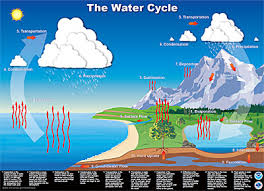
THE WATER CYCLE
•Water Cycle
–The continuous movement of water between Earth’s surface and its
atmosphere.
–Water changes from one form to another
–The sun is the source of energy for this process
•Evaporation
–Process where liquid changes to gas
•Transpiration
–Water vapor is released through tiny openings in plant leaves
–Animals also add water vapor to the atmosphere through breathing
•Condensation
–The process by which gas changes to a liquid
•Precipitation
–Water that falls to the Earth’s surface in the form of rain, snow, sleet, or hail
•Groundwater
–Water located below the Earth’s surface
•Runoff
– that flows over the surface of the earth, returning to the oceans.
23

24

PAUSE
AND
REFLECT
How is water used in your household?
Include activities that use water, sources of
water, and ways that water leaves your house.
25
THE SUN IS THE POWER SOURCE FOR THIS CYCLE
All life needs water
Water helps the carbon and nitrogen cycles either directly or indirectly
All water is recycled
We can run low on freshwater or potable water, but we will never run out until the heat death of the Earth

26
Multiple Choice
the 3 forms of water
the movement of water on, above, or below the surface of the Earth
when water melts
when clouds form
27
Multiple Choice
It returns water to other locations on Earth
It increases the chance of flooding
It makes evaporation occur faster
It increases condensation
28
Multiple Choice
condensation
evaporation
precipitation
29


30
Multiple Choice
What is the ultimate source of all energy for life and the cycles?
Sun
Carbohydrates
Producers
Consumers
31
Multiple Choice

The Water cycle
The Carbon cycle
The Nitrogen cycle
The Phosphorus cycle
32
Multiple Choice
They recycle matter and nutrients for reuse or to form fossil fuels.
They are burn and release as carbon dioxide
Decomposers are responsible to turn oxygen into carbon dioxide
They recycle energy back to the sun
33
Multiple Choice

The Water cycle
The Carbon cycle
The Nitrogen cycle
The Phosphorus cycle
34
Multiple Choice
Many food chains connected to each other is known as...
Fast Food Chain
Biodiversity
Food Pyramid
Food Web
How much energy moves to the next trophic level?
Show answer
Auto Play
Slide 1 / 34
SLIDE
Similar Resources on Wayground

27 questions
Collisions
Presentation
•
8th Grade
27 questions
Phases and Eclipses
Presentation
•
8th Grade
28 questions
Atomic Structure
Presentation
•
8th Grade
26 questions
Energy In = Energy Out
Presentation
•
8th Grade
25 questions
Atoms & Periodic Table
Presentation
•
8th Grade
25 questions
Chemical Bonds
Presentation
•
8th Grade
30 questions
Measuring Matter
Presentation
•
8th Grade
24 questions
Skeletal system
Presentation
•
8th Grade
Popular Resources on Wayground
10 questions
How much do you know about our Portrait of an Eagle?

Quiz
•
10th Grade
10 questions
Fast Food Slogans
Quiz
•
6th - 8th Grade
21 questions
Continents and Oceans
Quiz
•
6th Grade
20 questions
Parts of Speech
Quiz
•
5th Grade
16 questions
Subject & Predicate
Quiz
•
5th Grade
25 questions
Multiplication Facts
Quiz
•
5th Grade
12 questions
Map Skills
Quiz
•
3rd Grade
22 questions
Continents and Oceans
Quiz
•
5th Grade
Discover more resources for Science
20 questions
Scientific Method and Variables
Quiz
•
8th Grade
20 questions
Scientific method and variables
Quiz
•
8th Grade
27 questions
Counting Atoms - Subscripts
Quiz
•
8th Grade
20 questions
Claim, Evidence and Reasoning (CER)
Quiz
•
6th - 8th Grade
18 questions
Counting Atoms
Quiz
•
7th - 8th Grade
20 questions
Elements, Compounds and Mixtures
Quiz
•
8th Grade
10 questions
Exploring Chemical and Physical Changes

Interactive video
•
6th - 10th Grade
10 questions
Decoding the Periodic Table of Elements
Interactive video
•
6th - 10th Grade