

Multicultural Britain

Presentation
•
Social Studies, English
•
10th Grade
•
Medium

Estra Tõnisson
Used 13+ times
FREE Resource
20 Slides • 12 Questions
1
By Estra Tõnisson

2
Michael Ebenazer Kwadjo Omari Owuo Jr.
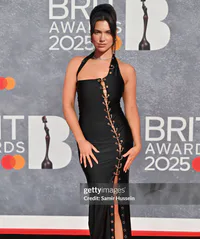
Dua Lipa
Farrokh Bomi Bulsara
Sir Mohamed Muktar Jama Farah
Olajide William Olatunji
Some text here about the topic of discussion
3



4
Open Ended
What is multiculturalism?
5
What is multiculturalism?
the belief that different cultures within a society should all be given importance (Cambridge Dictionaries Online)
All these groups are positively accepted, not negatively tolerated
Aspects of culture, customs, religion
Subject | Subject
Some text here about the topic of discussion
6
7
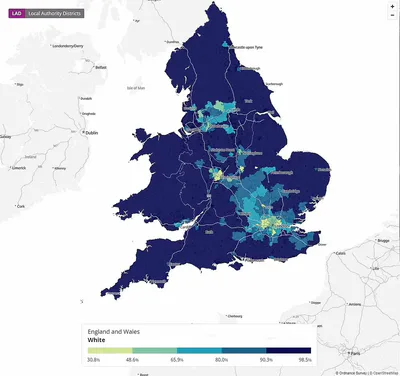
https://www.dailymail.co.uk/news/article-11480799/Census-results-2021-Data-maps-religion-ethnicity-England-Wales.html
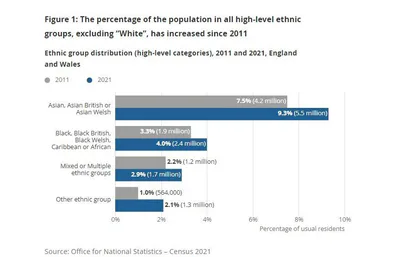
8
9
10
Some text here about the topic of discussion
11
Multiple Choice
Came to Britain from northern Europe in the 5th and 6th centuries. Fought Vikings before being beaten by the Normans in 1066. Modern English is based on their language.
the Vikings
Angles, Saxons and Jutes
Norman French
the Irish
12
Multiple Choice
Came to Britain from northern France in the 11th century. In 1066 their leader William the Conqueror defeated the Anglo Saxons in battle and was crowned King of England. They spoke French. Modern English contains many words from their language.
French Normans
Britons
Jews
Portuguese
13
Multiple Choice
Many came to Britain during the 17th and 18th centuries as slaves and settled in cities that became rich on the slave trade such as Liverpool and Bristol. Some had arrived earlier as soldiers in the Roman armies.
West Africans
Caribbeans
Pakistani
Indians
14
Multiple Choice
Came to Britain in large numbers in the 19th century especially during the potato famine. Most game to build roads, railways and canals.
Roma Gypsies
Russians
Chinese
the Irish
15
Multiple Choice
Came from islands near Americas, originally they were taken to those islands against their will as slaves from Africa. their main religion is Christianity. After World War II many came to Britain in response to a labor shortage.
Indian
West Africans
African Carribeans
Hawaiian
16
Multiple Choice
The first wave of Caribbean immigrants arrived on the Empire Windrush in 1948, and other ships followed. Most first generation immigrants moved to Britain in order to seek an improved standard of living, escape violence or to find employment. They made their homes in Notting Hill and Brixton, and unfortunately weren’t spared the effects of racism and xenophobia.
Bahamian
Dominican
Barbadian
Jamaican
17
18
19
Multiple Choice
Many came to Britain in the 1950s and 60s to work in the hotel and catering trades, many also came to seek refuge from human rights abuses at the end of the 20th century. They speak Cantonese, Hakka and Mandarin.
Indonesian
West Africans
African Carribeans
Chinese
20
21
Multiple Choice
Most came to Britain in the 1950s and 60s in response to a labour shortage, to work in transport, textiles and NHS. The main religion is Islam and their main languages are English, Urdu and Mirpuri.
West Africans
Caribbeans
Pakistani
Indians
22
Multiple Choice
Most came to Britain in the 1950s and 60s in response to labour shortages. However many had come earlier from the time when their country became a British colony. From 1773 one of their foods, curry, started to appear on British menus.
Bangladeshi
Pakistani
Indian
Chinese
23
Multiple Choice
Most came to Britain from a country that was known as East Pakistan up to 1971. Many came in the 1960s and 70s and set up businesses, including restaurants and textile workshops. Their main religion is Islam and they speak many languages including Bengali and Syltheti.
Bangladeshi
Indian
Pakistani
Chinese
24
Multiple Choice
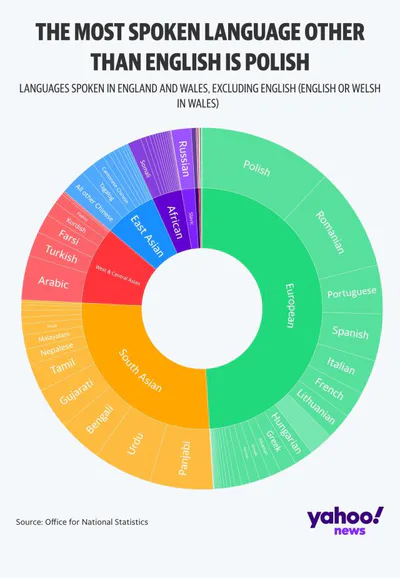
Many came after World War II but most arrived after the 2004 enlargement of the European Union. Today, their language is the second most spoken language in Britain and it is the most common country of birth for non-UK born mothers in Britain.
Czechs
Polish
Hungarians
Lithuanians
25
Some text here about the topic of discussion
26

27



28


29

30


31
32




By Estra Tõnisson
Show answer
Auto Play
Slide 1 / 32
SLIDE
Similar Resources on Wayground

26 questions
영어 C 복습
Presentation
•
10th Grade
21 questions
Age of Napoleon
Presentation
•
10th Grade
25 questions
Properties of Waves
Presentation
•
10th Grade
23 questions
procedure text
Presentation
•
9th Grade
27 questions
Decolonization in Africa
Presentation
•
10th Grade
27 questions
Phrases and Clauses
Presentation
•
9th - 10th Grade
25 questions
Irony
Presentation
•
9th Grade
27 questions
CAPTION CHAPTER 2
Presentation
•
11th Grade
Popular Resources on Wayground
10 questions
Safety Day 2026 – Student Review

Quiz
•
9th Grade
21 questions
Continents and Oceans
Quiz
•
6th Grade
20 questions
Parts of Speech
Quiz
•
5th Grade
16 questions
Subject & Predicate
Quiz
•
5th Grade
25 questions
Multiplication Facts
Quiz
•
5th Grade
12 questions
Map Skills
Quiz
•
3rd Grade
22 questions
Continents and Oceans
Quiz
•
5th Grade
15 questions
Rounding Decimals
Quiz
•
5th Grade
Discover more resources for Social Studies
10 questions
Exploring the Age of Exploration: Key Events and Figures

Interactive video
•
6th - 10th Grade
9 questions
Exploring Ancient Mesopotamia and Its Civilizations
Interactive video
•
10th Grade
10 questions
Debating the Legacy of Christopher Columbus
Interactive video
•
6th - 10th Grade
22 questions
U3T2 Vocab FAC: Domestic Policy
Quiz
•
10th Grade
25 questions
Gilded Age Gallery Walk
Presentation
•
9th - 12th Grade
50 questions
Progressive Era and Urbanization
Quiz
•
10th Grade
10 questions
U3T2D1 Daily Quiz
Quiz
•
10th Grade
10 questions
Exploring the 13 Colonies Regions
Interactive video
•
6th - 10th Grade