Search Header Logo
Animal's sexual reproduction

Animal's sexual reproduction

Assessment

Presentation

Science

9th Grade

Hard

Created by

Anna Masriyani

Used 4+ times

FREE Resource

13 Slides • 44 Questions

1

media

Animal's Sexual Reproduction

2

Before we start, please do this fun quiz

3

Multiple Choice

When Was D&D Made?

1

1974

2

2018

3

18 BC

4

1990

4

Multiple Choice

Question image

True or False:

D&D is based on Lord of the Rings

1

True

2

False

5

Multiple Choice

_________ reproduction involves 2 parent cells, a sperm and an egg.

1

Sexual

2

Asexual

6

Multiple Choice

Question image

When a battle starts, which die do you roll?

1

A d8

2

A d20

3

A d6

4

a d12

7

Multiple Choice

Question image
The offspring from asexually reproduced organisms are?
1
Different than their parents
2
Identical to parents
3
Like a combination from both parents
4
A different species

8

Multiple Choice

Question image

A lightning bolt streaks towards you. You try to dodge out of the way. Where do you look on your character sheet to find the bonus for your d20 roll?

1

Saving Throws

2

Initiative

3

Armour Class

4

Hit Points

9

Multiple Choice

______ reproduction involves 1 parent organism duplicating itself (copying)

1

Sexual

2

Asexual

10

Multiple Choice

If your are trying to sneak up on an enemy, where do you look for your bonus?

1

Initiative

2

Armour Class

3

Spells

4

Skills

11

Multiple Choice

Question image
If two organisms reproduce sexually, then their offspring will exhibit a genetic makeup that is -
1
identical to only one parent
2
identical to all of its siblings
3
a unique combination of traits
4
the recessive traits of each parent

12

Multiple Choice

After you hit with a weapon attack, what do you roll?

1

Saving Throw

2

Ht Points

3

Damage

4

A Ball

13

Multiple Choice

Offspring are identical to the parent

1

Sexual

2

Asexual

14

Multiple Choice

When a battle starts, where do you look for your bonus?

1

Armour Class

2

Skills

3

Hit Points

4

Initiative

15

Multiple Choice

Question image
Provided is a table of organisms and some data on their characteristics. Based on the information in the table, which organism is likely to produce offspring with the greatest genetic diversity?
1
Black mold
2
Bell tree dahlia
3
Spruce
4
Hydra

16

Multiple Choice

What do you have to do when you are reduced to less than 0 hit points?

1

Roll a death saving throw

2

Roll your hit die

3

Cry out in pain

4

Make an attack

17

Multiple Choice

Offspring are not identical to the parent, but contain genes from both

1

Sexual

2

Asexual

18

Multiple Choice

What does HP stand for?

1

health points

2

healing potion

3

healthy pie

4

hit points

19

Multiple Choice

Question image
When comparing the offspring of sexually and asexually reproducing organisms, we would expect the genetic material (DNA) of the sexually reproducing organism to -
1
contain fewer mutations
2
be lesser in quantity
3
be simpler overall
4
show more variation

20

Multiple Choice

If you are trying to notice a bugbear sneaking up on you, what skill do you use?

1

strength

2

perception

3

investigation

4

survival

21

Back to the topic of

"Animal's Sexual Reproduction"​

22

Sexual reproduction can occur because animals have gametes or reproductive cells that undergo meiosis and produce cells with half the number of chromosomes, namely spermatozoa in males and ova in females.These two cells can fuse to form a zygote to form a new individual

media

23

The zygote initially develops into a spherical cell with an empty space inside, called a blastula.Blastula in most animals undergo differentiation to form various types of cells.However, in sponges, blastula can swim to find a good place to grow and differentiate into new coral reefs.

media

24

The blastula then expands into a gastrula with a space that will serve as a digestive tract, and layers of ectoderm and endoderm. In higher animals, mesoderm is formed between the two. These layers then differentiate to form body tissues and organs.

media

25

Most insects hatch from eggs. Fertilization and development of the fetus takes place inside the egg, which is enclosed in a shell. Except for the eggs of arthropods and Schizophora, all insect eggs are drought tolerant, because insect egg shells have a serous layer that secretes a cuticle, a compound rich in chitin protein to protect the embryo from drying out. Insects that are not drought tolerant will lay their eggs in water or damp places.

media

​Insects

26

The cockroach Blaptica dubia, aphid, and tsetse fly are ovoviviparous; form eggs but the eggs expand inside the female's body. Cockroach species of the genus Diploptera are viviparous, do not form eggs and develop inside the female's body.Some insects are polyembryonic, where one fertilized egg can divide into multiple embryos.

media

​Insects

27

Reproductive variations occur such as haplodiploidy, polymorphism, pedomorphism, sexual dimorphism, and hermaphroditism. In haplodiploid insects, the sex of insects is determined by the number of chromosomes. Polymorphism is a state in which one species can have many forms and appearances. Sexual dimorphism is a condition in which males and females can be clearly distinguished from their outward appearance.

media

​Insects

28

Insects capable of parthenogenesis are aphids, which occur cyclically where one generation is parthenogenetic but the next generation is not, etc., or parthenogenesis occurs every more than one non-parthenogenetic generation.

Please watch the video here:

https://www.youtube.com/watch?v=U4aWYZXfHQY

media

​Insects

29

Most fish lay eggs after being fertilized by a male fish. Some fish spawn several at a time in one location, usually one that is rocky or one full of aquatic vegetation, while others lay one egg and the other in separate places. Eggs can sink, stick to the substrate, or float so that they follow the flow of the liquid.

Please watch the video here:

https://www.youtube.com/watch?v=u8cED6PQmPA

media

​FISH

30

There are three types of mammals, namely monotremes, marsupials, and placental, and all occur through internal fertilization. Monotremes are mammals that lay eggs. Marsupial mammals give birth to babies that have not developed properly; Its primary development occurs outside the uterus. In placental mammals, babies born are individuals with complete and functioning organs except for sexual organs.

Please watch the video here:

https://www.youtube.com/watch?v=sz3Yv3On4lE​

media

​MAMMALS

31

It's quiz time...

32

Multiple Choice

This type of reproduction produces offspring quicker.

1

Sexual

2

Asexual

33

Multiple Choice

What does NPC stand for?

1

Non-Player Character

2

Not Playable Currently

3

Non-Personal Creator

4

Number Players Current

34

Multiple Choice

Question image

Requires only one parent

1

sexual

2

asexual

35

Multiple Select

Which of the following Races are considered in the "small size" category?

1

Gnome

2

Dragonborn

3

Halfling

4

Half Elf

5

Dwarf

36

Multiple Choice

This type of reproduction produces offspring that are unique or different from the parents and siblings

1

Sexual

2

Asexual

37

Multiple Choice

What is the name of the creators of the original D&D?

1

Gary Gigax and Dave Arneson

2

Wizards of the Coast

3

Marty Scott and Richard Sully

4

George R. Martin and J. Tolkien

38

Multiple Choice

Which reproduction requires a mate?
1
asexual
2
sexual
3
neither

39

Multiple Choice

DM stands for...

1

Don't Mess

2

Darling Man

3

Dragon Manager

4

Dungeon Master

40

Multiple Choice

This type of reproduction requires more time and energy.

1

Sexual

2

Asexual

41

Multiple Choice

Hp is determined by...

1

Initiative

2

Constitution

3

Strength

4

Armor class

42

Multiple Choice

The variety of genes and alleles that exist in organisms

1

independent assortment

2

chromosomal abnormalities

3

genetic diversity

4

mutations

43

Multiple Choice

What does D&D stand for?

1

Dungeons & Damsels

2

Dark & Drow

3

Doctor & Doolittle

4

Dungeons & Dragons

44

Multiple Choice

Question image

The hydra in the picture produces a bud that is a copy of itself. When mature, the bud will fall off and be a new organism.

1

Sexual

2

Asexual

45

Poll

Question image

How do you like D&D?

D&D is awesome!

It's ok.

I COULD NOT LIVE WITHOUT D&D

I really hate it.

46

Multiple Choice

Which of the following is NOT a source of genetic diversity?

1

mutation

2

segregation of homologs

3

independent assortment of homologous pairs

4

mitosis

47

Multiple Choice

Question image

Two parents produce an offspring that contains 1/2 of the parents' DNA.

1

Sexual

2

Asexual

48

Multiple Choice

This law describes how each member of a homologous pair is pulled randomly to one side or another in anaphase I

1

Law of Segregation

2

Law of Independent Assortment

3

Law of Gravity

4

Law of Mathematical Order

49

Multiple Choice

Question image

A clipping from a plant will become a new plant thanks to vegetative propagation.

1

Sexual

2

Asexual

50

Multiple Choice

This law describes how each homologous pair separates independently of any other pairs during Anaphase I of meiosis

1

Law of Segregation

2

Law of Independent Assortment

3

Law of Gravity

4

Law of Mathematical Order

51

Multiple Choice

Question image

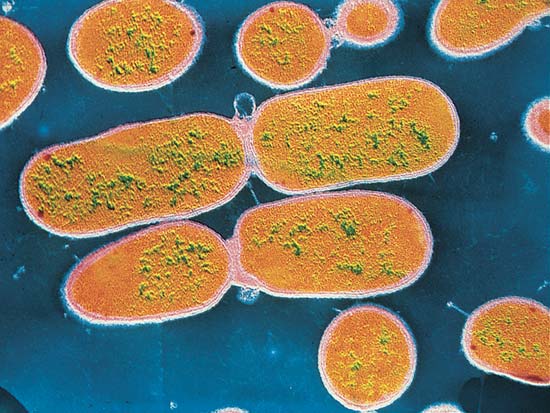
Bacteria will produce offspring by dividing in half during binary fission.

1

Sexual

2

Asexual

52

Multiple Choice

The exchange of pieces of chromatin between homologous chromosomes during Prophase I of meiosis is called

1

independent assortment

2

mutation

3

crossing over

4

random fertilization

53

Multiple Choice

Question image

Males will pass DNA to sperm cells, and females will pass their DNA to egg cells to produce an offspring.

1

Sexual

2

Asexual

54

Multiple Choice

Any change in the sequence of DNA is a

1

recombination

2

mutation

3

chromatin

4

independent assortment

55

Multiple Choice

Question image

Which process is shown in the image?

1

crossing over

2

independent assortment

3

segregation

4

mutation

56

Multiple Choice

Crossing over is important because....
1
It prevents mutations from entering the gametes. 
2
It allows for even distribution of chromosomes in the gametes.
3
It allows for more genetic diversity of gametes.
4
It allows for genetic uniformity of gametes. 

57

Multiple Choice

Which source of genetic variation is NOT a result of sexual reproduction?

1

Crossing over

2

Independent assortment (due to random orientation

3

Gene mutation

4

Random fertilization

media

Animal's Sexual Reproduction

Show answer

Auto Play

Slide 1 / 57

SLIDE