F4 Core 1 Unit 1.4 Tectonic hazards
Presentation
•
Geography
•
10th Grade
•
Medium
Miss vchow
Used 11+ times
FREE Resource
61 Slides • 41 Questions
1
2
3
4
5
6
7
8
9
10
11
Reorder
Reorder the following
Plates move
Pressure builds up
When pressure exceeds the strength of rock
Rock breaks
Energy releases
12
13
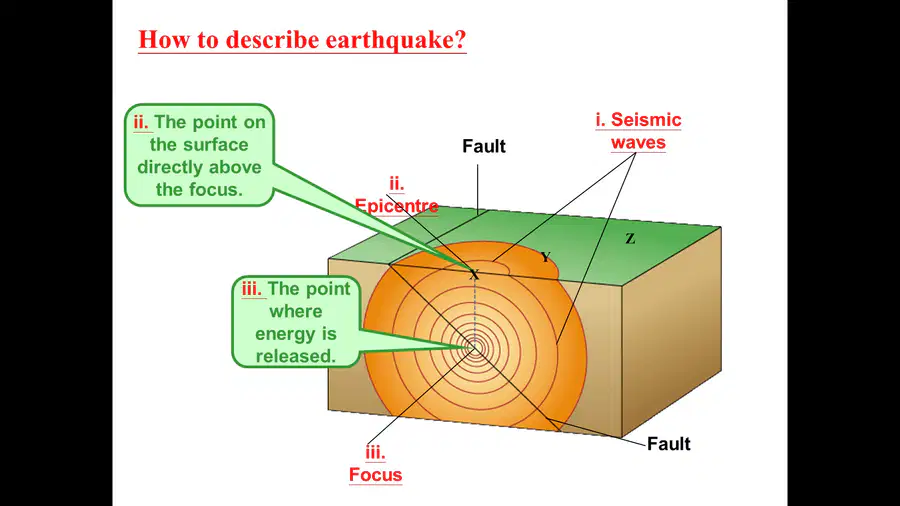
What are (i), (ii), (iii)?
14
Match
Match the following
(i)
(ii)
(iii)
Seismic wave
epicentre
focus
Seismic wave
epicentre
focus
15
16
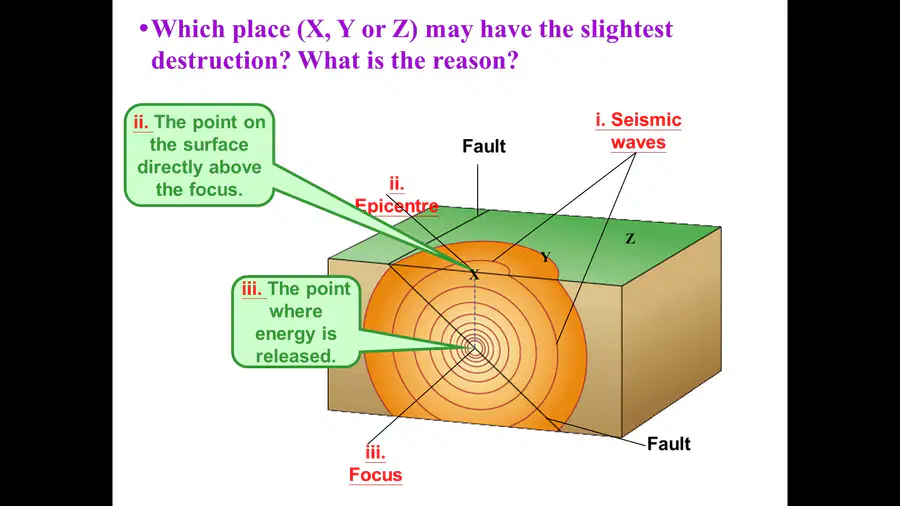
17
Open Ended
Which place may have the slightest destruction? Why?
18
19
20
21
22
Multiple Choice
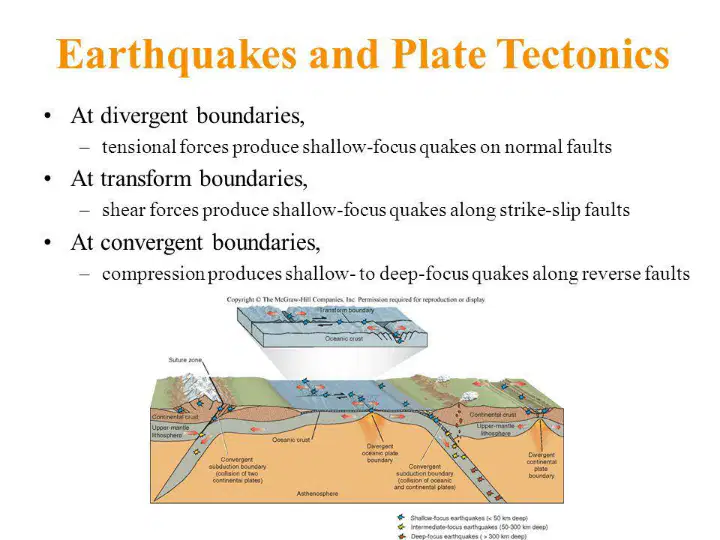
At which type of plate boundaries are earthquakes stronger and more frequent? Why?
convergent
divergent
transform
23
24
25
26
27
28
29
30
31
32
33
34
35
36
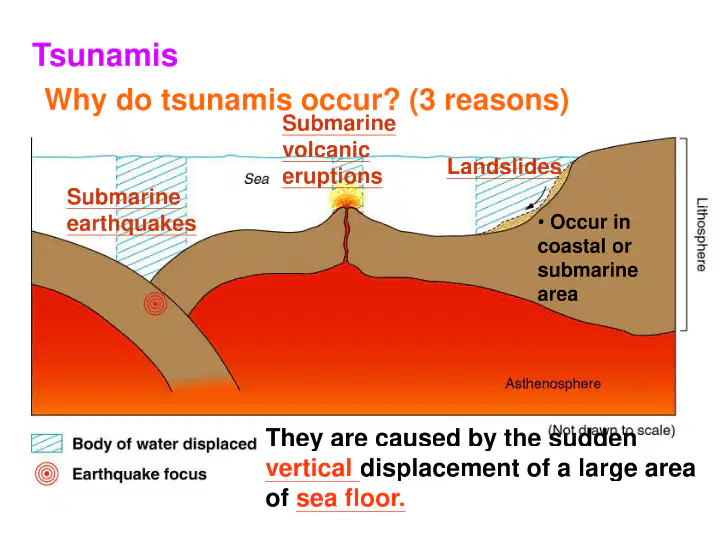
37
38
39
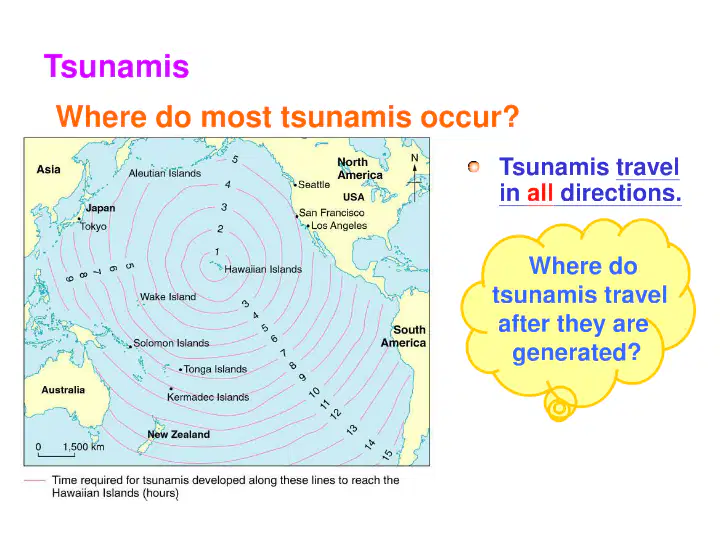
40
Multiple Select
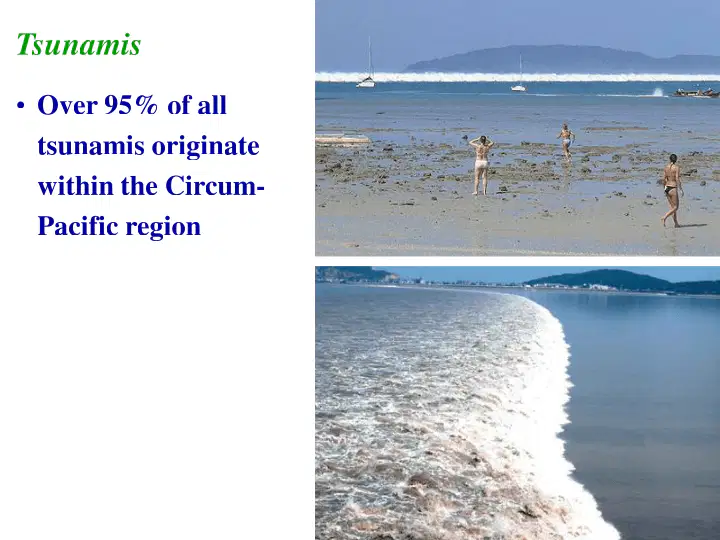
Why are tsunamis less frequent and less serious in the Indian and Atlantic Ocean?
Q1. Do you still remember how tsunamis are triggered?
submarine earthquake
submarine volcanic eruption
submarine/coastal landslide
flooding
41
Multiple Choice
Why are tsunamis less frequent and less serious in the Indian and Atlantic Ocean?
Q2. Where do earthquakes and volcanic eruptions most frequently occur?
along convergent plate boundaries
along divergent plate boundaries
along transform plate boundaries
42
Multiple Choice
Why are tsunamis less frequent and less serious in the Indian and Atlantic Ocean?
Q3. What kind of plate boundary is found in the Indian Ocean and Atlantic Ocean?
along convergent plate boundaries
along divergent plate boundaries
along transform plate boundaries
43
44
Multiple Choice
P.62 Q1
A
B
C
D
45
Multiple Choice
P.63 Q2
A
B
C
D
46
Multiple Choice
P.67 Q1
A
B
C
D
47
火山碎屑
48
Multiple Choice
P.70 Q1
A
B
C
D
49
Multiple Choice
P.70 Q2
A
B
C
D
50
Multiple Choice
P.67 Q2
A
B
C
D
51
Multiple Choice
P.68 Q3
A
B
C
D
52
Past paper exercise
53
Multiple Choice
p.2 2005 CE Q24
A
B
C
D
54
Multiple Choice
p.5 2007 CE Q39 (hot spot)
A
B
C
D
55
Multiple Choice
p.5 2007 CE Q41
A
B
C
D
56
Multiple Choice
p.7 2007 CE Q45
A
B
C
D
57
Multiple Choice
p.8 2008 CE Q12
A
B
C
D
58
Multiple Choice
p.9 2008 CE Q15
A
B
C
D
59
Multiple Choice
p.9 2008 CE Q16
A
B
C
D
60
Multiple Choice
p.9 2008 CE Q17
A
B
C
D
61
Multiple Choice
p.10 2009 CE Q14
A
B
C
D
62
Multiple Choice
p.11 2009 CE Q15
A
B
C
D
63
Multiple Choice
p.12 2010 CE Q39
A
B
C
D
64
Multiple Choice
p.13 Sample Paper DSE Q22
A
B
C
D
65
Multiple Choice
p.13 Sample Paper DSE Q23
A
B
C
D
66
Multiple Choice
p.19 2013 DSE Q10
A
B
C
D
67
Multiple Choice
p.22 2015 DSE Q9
A
B
C
D
68
Multiple Choice
p.22 2015 DSE Q10
A
B
C
D
69
Multiple Choice
p.26 2017 DSE Q10 (hot spot)
A
B
C
D
70
PP Q1b: Explain how the tectonic hazard changes with time and space.
71
Match
Explain how tectonic hazard occurs at region B.
Tectonic hazard (volcanic eruption) occurs at Region B is caused by hot spot.
Ruptures of the crust over the hot spot produced submarine volcano when lava extrudes, cools and solidifies.
After repeated eruption
The volcano grows gradually above the sea level.
1
2
3
4
1
2
3
4
72
DBQ PP Q1b
•Tectonic hazard (volcanic eruption) occurs at Region B is caused by hot spot.
•Ruptures of the crust over the hot spot produces submarine volcano when lava extrudes, cools and solidifies.
•After repeated eruption, the volcano grows gradually above the sea level.
73
DBQ PP Q1b
•Since the hot spot is of fixed location.
•When the Pacific Plate moves in a northwest direction, it carries away the volcano that formed above the hot spot.
•This volcano becomes extinct while new volcano is formed at the SE of the extinct volcano.
•Thus, the oldest volcano is found at NW while the youngest one is at SE.
74
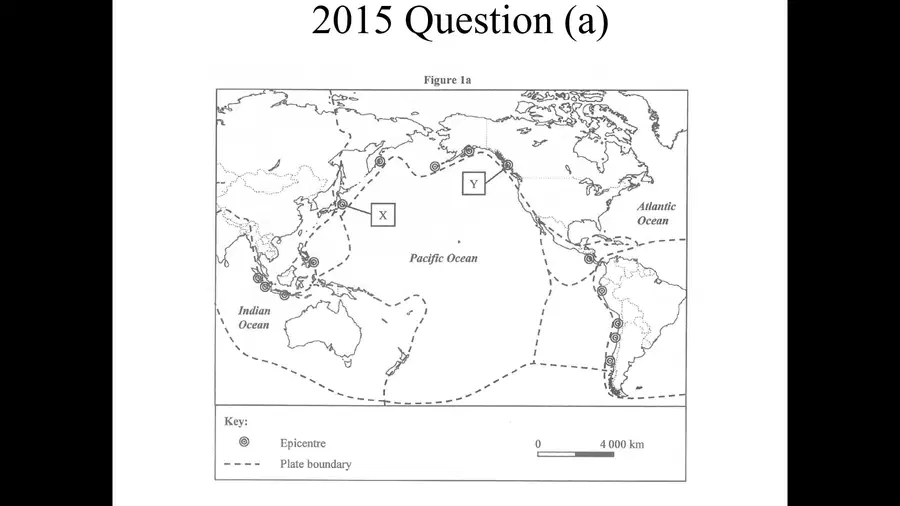
DBQ 2015 Q1
75
76
Spatial distribution 空間分佈 = where?
77
Open Ended
Describe the spatial distribution of the epicentres. (3 marks)
78
79
80
Open Ended
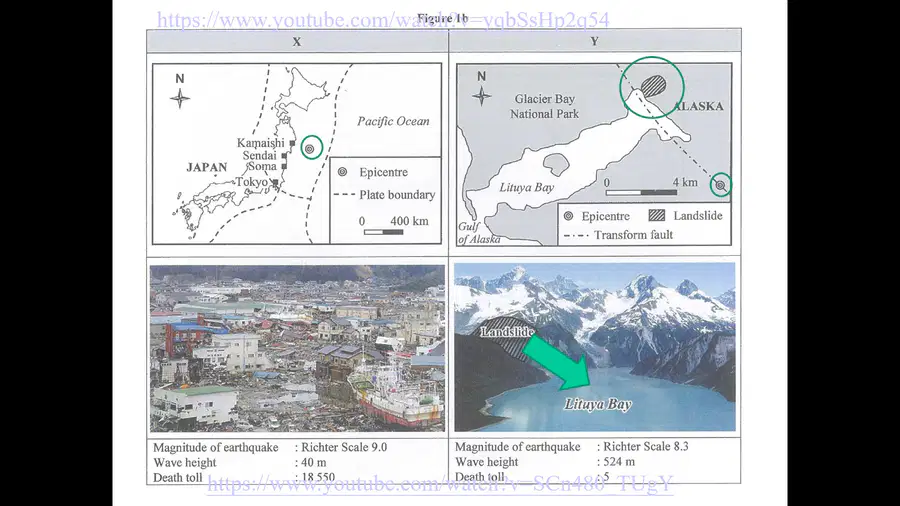
Give one similarity of the causes of tsunami at X and Y.
81
They are both caused by earthquake.
They are both caused by plate movement/near plate boundaries.
82
Look at the locations of epicentres again. Find out the difference.
83
Open Ended
Look at the locations of epicentres again. Find out the difference.
84
The epicentre of the earthquake at X is located at the seafloor while that at Y is on land.
85
Look at the plate boundary again. Find out the difference.
86
Open Ended
Look at the plate boundaries again. Find out the difference.
87
Plates near X collide with each other while those at Y slide past each other.
88
Open Ended
Are there any other differences in the causes?
89
90
91
92
DBQ 2012 Q1a
93
Multiple Choice
(a)(i) Refer to Figure 1a, Table 1b and Photograph 1c. Name the hazard.
earthquake
volcanic eruption
tsunami
94
Multiple Choice
(a)(ii) Refer to Figure 1a, Table 1b and Photograph 1c.
With reference to the theory of plate tectonics, explain the occurrence of the above hazard.
(1) Identify the type of plate boundary.
Destructive / Convergent
Constructive / Divergent
Conservative / Transform
95
Multiple Choice
(a)(ii) Refer to Figure 1a, Table 1b and Photograph 1c.
With reference to the theory of plate tectonics, explain the occurrence of the above hazard.
(1) Along conservative plate boundary, (2) ____________ Plate and __________ Plate slide past each other.
North American Plate and South American Plate
Caribbean Plate and South American Plate
Caribbean Plate and North American Plate
96
Match
(a)(ii) Refer to Figure 1a, Table 1b and Photograph 1c.
With reference to the theory of plate tectonics, explain the occurrence of the above hazard.
(1) Along conservative plate boundary, (2) Caribbean Plate and North American Plate slide past each other.
Great pressure exerts on the rock
stress accumulates within the rock
When stress exceeds the limit of the rock
rock breaks
energy releases
3
4
5
6
7
3
4
5
6
7
97
Core 1 Past paper Practice [causes of hazards]
2012DSE Q1a
ai/ earthquake
aii/ Explain the occurrence of earthquake:
along transform plate boundary
where Caribbean Plate and North American Plate slide past each other
great pressure is then exerted on the rock
stress builds up in the rock
when stress exceeds the strength of the rock
rock breaks and displaces
Energy releases in form of seismic waves
98
Core 1 Past paper Practice [causes of hazards]
2018DSE Q1a
99
Core 1 Past paper Practice [causes of hazards]
PPDSE Q1a (iii)
100
Core 1 Past paper Practice [causes of hazards]
2017DSE Q1a
ai/ major volcanoes are found ....
aii/ Formation of volcano X
..........................................................................
Formation of volcano Y
..........................................................................
[Compare --> find out similarities and differences]
101
Core 1 Past paper Practice [causes of hazards]
2015DSE Q1a, bi
102
Class work:
Past Paper Practice
2018 Q1a, PP Q1aiii, 2017 Q1a, 2015 Q1a, bi
Show answer
Auto Play
Slide 1 / 102
SLIDE

Similar Resources on Wayground
96 questions
Chemical Bonds
Presentation
•
10th Grade
95 questions
Genetics
Presentation
•
10th Grade
97 questions
English A1
Presentation
•
10th Grade
98 questions
F5 Shopping Therapy L22
Presentation
•
10th Grade
95 questions
US History Ch. 16 the Gilded Age
Presentation
•
9th Grade
101 questions
DENİZLERDE HÂKİMİYET MÜCADELESİ
Presentation
•
10th Grade
98 questions
E32102_Unit 6 Review
Presentation
•
11th Grade
100 questions
Biology EOC Review 1
Presentation
•
9th - 10th Grade
Popular Resources on Wayground
20 questions
Math Review
Quiz
•
3rd Grade
15 questions
Fast food
Quiz
•
7th Grade
20 questions
Context Clues
Quiz
•
6th Grade
20 questions
Inferences
Quiz
•
4th Grade
19 questions
Classifying Quadrilaterals
Quiz
•
3rd Grade
20 questions
Figurative Language Review
Quiz
•
6th Grade
20 questions
Equivalent Fractions
Quiz
•
3rd Grade
10 questions
Identify Fractions, Mixed Numbers & Improper Fractions
Quiz
•
3rd - 4th Grade