

Energy and SM Review

Presentation
•
Physics
•
7th Grade
•
Medium
+10
Standards-aligned

Angalel Dixon
Used 8+ times
FREE Resource
12 Slides • 37 Questions
1
Energy & Simple Machines Review
2
What is energy?
Energy is the ability to do work or cause change
Energy has many forms.
Even though energy can change from one form to another, energy cannot be created or destroyed. This is known as the law of conservation of energy

3
Multiple Choice
What is energy?
moving energy
stored energy
renewable energy
The ability to do work.
4
Multiple Choice
Energy can be transformed into many different forms:
True
False
5
Multiple Choice
Energy can created or destroyed but not transformed
Energy cannot be created or destroyed, it can only transformed
Energy can't be created, destroyed or transformed
6
Forms of Energy
Type of Energy | Definition |
|---|---|
Mechanical energy | The combination of both potential & kinetic energies working together in a system |
Light energy (radiant) | Energy due to electromagnetic radiation that is visible to the human eye |
Chemical energy | A type of potential energy stored in the bonds of molecules in substances like foods & batteries |
Sound energy | Caused by waves of vibrations through the air |
Electrical energy | Energy due to the movement of charged electrons |
Thermal energy | Heat energy coming from particles bumping together |
Gravitational energy | Type of potential energy stored in an object due to its height above the Earth |

7
Multiple Choice

What is the form of energy that is created using heat? This form of energy makes particles of matter move faster.
light energy
thermal energy
chemical energy
kinetic energy
8
Multiple Choice
energy built up before being in motion
energy released in a chemical reaction
energy of motion
sum of kinetic and potential energy
9
Multiple Choice
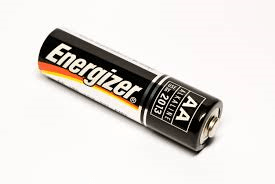
electrical
chemical
thermal
mechanical
10
Multiple Choice
mechanical to electrical
electrical to mechanical
chemical to mechanical
electromagnetic to mechanical
11
Multiple Choice
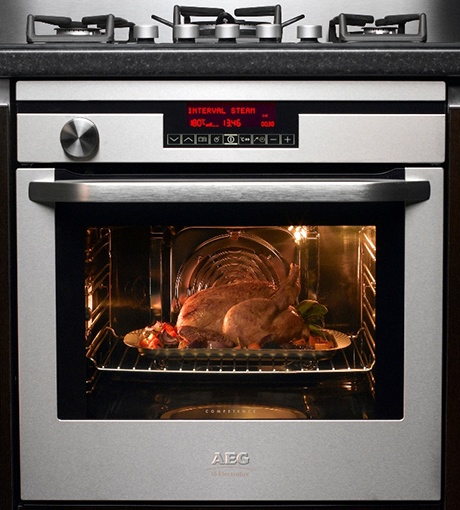
Thermal
Solar
Electrical
None
12
Potential vs Kinetic Energy
Potential Energy
Stored energy due to an object's position
The higher the object, the more potential energy it has
Kinetic Energy
Energy due to motion
The more speed and mass an object has the more kinetic energy it has

13
Multiple Choice
The energy of moving matter
gravitational potential energy
elastic potential energy
kinetic energy
potential energy
14
Multiple Choice
Energy that is stored in a person or object.
potential energy
energy conversion
law of conservation of energy
kinetic energy
15
Potential vs Kinetic Energy
Potential energy can transform into kinetic energy
When potential energy is high, kinetic energy is low
When potential energy is low, kinetic energy is high
Total energy remains the same


16
Multiple Choice

W
X
Y
Z
17
Multiple Choice

W
X
Y
Z
18
Multiple Choice

Both the potential energy and kinetic energy decrease
The potential energy decreases while the kinetic energy increases
The kinetic energy decreases while the potential energy increases
Bothe the potential energy and kinetic energy increase
19
What is Work?
In physics, work is defined as the use of force to move an object. For work to be done, the force must be applied in the same direction that the object moves.
Work is directly related to both the force applied to an object and the distance the object moves. It can be represented by the equation: Work = Force × Distance.

20
Multiple Choice
For work to be done on an object, the direction and force have to be going the same direction.
True
False
21
Multiple Choice
A child pushing his baby brother in a stroller.
Work
Not work
22
Multiple Choice
Pushing on a car but it does not move.
Work
Not work
23
Multiple Choice
lifting a 20 pound box off the floor
holding a 20 pound box above the floor
sliding a 20 pound box across the floor
sliding a 20 pound box up an inclined plane
24
Calculating Work
Work, distance, and force are all related. The work equation can be rearranged to find force or distance if . the other values are known
Work= Force Distance SI unit of work- Joule (Nm)
Force= Work ÷ Distance SI unit of force- Newton (N)
distance= Work ÷ Force SI unit of distance- meter (m)

25
Multiple Choice
Force = work x distance
Distance = force x work
Work = force x distance
Work = force x mass
26
Multiple Choice

Fred kicks a ball with a force of 20N to George, who is 5M away. How much work was done to the ball?
25J
100J
4J
75J
27
Multiple Choice
Watt
Newton
Joule
meter
28
Multiple Select
Two factors that determine work are
force
acceleration
mass
distance
velocity
29
Multiple Choice

500 J of work is done by a person who uses a force of 50N to move a box, how far does it go?
10 m
0.1 m
25,000 m
10 J
30
Simple Machines

Simple machines make work easier. They have few or no moving parts and they work by changing the direction of a force or the amount of force needed to do something.
There are six simple machines
inclined plane
wedge
screw
pulley
lever
wheel & axle
31
Multiple Choice

32
Multiple Choice

Lever
Wedge
Pulley
Inclined Plane
33
Multiple Choice

What is this simple machine?
Wedge
Inclined plane
Lever
Screw
34
Making Work Easier
A machine makes work easier by changing at least one of three factors. A machine may
● change the amount of force you exert
● change the distance over which you exert a force
● change the direction in which you exert a force
Machines do not make work easier by changing the amount of work. The work that goes into a machine must be the same as the work that comes out according to the law of conservation. Machines make work easier by changing the force or the distance over which the force is applied. If you decrease the force you must increase the distance. If you increase the force, you have to decrease the distance.
35
Multiple Choice
Which of the following is NOT one of the things a machine can do?
Changes the amount of force required.
Changes the distance over which the force is exerted.
Changes the direction of the force.
Changes the amount of work done.
36
Multiple Choice
Simple machines can make work easier by reducing the input force needed to move an object. However, there is a trade off for decreased input. What is the trade off?
The distance the object is moved is increased.
The distance the object is moved is decreased.
The amount of work is increased.
The amount of work is decreased.
37
Labeling Simple Machines
Input forces
The work you do on a machine is known as input or effort. There are two input forces- effort force & effort distance
effort force (input force)- force that you exert on the machine (Fe)
effort distance (input distance)- distance over which the effort force is exerted (De)
Output Forces
The work done by the machine on the object is known as the output. There are two output forces- resistance force & resistance distance
resistance force (output force)- force that opposes the motion (Fr)
resistance distance (output distance) - distance over which the resistance force is exerted (Dr)
38
Multiple Choice
What is effort (input) force?
the force one exerts on a machine
the force which an effort force must overcome in order to do work on an object via a simple machine.
the force the machine exerts on a object
the output work times the input distance
39
Multiple Choice
What is resistance (output) force?
the force required by a machine in order to accomplish work (the force you put on the machine)
The force that is exerted by a machine; force that resists motion
the force the machine exerts on a object
the output work times the input distance
40
Multiple Choice
What is effort (input) distance?
the force required by a machine in order to accomplish work (the force you put on the machine)
the force which an effort force must overcome in order to do work on an object via a simple machine.
the distance an input force acts through
the output work times the input distance
41
Multiple Choice
What is resistance (output) distance?
the force required by a machine in order to accomplish work (the force you put on the machine)
the force which an effort force must overcome in order to do work on an object via a simple machine.
the distance an input force moves a machine
the distance through which the output force is exerted
42
Ideal vs Actual Mechanical Advantage
Mechanical advantage (MA) is the factor by which a machine multiplies the force put into it. The higher the mechanical advantage, the less input force (effort force) is required.
There are two types of mechanical advantage
Actual mechanical advantage considers external factors such as the loss of energy due to friction and heat.
Ideal mechanical advantage does not consider external factors. This means that ideal mechanical advantage has a higher efficiency or ratio of output work to input work
43
Multiple Choice
Which type of mechanical advantage considers the loss of energy due to heat & friction?
actual mechanical advantage
ideal mechanical advantage
44
Multiple Choice
the percentage of the input work that is converted to output work
mechanical advantage
efficiency
joule
machine
45
Calculating Mechanical Advantage
The formula for mechanical advantage is effort distance/ resistance distance. This looks different for every machine

46
Multiple Choice
The IMA (ideal mechanical advantage) formula for simple machines
output/input
input/output
effort distance/ resistance distance
resistance arm length/effort arm length
47
Multiple Choice

What is the IMA of this lever
90
33
10
28
48
Multiple Choice

2
3
4
5
49
Multiple Choice

the mechanical advantage of a wheel and axle is...
wheel diameter / force
wheel radius / axle radius
axle diameter / wheel diameter
Energy & Simple Machines Review
Show answer
Auto Play
Slide 1 / 49
SLIDE
Similar Resources on Wayground

44 questions
The Carbon Cycle
Presentation
•
8th Grade
41 questions
Magnets and Electromagnets
Presentation
•
8th Grade
46 questions
KS3 P1 Core Questions
Presentation
•
7th Grade
44 questions
Unit 1 Lesson 4: E+D by Wind, Ice, and Gravity
Presentation
•
6th Grade
41 questions
Cross Section Lesson
Presentation
•
7th Grade
47 questions
Proportional Relationships
Presentation
•
7th Grade
44 questions
Cooking Terms
Presentation
•
7th - 8th Grade
41 questions
Land Biomes and Aquatic Ecosystems Study Guide
Presentation
•
7th Grade
Popular Resources on Wayground
6 questions
PRIDE Always and Everywhere
Presentation
•
12th Grade
20 questions
Lab Safety Quiz

Quiz
•
6th Grade
26 questions
KOR Review Kahoot Questions
Quiz
•
8th Grade
21 questions
Continents and Oceans
Quiz
•
6th Grade
12 questions
Unit Zero lesson 2 cafeteria
Presentation
•
9th - 12th Grade
20 questions
Parts of Speech
Quiz
•
5th Grade
10 questions
Riddles Riddles fun Riddles
Quiz
•
6th - 12th Grade
16 questions
Subject & Predicate
Quiz
•
5th Grade
Discover more resources for Physics
10 questions
Riddles Riddles fun Riddles
Quiz
•
6th - 12th Grade
17 questions
26-27 School-Wide Expectations
Presentation
•
6th - 8th Grade
20 questions
Lab Safety
Quiz
•
5th - 8th Grade
10 questions
Soup, Salad, or Sandwich?
Quiz
•
1st Grade - Professio...
10 questions
Labor Day and Its Historical Significance

Interactive video
•
7th - 12th Grade
20 questions
Add and Subtract Integers
Quiz
•
6th - 8th Grade
21 questions
SR&R 2026-2027 Practice Quiz
Quiz
•
6th - 8th Grade
16 questions
Adding and Subtracting Integers
Quiz
•
7th Grade