Nervous System Mini-Summative Review
Presentation
•
Biology
•
7th Grade
•
Medium
Heather Ziemba
Used 1+ times
FREE Resource
12 Slides • 55 Questions
1
2
IMPORTANT NOTE! You actually have more than 5 senses. You have internal senses that monitor your body temperature, blood pressure, hunger, and more! But these are the five most recognizable senses, and the easiest for us to study in middle school.
3
4
Multiple Choice
Blood
Spinal Cord
Atrium
Ventricle
5
Multiple Choice
neurons
spinal cord
spaghetti
brain
6
Multiple Choice
7
Multiple Choice
brain and spinal cord
brain and cranial nerves
spinal cord and spinal nerves
cranial nerves and spinal nerves
8
Multiple Choice
To protect your muscles
To communicate from your brain to the rest of your body
To open and close your lungs.
9
Multiple Choice
Ears
Face
Nose
Skin
10
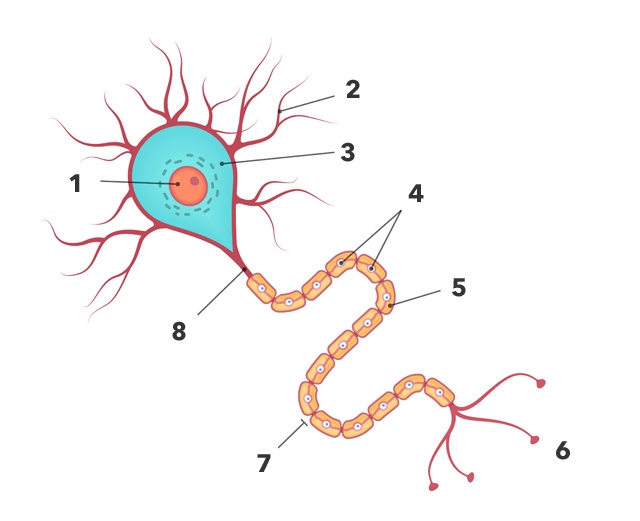
Neurons - main cell of the nervous system; communicate signals to different parts of the body.
Some text here about the topic of discussion
11
Dendrites: receive neurotransmitters from other neurons
Cell Body: Contains the nucleus and other organelles
Some text here about the topic of discussion.
Major parts of a Neuron
12
Axon: carries the nerve impulse away from the cell body.
Myelin Sheaths: Protects the axon and speeds up the nerve impulse
Some text here about the topic of discussion.
Major parts of a Neuron
13
Nerve Impulses are electrical, and travel down the neuron for quick signaling.
Some text here about the topic of discussion
Neurotransmitters are chemical signaling between neurons.
14
Multiple Choice
The part of the neuron that receives messages from adjacent neurons
axon
axon terminal
dendrite
neuron
15
Multiple Choice
neuron
myelin sheath
dendrite
neurotransmitter
16
Multiple Choice
myelin sheath
neurotransmitter
axon
axon terminal
17
Multiple Choice
synapse
axon terminal
impulse
myelin
18
Multiple Choice
Identify #1
axon
cell body
myelin sheath
nucleus
19
Multiple Choice
Identify #2
axon
cell body
dendrite
myelin sheath
20
Multiple Choice
Identify #3
axon
cell body
dendrite
myelin sheath
21
Multiple Choice
The long, fiber like part of a neuron which the cell sends information to receiving neurons
axon
dendrite
myelin
Node of Ranvier
22
Multiple Choice
Synapse
Dendrite
Myelin Sheath
Axon Terminal Button
23
Multiple Choice
24
Multiple Choice
Axon Terminal to Dendrite
Dendrite to Axon Terminal
Cell Body to Axon
Axon Terminal to Cell Body
25
Multiple Choice
Muscle Fiber
Connective Tissue
Impulse
Neuron
26
Multiple Choice
dendrite
axon
nucleus
node of Ranvier
27
Multiple Choice
dendrite
axon
cell body
Schwann cell
28
Multiple Choice
Neurotransmitters
Synapse
Threshold
Impulse
29
Multiple Choice
Axon
Dendrites
Node of Ranvier
Myelin Sheath
30
Helps with executive functions like attention, self-control, planning, problem-solving, thought, language, and personality.,
Frontal Lobe
Process sensory information about temperature, touch, and paste. Some evidence suggests reading and math skills happen here too!
Parietal Lobe
Processes what you hear, allows for voice and sound recognition, helps with memory
Temporal Lobe
Processes the information that your eyes see.
Occipital Lobe
A lot of sensory processing and thinking happens in the lobes of the CEREBRUM!
31
Match
Match the following brain structures to their functions
Frontal Lobe
Parietal Lobe
Occipital Lobe
Temporal Lobe
Personality, reasoning, thinking
Sense of touch; reading/writing, math skills
Processes what you see
Processes what you hear
Personality, reasoning, thinking
Sense of touch; reading/writing, math skills
Processes what you see
Processes what you hear
32
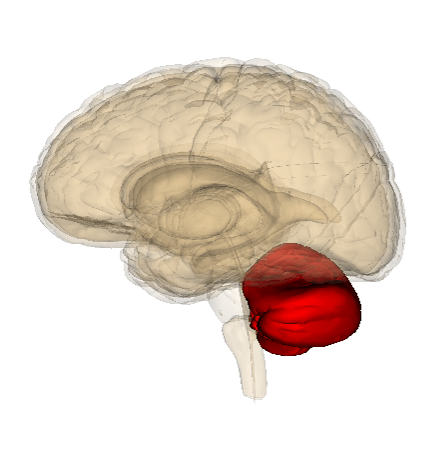
Coordinates body movements, especially those that are practiced; helps with balance and coordination.
Cerebellum
Connects the brain to the spinal cord, controls vital functions like breathing, heart rate and blood pressure and some eye reflexes.
Brainstem
Emotional center of the brain; helps process memory, emotional responses, and decision-making
Amygdala
Helps with long-term memory, and some emotional processing,
Hippocampus
More external and some internal anatomy of the brain!
33
Match
Match the following brain structures to their functions
Brainstem
Cerebellum
Amygdala
Hippocampus
vital functions like heart rate, blood pressure, and breathing
balance and coordination
Emotional Center
Long term memory
vital functions like heart rate, blood pressure, and breathing
balance and coordination
Emotional Center
Long term memory
34
Synthesizes important hormones for the body and controls the pituitary gland.
Hypothalamus
Master gland of the endocrine system; helps influence most hormone functions in the body.
Pituitary Gland
Major hub for information traveling back and forth between the spinal cord and cerebrum; relays sensory signals and motor signal; controls consciousness
Thalamus
Connections to the Endocrine System
35
Match
Hypothalamus
Thalamus
Pituitary Gland
Makes hormones for your endocrine system, controls the pituitary gland
Relays sensory information to the lobes of the cerebrum
Controls the Endocrine System
Makes hormones for your endocrine system, controls the pituitary gland
Relays sensory information to the lobes of the cerebrum
Controls the Endocrine System
36
Multiple Choice
Which part of the brain is responsible for the cardiac and respiratory activities?
cerebelum
brainstem
cerebrum
diencephalon
37
Multiple Choice
Which part of the brain is responsible for coordinating body's balance and posture?
cerebelum
brainstem
cerebrum
diencephalon
38
Multiple Choice
thalamus
cerebellum
basal ganglia
frontal lobes
39
Multiple Choice
parietal lobes
occipital lobes
temporal lobes
frontal lobes
40
Multiple Choice
parietal lobes
brainstem
thalamus
motor strip
41
Multiple Choice
motor stip
sensory strip
cerebellum
brainstem
42
Multiple Choice
occipital lobes
temporal lobes
parietal lobes
brainstem
43
Multiple Choice
What is #1?
Frontal Lobe
Parietal Lobe
Cerebellum
Occipital Lobe
44
Multiple Choice
What is #2?
Frontal Lobe
Temporal Lobe
Medulla Oblongata
Occipital Lobe
45
Multiple Choice
The hypothalamus contains a control centre for many functions of the autonomic nervous system, and it has effects on the
Endocrine System
Exocrine system
Excretory system
Circulatory system
46
Multiple Choice
(produces hormones that affect growth and reproduction) is the fuction of which of the following endocrine glands?
Pancreas
Pituitary Gland
Pineal
Thymus
47
Multiple Choice
It is the switching station that sends sensory information to the proper areas of the cortex.
Cerebellum
Thalamus
Hypothalamus
Hippocampus
48
Multiple Choice
It is responsible for strong memories and remembering locations of objects.
Cerebellum
Thalamus
Hypothalamus
Hippocampus
49
Multiple Choice
It controls our fear responses and memory of fearful stimuli.
Amygdala
Hippocampus
Thalamus
Hypothalamus
50
Multiple Choice
What is #3?
Frontal Lobe
Parietal Lobe
Temporal Lobe
Occipital Lobe
51
Multiple Choice
What is #7?
Occipital Lobe
Parietal Lobe
Temporal Lobe
Cerebellum
52
Multiple Choice
Cerebrum
Cerebellum
Brain Stem
Diencephalon
53
Multiple Choice
parietal
temporal
occipital
frontal
54
In a reflex arc, a receptor senses a stimulus, and sends a message via a sensory neuron. This sensory neuron goes to a integration center in the brain or spinal cord. Then a message is sent using a motor neuron to an effector, to create a response.
Signaling arcs allow us to react quickly to stimuli!
55
Reflexes and Reactions both use signaling arcs, but have some important differences!
56
Match
Match the following descriptions
Speed of a Reflex
Speed of a Reaction
Description of Reaction
Description of Reflex
Sometimes fast, sometimes slow
Always fast
Somatic
Autonomic
Sometimes fast, sometimes slow
Always fast
Somatic
Autonomic
57
Match
Description of Reflexes
Description of Reactions
Interneurons for reflexes are found in ...
Interneurons for reactions are found in ...
involuntary
voluntary
spinal cord
brain
involuntary
voluntary
spinal cord
brain
58
Multiple Choice
What type of neuron is A?
Sensory
Inter
Motor
59
Multiple Choice
What type of neuron is C?
Sensory
Inter
Motor
60
Multiple Choice
Name an effector in this diagram.
A
B
D
E
F
61
Multiple Select
Select two examples of effectors.
Neuron
Gland
Muscle
Receptor
62
Multiple Choice
Which statement best describes a reflex?
Slow response that you have to think about
Rapid response to protect body from harm
63
Multiple Choice
_____ neurons carry messages away from the central nervous system and out to muscles or glands. The RED neuron in diagram.
sensory
motor
inter
central
64
Multiple Choice
Where would the nerve impulse start in this reflex arc?
A
C
D
E
65
Multiple Choice
Which is the correct order of neurons in a reflex arc?
Sensory neuron, motor neuron, relay neuron
Relay neuron, sensory neuron, motor neuron
Sensory neuron, relay neuron, motor neuron
66
Multiple Choice
Which number represents the stimulus?
1
2
3
4
67
Multiple Choice
Which number represents the effector?
4
5
6
7
Show answer
Auto Play
Slide 1 / 67
SLIDE

Similar Resources on Wayground
63 questions
Tuck Everlasting Unit Exam Practice
Presentation
•
7th Grade
62 questions
Relative Dating and Fossil Quiz Review
Presentation
•
8th Grade
62 questions
Year 7 Chemistry Revision
Presentation
•
7th Grade
62 questions
Renaissance Simulation Game
Presentation
•
7th Grade
63 questions
Geography Handbook
Presentation
•
7th Grade
63 questions
Grade 7 EOY Review
Presentation
•
7th Grade
60 questions
Proportional Reasoning
Presentation
•
7th Grade
62 questions
Photosynthesis investigation Virtual lab
Presentation
•
7th Grade
Popular Resources on Wayground
11 questions
Hallway & Bathroom Expectations
Quiz
•
6th - 8th Grade
10 questions
HCS SCI 03 Summer School Assessment 2
Quiz
•
3rd Grade
11 questions
Home Scope
Quiz
•
7th - 8th Grade
12 questions
2026 TAP Technology in the Classroom
Presentation
•
Professional Development
15 questions
HCS SCI 05 Summer School Assessment 2 Review
Quiz
•
5th Grade
15 questions
HCS SCI 04 Summer School Review 2
Quiz
•
4th Grade
59 questions
Geometry Unit 3 Review
Quiz
•
9th - 12th Grade
14 questions
FAST ELA READING SMAPLE TEST MATERIALS
Passage
•
3rd Grade