Search Header Logo
Relative Dating and Fossil Quiz Review

Relative Dating and Fossil Quiz Review

Assessment

Presentation

Science

8th Grade

Medium

NGSS
MS-ESS1-4, MS-ESS1-1, MS-LS4-1

+12

Standards-aligned

Created by

Monica Burkett

Used 24+ times

FREE Resource

17 Slides • 45 Questions

1

media

2

media

3

media

4

media

5

media

6

Multiple Choice

What does the principle of uniformitarianism state?

1

Organisms that lived in the past can be preserved

2

processes that operate today also operated in the past

3

there are no gaps in the geologic record

4

Earth's eras occurred during uniform time spans

7

media
media

The relative age of a rock is its age compared to the ages of other rocks.
Tools used- Law of Superposition, Correlation, & Index Fossil

The absolute age of a rock is the number of years that have passed since the rock formed.
Tool used- Radiometric Dating

HOW OLD ARE ROCK

LAYERS?

8

Multiple Choice

Geologists use radioactive dating to _________

1

determine the relative ages of rock layers

2

tell the difference between molds and casts

3

tell where one soil horizon ends and the next one begins

4

determine the absolute ages of rocks

9

Multiple Choice

True or False? The absolute age of a rock is an approximate age that is close to the real age, but not exact.

1

True

2

False

10

Multiple Choice

True or False? The relative age of a rock is an approximate age that is close to the real age, but not exact.

1

True

2

False

11

media
media

According to the law of superposition, in undisturbed
horizontal sedimentary rock
layers, the oldest layer is at
the bottom.

Each higher layer is younger than the layers below it.

The principle of original horizontality states that most sedimentary layers of rock are deposited in a horizontal position.

HOW OLD ARE ROCK

LAYERS?

12

Multiple Choice

Summarize the Law of Superposition

1

The youngest rocks are located at the bottom of the rock layers

2

The oldest rocks are located at the bottom of the rock layers

3

The ages of the rocks are mixed between the layers of the rock

4

The ages of all the rocks are the same throughout all the layers

13

Multiple Choice

What does the Law of Original Horizontality mean?

1

Sedimentary Rocks nautrally form vertical layers and then they fall horizontally

2

Sedimentary Rocks form in horizontal layers

3

Sedimentary Rocks form vertical and horizontal layers

4

Sedimentary Rocks cannot change direction once formed

14

media

15

media

16

Multiple Choice

Question image

a rock layer is older than the intrusion or fault that disturbs it

1

law of superposition

2

unconformity

3

original horizontality

4

cross-cutting relationship

17

Multiple Choice

Which of the following is an example of a crosscutting relationship?

1
A fold in a rock layer
2
A volcanic eruption
3
A river eroding a canyon
4

A fault or intrusion cutting through layers of sedimentary rock

18

Multiple Choice

Question image
This rock diagram has a line running through with arrows pointing in the direction of rock movement.  What does the line represent?
1
A fold
2
A fault
3
A tilt
4
An intrusion

19

media

20

Multiple Choice

A break in the geologic record that is made when rock layers are eroded over a long period of time
1
Law of Superposition
2
Law of Crosscutting
3
Relative Dating
4
Unconformity

21

media

22

Multiple Choice

Process of matching rocks and fossils from separate locations

1

correlation

2

inclusion

3

relative age

4

superposition

23

Multiple Choice

Question image

Above what layer is there an unconformity?

1

H

2

M

3

R

4

F

24

media

25

media
media

Are fossils used to define and
identify geologic periods.
1.

Abundant

2.

Widespread (multiple columns)

3.

Lived for a short period of
time (shows up in one row)

Index Fossils

26

Multiple Choice

The best index fossils meet these 3 requirements?

1

widespread, abundant, long lifespan

2

widespread, abundant, short lifespan

3

one location, abundant long lifespan

4

one location, abundant, short lifespan

27

What do Fossils show?

  • Paleontologists: Scientists who study fossils

  • Paleontologists gather information into the Fossil Record

    • Provides evidence about the history of life and past environments on Earth

      • Helps show how organisms have changed over time

Grade 8 Ohio | Lesson 6.1

media

28

media
media
media
media
media
media
media

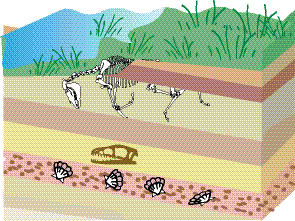
HOW IS A FOSSIL FORMED?

1. Sediment

-animal is buried
by sediment
shortly after it
dies.

4. Erosion
Erosion wears
away the
remaining rock
layers to expose
the fossil.

2. Layers
More sediment
layers form
above the
remains

3. Movement
Movement of
tectonic plates
lifts the fossil
closer to the
surface.

29

What Fossils Reveal?

  • Fossils give clues to the diversity of living things over the history of Earth

  • Give clues to past climate and surface changes on Earth

  • Give clues to changes that have occurred with organisms over time

media

30

​What are the different kinds of fossils?

  • Trace fossils (record the actions of organisms such as burrowing, footprints, slithering, nests, etc.

  • Mold fossils (impression left behind after organism decayed) Cast fossil (forms when minerals fill up molds)

  • Petrified Fossil- (minerals replace all or part of organism) LIKE STONE

  • Carbon Film fossil- (carbon left behind)

  • ​Preserved Remains fossil- (some mummies) close to orginal state

media

31

Multiple Choice

Scientist who studies fossils?

1
Paleontology
2
Archeology
3
Fossilology

32

Multiple Choice

Question image

The diagram shows different layers of sedimentary rock. Each layer is labeled with a letter.

1

The left part of Layer B is younger than the right part.

2

The left part of Layer F is the same age as Layer M.

3

Layer R is older than Layer M

4

Layer I is older than Layer B

33

Multiple Choice

Question image

What is the correct age order of the rocks from OLDEST to YOUNGEST

1

A,B,C,D,E

2

B,C,D,E,A

3

All are the same age

4

A,E,D,B,C

34

Multiple Choice

Question image

What Letter represents the most recent event?

1

A

2

C

3

D

4

E

35

Multiple Choice

Question image

Place the layers in order from oldest to youngest.

1

1, 2, 3, 4, 5, 6, 7

2

7, 6, 5, 4, 3, 2, 1

3

1, 2, 3, 7, 4, 5, 6

4

1, 2, 4, 3, 7, 5, 6

36

Multiple Choice

Question image
The rock formation labeled "P" is a(n)...
1
fault
2
intrusion
3
inclusion
4
unconformity

37

Multiple Choice

Question image
Letter "F" is a....
1
inclusion
2
intrusion
3
fault
4
unconformity 

38

Multiple Choice

Question image

Place the layers in order from oldest to youngest.

1

G, C, A, B, F, H, D, E

2

A, B, C, D, E, F, G, H

3

G, C, A, F, H, D, B, E

4

D, H, E, F, A, C, G, B

39

Multiple Choice

Question image

Which layer is an intrusion?

1

A

2

B

3

C

4

D

40

Multiple Choice

Question image

Which layer is OLDER? Intrusion M or Layer D?

1

Intrusion M

2

Layer D

41

Multiple Choice

Question image

Which layer is OLDER? Layer E or Intrusion A?

1

Layer E

2

Intrusion A

42

Multiple Choice

Question image

Which layer is OLDER? Layer M or Intrusion P?

1

Layer M

2

Intrusion P

43

Multiple Choice

Question image
According to the law of superposition, the oldest fossils are found 
1
At the top of the rock layers
2
Near the bottom of the rock layers
3
In the middle of the rock layers
4
Somewhat near the surface

44

Multiple Choice

history of life as documented by fossils, the remains or imprints of organisms from earlier geological periods preserved in sedimentary rock

1

Fossil record

2

Relative age dating

3

igneous intrusion

4

superposition

45

Multiple Choice

Question image

What is the best reason that fossil #4 is NOT a good index fossil?

1

It is not widespread

2

it is not short-lived (in numerous layers)

3

It is in half of the outcrops

46

Multiple Choice

a fossil that is abundant, short lived and widespread, helps discover the relative age of rocks

1

fossils

2

trace fossil

3

fossil record

4
index fossil

47

Multiple Choice

Question image

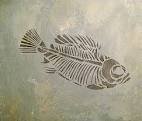
If scientists found this fossil, what could they infer?

1

what fish are like today

2

that this fish lacked oxygen

3

that water once covered the area where this fossil was found

48

Multiple Choice

Question image

Which is the best index fossil?

1
2
3
4

49

Multiple Choice

Fossils are the preserved remains or traces of plants and animals that have lived on Earth throughout Earth's history. How does the fossil record of animals compare to animals that exist today?

1

Animals in the fossil record are the same as animals that exist today.

2

Animals in the fossil record are ancestors of animals that exist today.

3

Animals in the fossil record have no similarities to animals that exist today.

4

Animals in the fossil record are more complex than animals that exist today.

50

Multiple Choice

The relative age of a rock is ____________

1

its age compared with the ages of other rocks

2

less than the age of the fossil the rock contains

3

the number of years since the rock formed

4

its age based on how much carbon-14 the rock contains

51

Multiple Choice

A(n) ______________ is a gap in the geologic record where some rock layers have been lost because of erosion.

1

layer

2

relative age

3

unconformity

52

Multiple Choice

Question image
This type of fossil forms when entire organisms or parts of organisms are prevented from decaying by being trapped in rock, ice, tar, or amber.
1
trace
2
preserved or original remains
3
carbonized or carbon film
4
index

53

Multiple Choice

Question image
This type of fossil forms when a mold is filled with sand or mud that hardens into the shape of the organism.
1
mold
2
cast
3
trace
4
preserved

54

Multiple Choice

Question image
This type of fossil forms when minerals soak into the buried remains, replacing the remains, and changing them into rock.
1
mold
2
cast
3
petrified
4
preserved

55

Multiple Choice

Question image
This type of fossil forms when the mud or sand hardens to stone where a footprint, trail, or burrow of an organism was left behind. 
1
carbonized or carbon film
2
trace
3
permineralized or petrified
4
mold

56

Multiple Choice

Question image
This type of fossil forms when organisms or parts, like leaves, stems, flowers, fish, are pressed between layers of soft mud or clay that hardens squeezing almost all the decaying organism away leaving the carbon imprint in the rock.
1
trace
2
preserved or original remains
3
carbonized or carbon film
4
permineralized or petrified

57

Multiple Choice

In what type of rocks are fossils found?
1
igneous
2
metamorphic
3
sedimentary

58

Multiple Choice

Question image

This fossil is a

1

cast

2

mold

3

amber

59

Multiple Choice

Question image
Does the picture represent relative or absolute dating?
1
relative
2
absolute

60

Multiple Choice

Question image
Which principle helped you determine that E is younger than D?
1
principle of superposition
2
principle of original horizontality
3
principle of inclusions
4
principle of cross cutting relationships

61

Multiple Choice

a surface where rock has eroded away, producing a break, or gap, in the rock record (dis-, angular, or non-)

1

production

2

inclusions

3

superposition

4

unconformities

62

Multiple Choice

A(n) __________ fossil forms when dissolved minerals replace the remains of an organism and then harden to form rock.

1

amber

2

frozen

3

asphalt

4

petrified

media

Show answer

Auto Play

Slide 1 / 62

SLIDE