Search Header Logo
  1. Resource Library
  2. Science
  3. Chemistry
  4. Periodic Table
  5. The Periodic Table Of The Elements
The Periodic Table of the Elements

The Periodic Table of the Elements

Assessment

Presentation

Science

6th - 8th Grade

Medium

NGSS
MS-PS1-1, HS-ESS1-5, HS-PS1-1

+7

Standards-aligned

Created by

Jawara Senghor

Used 94+ times

FREE Resource

9 Slides • 16 Questions

1

The Periodic Table of Elements

media

The building blocks of the universe

2

media

In the mid 1800s, a Russian chemist named Dmitri Mendeleev began to think of how elements could be organized. In the year 1869, he arranged the elements in order of increasing atomic mass and realized the properties of the elements occurred in a periodic, or regularly repeating pattern. This arrangement eventually became known as The Periodic Table of the Elements. He even used the pattern in his table to predict elements that had not yet been discovered.

The birth of the Period Table.

Organizing the Elements

3

media

In the year 1913, a British scientist named Henry Moseley rearranged Mendeleev's periodic table in the order of increasing atomic number instead of atomic mass. This new configuration corrected some of the flaws in Mendeleev's table. To this day, this is configuration of the periodic table that is used by scientists around the world.

A more accurate version of the Periodic Table

Re-arranging the Periodic Table

4

Multiple Choice

Question image
How did Mendeleev arrange the elements?
1

alphabetical 

2

density

3

melting point

4

atomic mass

5

Multiple Choice

In the modern periodic table elements are arranged by:
1

atomic mass

2

atomic number

3

valence electrons

4

number of isotopes

6

media

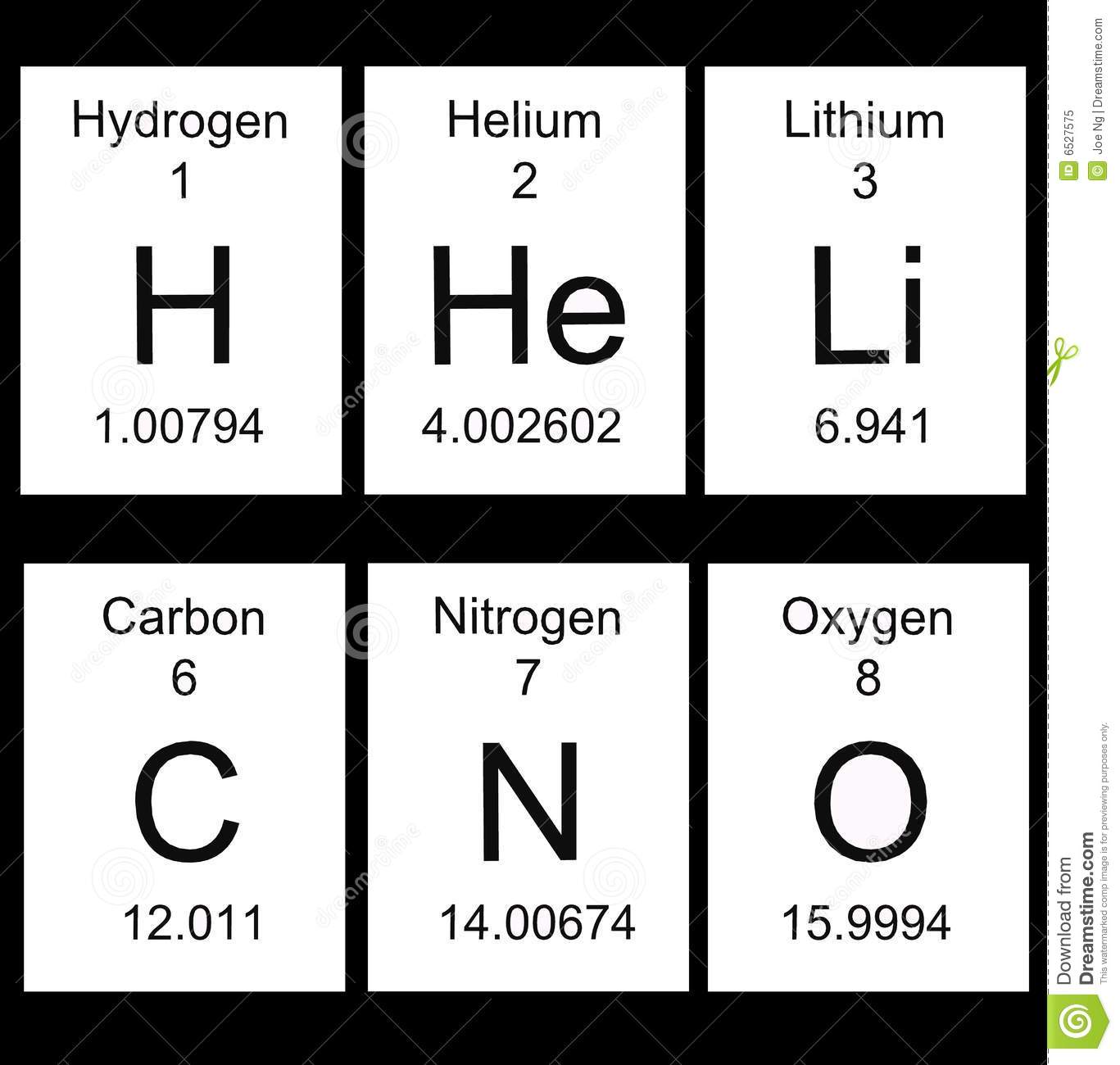
This is the information you can find in a Periodic Table square.

  • ​Atomic number - the number of protons in the nucleus of an atom of that element.

  • Chemical symbol - an abbreviation of the element's name

  • Element name - the common name of the element. 

  • Average atomic mass - the average masses of all of the naturally occurring isotopes of that element.

How to read the Periodic Table

Reading a square

7

Multiple Choice

The atomic number tells you what?
1

number of electrons

2

number of protons

3

number of neutrons

4

both electrons and protons in an atom.

8

Multiple Choice

Question image
The number at the bottom of each square on the periodic table is the ...
1

atomic number

2

atomic mass

3

chemical symbol

4

element name

9

media

Metals:

​The majority of the elements in the Periodic Table are classified as metals. Metals are usually solid at room temperature, malleable, ductile (means it can be turned into wires), shiny, and are good conductors of heat and electricity.

Classifying the Elements of the Periodic Table

Regions of the Table

media

10

media

Metalloids:

​There is a zig-zag line that looks like a staircase and the elements that border this line are called metalloids. These elements have some properties of both metals and nonmetals. Some metalloids, like silicon, are used to make semiconductor chips in computers.

Classifying the elements of the Periodic Table

Regions of the Table

media

11

media

Nonmetals:

​The elements to the right of the metalloid line are nonmetals which are usually dull, brittle and bad conductors of heat and electricity.

Classifying the elements of the Table

Regions of the Table

media

12

Multiple Select

What are the three main groups of the periodic table?

1

groups

2

metal

3

nonmetals

4

metalloids

5

periods

13

Multiple Choice

Question image
The atoms along the staircase are called 
1

metals

2

nonmetals

3

metalloids

4

noble gases

14

media

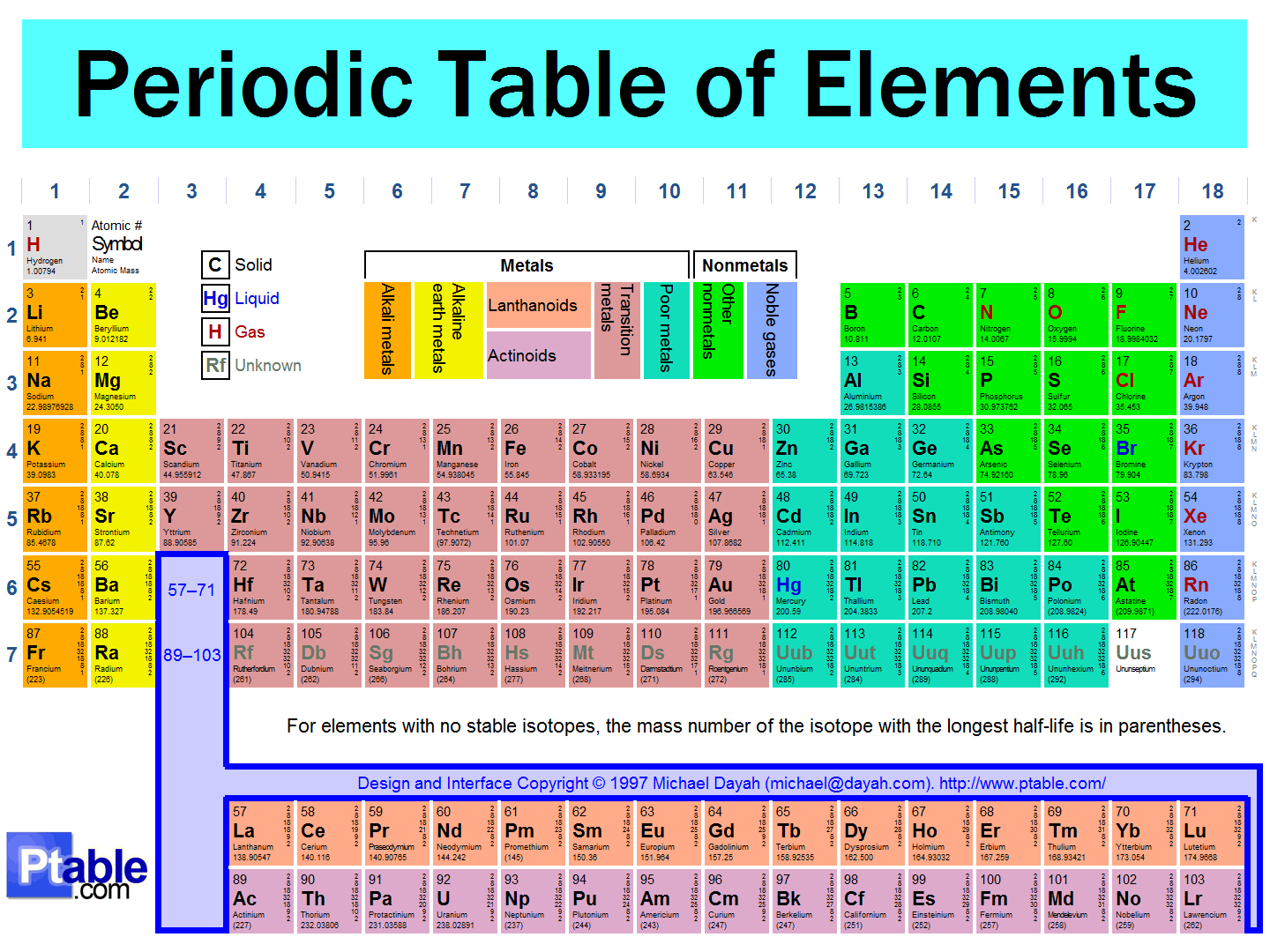
Every vertical (up and down) column of elements is called a group. In total, there are 18 groups on the periodic table Elements in the same group often have similar physical and chemical properties and for this reason, a group is sometimes called a family. The properties of the elements in a group are similar because they have number of valence electrons.

Groups of the Periodic Table

Going up & down

15

media

Each horizontal (left to right) row of elements on the periodic table is called a period. The physical and chemical properties of elements change in predictable ways from one end of the period to another. For example, within any given period, atomic size decreases as you move from left to right. In addition to this, the density of the elements on the left and right side of a period are the least dense and  the elements in the middle are the most dense.

Periods of the Table

Going left & right

16

Multiple Choice

What are the horizontal rows on the periodic table called?

1

periods

2

groups

3

metals

4

nonmetals

5

metalloids

17

Multiple Choice

Question image
Which item on this element square is the chemical symbol?
1

Copper

2

29

3

Cu

4

63.546

18

Multiple Choice

What do the horizontal rows on the periodic table tell us?

1

The number of orbitals

2

The number of valence electrons (the electrons on the outer most shell)

19

Multiple Select

What does the number of protons tell us?

1

electrons

2

atomic number

3

atomic mass

4

neutrons

20

Multiple Choice

Question image

What is the atomic mass?

1

58.693

2

28

21

Multiple Choice

Question image

How many protons and electrons does nickel have?

1

28

2

58.69

22

Multiple Choice

Question image
Beryllium is in group number______.
1

Group 2

2

Group 3

3

Group 4

4

Group 7

23

Multiple Choice

Question image
Sodium (Na) is found in period 
1

3

2

2

3

4

4

1

24

Multiple Choice

Question image

The atoms on the right of the staircase are called

1

metalloids

2

non-metals

3

metals

4

noble gases

25

Multiple Choice

Question image
This class of elements are sometimes called "semiconductors."
1

Metals

2

Nonmetals

3

Metalloids

4

Groups

The Periodic Table of Elements

media

The building blocks of the universe

Show answer

Auto Play

Slide 1 / 25

SLIDE